As promised, I have read all the novels short-listed for the 2025 World Fantasy Awards. The awards will be announced at the World Fantasy Convention, held this year in Brighton UK on Oct. 30-Nov. 2, 2025. If I only had the time, I’d read all the other nominated works, but I don’t. So I’ll do what I love most, read novels and talk about them.
Here are the short-listed novels, and my first two reviews:
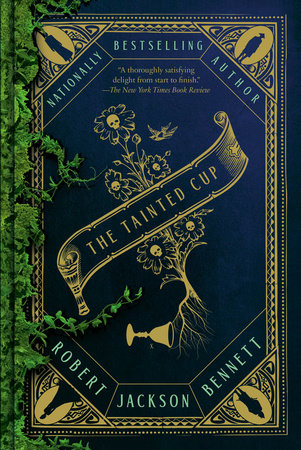
The Tainted Cup, Robert Jackson Bennett (Del Rey; Hodderscape)–This novel won the 2025 Hugo Award and was short-listed for the Locus Award. Mentioned in this post.
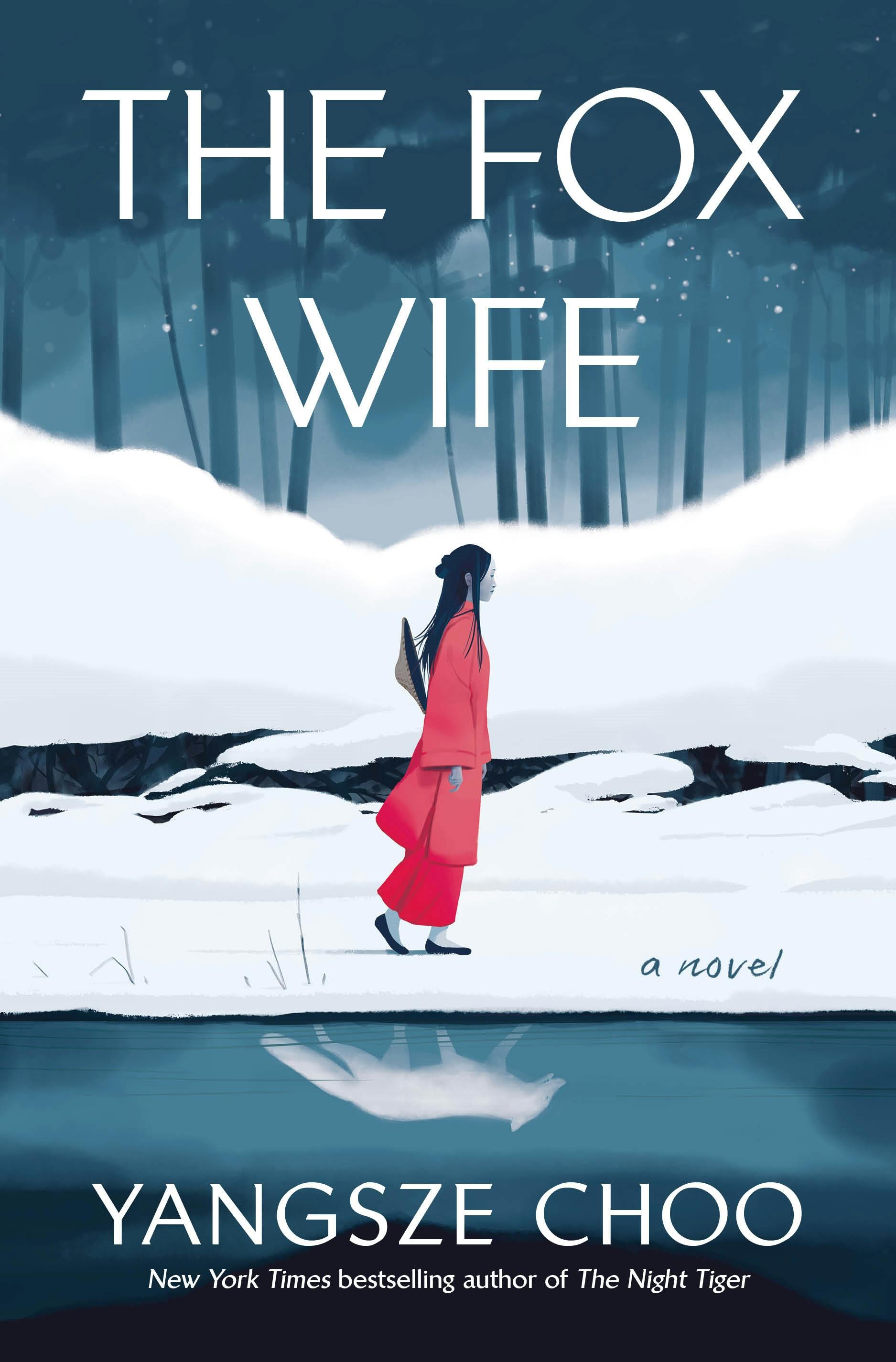
The Fox Wife, Yangsze Choo (Holt; Quercus UK)–a wonderful overlay of Chinese folklore on the early 20th century historical conflict between China and Japan. Reviewed in this post.
The Bog Wife, Kay Chronister (Counterpoint; Titan UK)–what IS this thing? Southern/Appalachian Gothic? Magical Realism? Fascinating read.
The Bright Sword, Lev Grossman (Viking; Del Rey UK)–combined Monty Pythonesque and Malory Morte-D’Arthur-esque massive novel about the Arthurian world in decline.
The Wings Upon Her Back, Samantha Mills (Tachyon)–What if profound disillusionment causes you to lose your wings? What would you do to get them back?
I’ll review one novel per post as we all anticipate the judges’ decision, but in THIS POST ONLY, I’m mentioning two. That’s because I’ve already reviewed The Tainted Cup recently, so I’ll just give a shout-out to the novel here and point you to the review.
Yangsze Choo’ s The Fox Wife delightfully combines Chinese folklore about the supernatural nature of foxes with the early 20th century historical conflict between China and Japan. The main character Snow (Ah San), a woman who is actually a shape-shifting fox, has a wry take on the world of humans that instantly charms and engages the reader. When she states, “The first rule about foxes is that you don’t talk about foxes,” she grabs me with this slyly repurposed Fight Club meme and doesn’t let go. Then, as the novel combines the magic of fantasy with the separate magic of historical fiction, I really am a goner. There’s a mystery here, a love story, the broken heart of a grief-stricken mother, and revenge, sweet revenge. Snow the Fox Wife is a marvelous storyteller into the bargain. It’s a wonderful novel. I savored every word.
COMING UP NEXT: my review of Kay Chronister’s The Bog Wife.
The Nebula Awards, sponsored by the Science Fiction and Fantasy Writers Association, have announced their short-list of nominated speculative fiction published in 2024. The short-listed books nominated for best novel are:
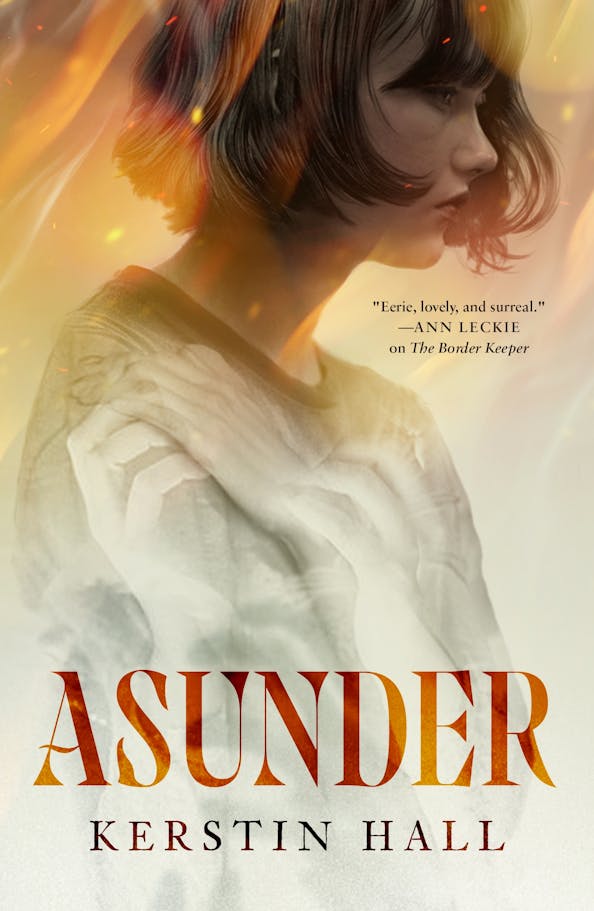
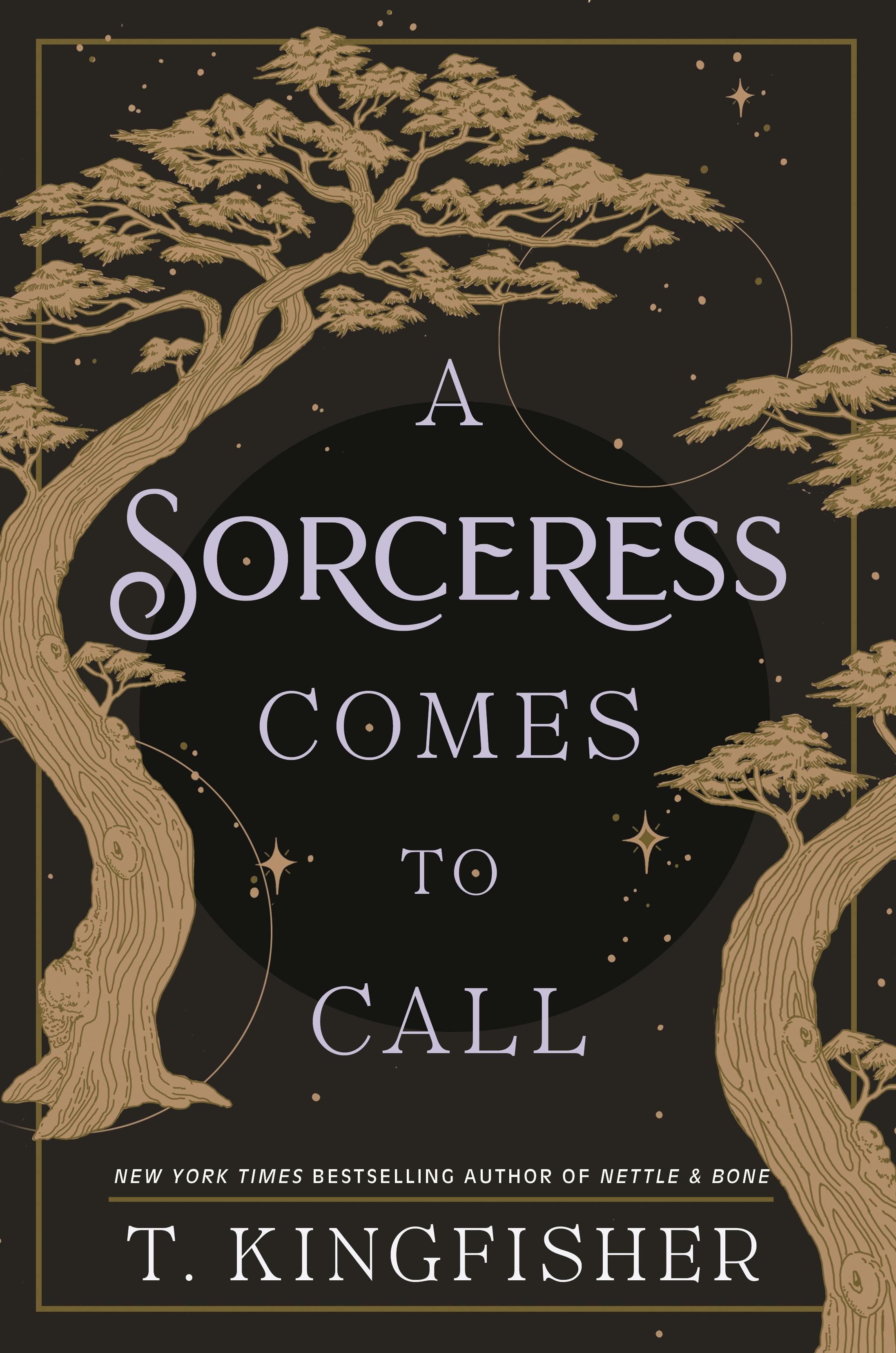
I’m reading the short-listed books in alphabetical order by author, which means I’m coming at them at random. The two books I’m reviewing in this post, Asunder, by Kerstin Hall, and A Sorceress Comes to Call, by T. Kingfisher, certainly do make an interesting pair. Both involve intricate systems of magic, and both involve the matter of possession–one person taking over another’s body. There the resemblance ends.
This is a sometimes-thrilling, pretty consistently absorbing novel with a magic system so complex I never did completely figure out what it was all about. It’s a magic that punches you in the face starting on page one, a magic that must be unraveled as disaster looms. Meanwhile the main characters struggle with a state of possession that reads like the forced-proximity romance trope on steroids. Sometimes Hall’s novel goes off the rails. There’s a long sagging middle. Occasionally it veers into the bizarre, and not in a good way. Example: a method of mass transit that involves boarding a giant spider through its gullet and settling down to enjoy the view while the spider ambles off to the next town. Very few writers can engage in a China Miéville-level of weirdness without sounding outright silly. But just as I was starting to get bored and annoyed, Asunder brought off a stunning mid-plot surprise . Not a cheap thrills surprise, either. Not a surprise engineered by the need for a swerve in the plot–although the plot does swerve! Not the other kind of surprise just arbitrarily stuck in there because the author doesn’t know what else to do. No–this surprise rises organically from plot and character and genuinely changes the way we see both. I loved it. Throughout, big set-pieces stud the novel, gore- and horror-filled fights to the death with god-like creatures. At the end, I wasn’t really sure what had happened or exactly why. It seemed for a while that we were about to go veering off into romantasy, but Hall does not allow that. In spite of a kind of low-level confusion, I really enjoyed reading this novel.
Let’s say a Grimms’ fairytale and a Regency romance had a baby, and that baby was a real little horror. That would be this book. It was a delight to read. In a plot riffing off the Goose-Girl fairytale, T. Kingfisher (pen name for the author Ursula Vernon) spins the tale of a sorceress and her hapless daughter who set out to insinuate themselves into an upper-crust household. The sorceress hopes to ensnare the squire of the household into marriage, mostly in order to gain enough worldly advantages for her daughter Cordelia so that Cordelia can make a brilliant match with the squire’s filthy-rich bachelor neighbor. It is a truth universally to be acknowledged etc. etc. If the mother–a horror-infused Mrs. Bennet–succeeds, mother and daughter will live in comfort for the rest of their lives. The squire and his sister won’t fare so well. In fact, they could well end up murdered. People who turn out to inconvenience the sorceress often meet that fate. And then there’s the nightmare horse who is the sorceress’s familiar, trampling anyone who gets in his mistress’s way. As mousy Cordelia finds an affection she has never known among the squire’s household and the guests at his house party, she needs to rise to the occasion, grow a spine, and defeat her murderous mother. As with Asunder, horror, magic, and magical possession drive the plot. But what a difference in tone and outcome and just about everything else. A Sorceress Comes to Call was fun from page one all the way through. I loved reading it.
The Nebula Awards, sponsored by the Science Fiction and Fantasy Writers Association, have announced their short-list of nominated speculative fiction published in 2024. The short-listed books nominated for best novel are:
I’m reading the short-listed books in alphabetical order by author, which seems like a good random way to approach my task of reading and reviewing every one of the six before awards day. Today, however, I’m going to review Chandrasekera’s novel first, and then Barsukov’s. I think this pair present a good contrast: two difficult reads for very different reasons. I have taken a while getting these first two reviews out because–while I’m a fast reader–both of these novels are challenging to read, and that has slowed me down quite a lot.
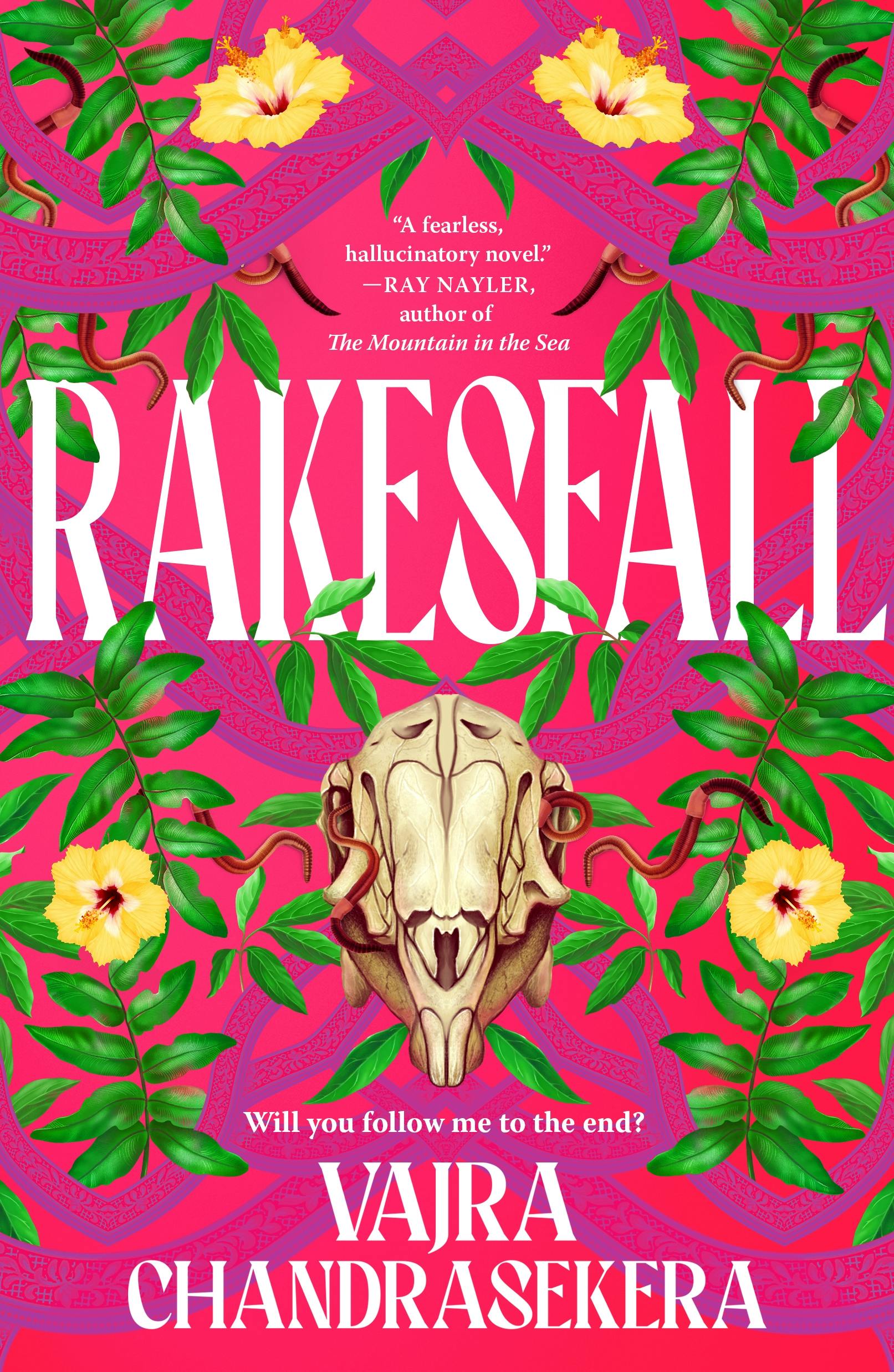
Rakesfall, Vajra Chandrasekera (Tordotcom; Solaris UK)
The marketing copy on the cover reads, “Will you follow me to the end?” That’s the question, all right. If you start reading this novel (can you even call this book a novel?), prepare for a long, wild ride–emphasis on “long.” The blurb on the cover is from the incomparable Ray Nayler, calling this book “hallucinatory.” That is right on the nose. I loved Chandrasekera’s The Saint of Bright Doors, which rightfully won both Nebula and Locus awards last year. See my review HERE. I mentioned the amazing intersection of the world of myth and the gritty world of South Asian political turmoil in that novel. Chandrasekera’s new novel, Rakesfall, takes that mix and extends it in ways a lot of readers may not bother or have the stamina to follow. It’s a very challenging read.
Many of its parts were previously published as short fiction, so as one reviewer notes, the book is more of a collection than a traditional novel. I myself might call it an extended prose poem (VERY extended–300 pages, but it feels longer). A poem can be that long. I think right away of The Iliad and The Odyssey. But those epic poems work because the reader (originally: listener) follows a story line. I’m also reminded of Edmund Spenser’s 16th century unfinished masterpiece, The Faerie Queene. In that strange and huge poem, there are story lines galore, all overlapping, many iterations of the same story and characters in different forms and for different purposes. Rakesfall is more like that. There’s no one narrative line to keep you anchored, although a background story of two children and their endlessly repeating reincarnations and intertwinings do form a sort of through-line.
I see my examples are drawn from Western literature, which is itself a problem. I also see I’m exhibiting my bias for “story.” In Chapter 28, “Arranged Marriage,” a listener–who may be an iteration of a “character” we discovered earlier in the book, complains to one of the novel’s many sage grandmother figures: “This story. . . Isn’t it missing the bit at the end where you explain the moral, what the story means?” The grandmother’s reply: “There is no moral because this is a history, rather than a story.” Later she elaborates: “Stories have endings, and histories understand that nothing ever ends.”
So The Iliad and The Odyssey may not be good reference points. Rakesfall comes from a different world-view entirely–one that I’m not the best qualified to review. But Rakesfall, for all the grandmother’s denials, is about story, too, in a non-Western context. Deep into Rakesfall, I think we readers get a clue how we might approach Chandrasekera’s strange immersive object/novel. Chapter Twenty-three, “Electric Head in the Golden City,” begins this way:
Somadeva’s eleventh-century epic Kathasaritsagara, the ocean fed by rivers of story, is so called because it is fulfilled by many interflowing stories, some of which run deep within the ocean itself, cold currents far beneath the surface.
Somadeva’s vast collection of Indian myths was itself derived from an earlier work, Brhatkatha, a title translated as “the Great Narrative,” which has been lost. I know little about this, and what little I do know comes from Wikipedia, but the article in that much-maligned, hugely valuable online encyclopedia ends with a list of sources, so I invite any general non-scholarly reader to go there first and then delve deeper. The concept of “many interflowing stories” and “cold currents far beneath the surface” describes Rakesfall well.
The poetic language in Rakesfall is real (as opposed to that faux-flowery stuff passing itself off as poetry), and rich. Often, different registers of language intermingle, such as a highly poetic sentence followed by a pithy and often comic piece of slang. In a story about a king who sends a wrestler into a haunted cemetery, the wrestler unexpectedly encounters a beautiful woman amidst the ghouls and vampires. In a hilarious parody of heroic storytelling lingo, “Oh Shit, the wrestler says, embarrassed and unsure how to act. Ma’am, Whomst art Thou.” This particular story, by the way, is part of a seemingly endless recursion of stories, one detail leading to another story to another story and so on. The resolution, if it ever occurs, may take place many chapters later–or in a completely unexpected context and form. Or the reader will be proceeding painfully along some obscure line of thinking involving multiverses and strange dimensions, and suddenly one of these delightful little pieces of language will stop everything cold.
At the same time, the novel probes the root causes of present-day turmoil and violence. Chandrasekera folds a multitude of worlds past, present, and future into his novel’s pages, imaginatively and often savagely. These intersecting worlds reflect on the damage inflicted on humanity by oligarchy and autocracy, and especially the aftermath of colonialism. Any reader well-informed about Sri Lanka and its political and social struggles will be at a huge advantage, as I am not. I can only approach this novel as that creature Virginia Woolf once called “the common reader”–no particular expertise, just an intention to leap into the book and savor it as best I can.
And at its best, this novel is enthralling. I’m thinking especially of the story of the Hero, the King, and the Wasp, late in the novel. But there are long talky, opaque parts that try a reader’s patience. Again my bias for “story”! In a way, the novel is framed at the beginning and the end by listeners to “story” who divide into warring factions over what the story means, how to apply it. I suppose we readers are doing the same. Nevertheless, a patient reader will be well-rewarded if she sticks with this novel.
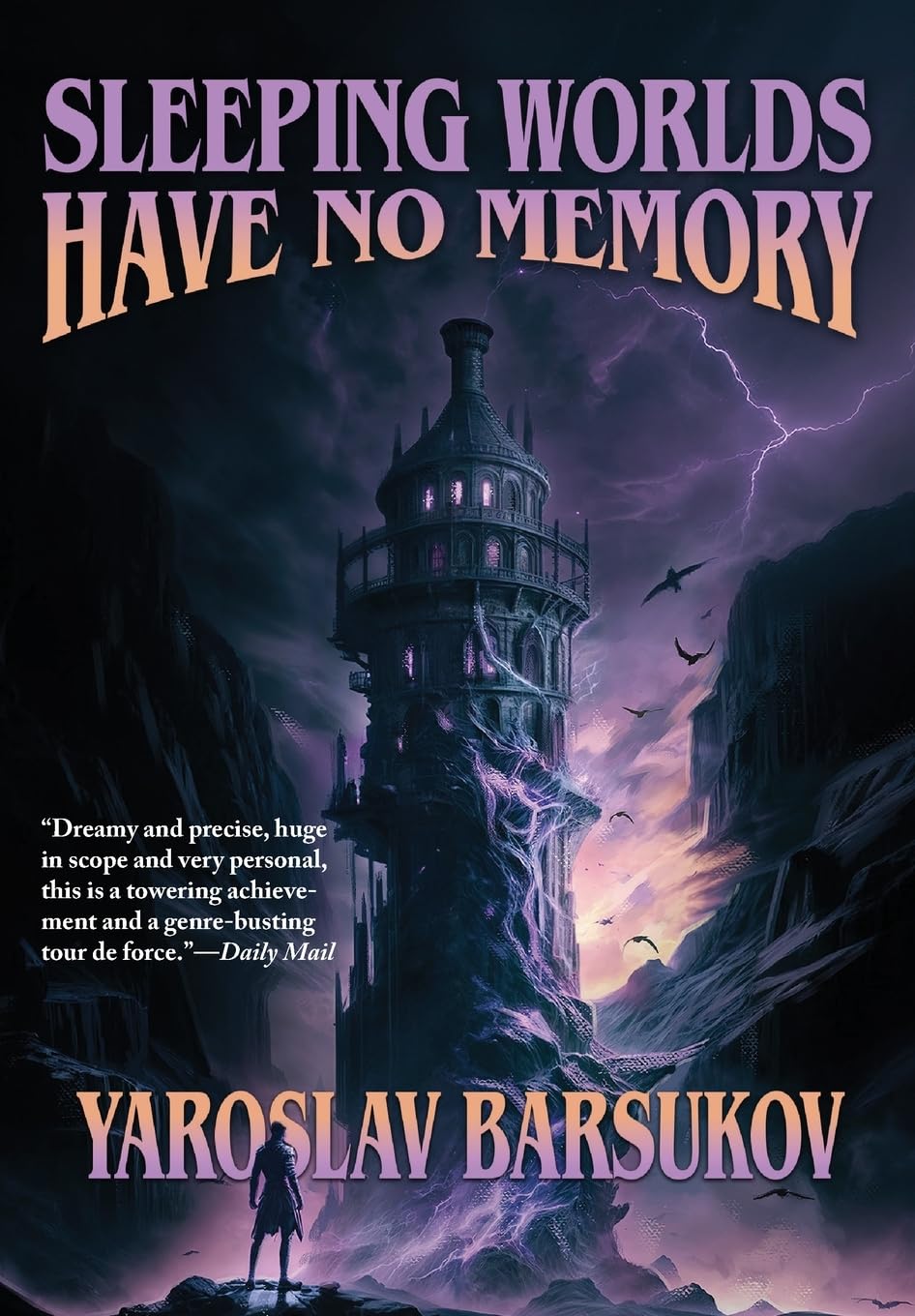
This novel, too, I found a long, slow read. For me, though, the difficulty of getting through it was due to a very uncertain tone throughout. Some of it is slangy, some of it is self-consciously “poetic,” and the narrative and character motivations jump around in a disconcerting way, making it hard for me to follow. The author’s first language is not English, so perhaps that is part of the problem.
The set-up is intriguing. Two warring countries face off over a border. The interior minister of one, Shea, is charged by his queen to investigate the building of a tower that his country hopes to use to defend against its neighbor. When Shea gets to the border town, he discovers a baffling set of problems. The tower’s builder has miscalculated, leading her to use a dangerous technology to keep the tower from falling. An ethnic group distrusted by both sides has magical abilities related to the technology. Shea himself has a troubled personal history involving the technology. And palace intrigue threatens his authority. There’s almost a Ruritanian/Graustarkian feel to the world-building. All very thrilling–except the deeper I got into this novel, the more uncertain I felt about who was doing what to whom, and why. The more uncertain I felt about the motivations of almost all of the characters. And the more annoyed I got by poetic metaphors that seemed to go no place or were wildly misdirected. Sorry, everyone. I wouldn’t have finished this novel if I hadn’t felt obligated to review it.
But there–you see? Different readers, different tastes. This novel was nominated for a Nebula Award. That means tons of readers admire it. Look at this review, for example. Did that person and I read the same book? We did! The author has stated that he wrote it because of his conviction that disinformation is one of the leading problems of our time. See “a note from the author” here. I emphatically agree. And different readers read books for different reasons. For me, a great writing style is a necessity (although, as we see from that review, others like his style just fine). For other readers, plot and characters and world-building may be so much more important that they can overlook an awkward writing style. Depending on what you want out of a fantasy novel, you may like it.

 Fantastes
You must be logged in to post a comment.