It’s Midsummer! Have you been abducted by a fairy yet?

For the past few years at Midsummer, I’ve posted my recommendations for speculative fiction with fairies. June 20th is this year’s summer solstice ushering in the season of summer in the geographical (astronomical) sense. Midsummer, Midsummer Eve–these have been recognized and celebrated by humans since there were humans. I’m speaking of the Northern hemisphere, of course, for in the Southern, the same dates on the calendar begin the tilt into winter.

But in this northern half of the globe, even very ancient people have taken note of this day of the year when the sunlight lasts longest and the night is shortest. In western and northern Europe, ancient peoples erected stone circles as a kind of clock and calendar to track the moment. The English monument Stonehenge is the most well-known of these. Find out more here. The Wikipedia entry will give you a great overview, as well as many sources for follow-up. Certain structures in Meso-America, such as the Pyramids of the Moon and Sun in Teotihuacán, Mexico, may serve a similar function. Find out more about them here.
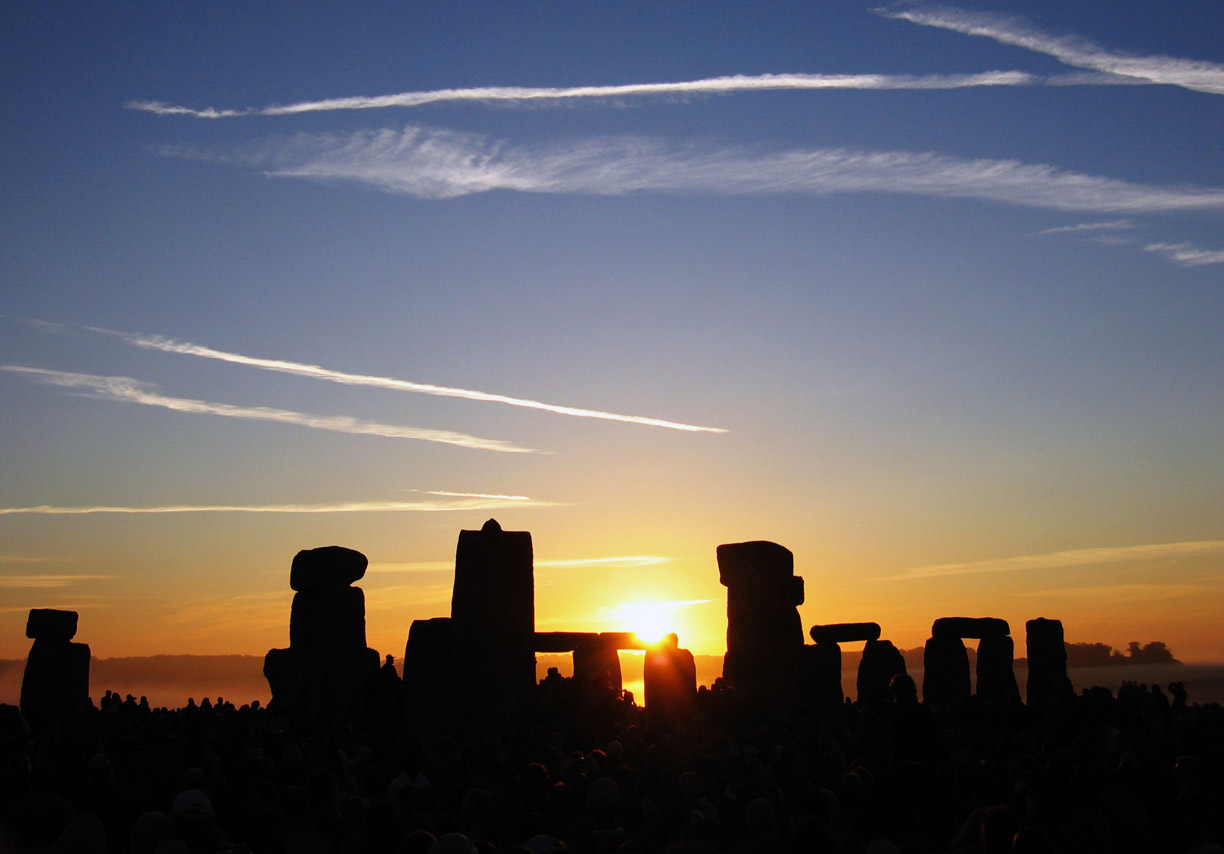
Sunrise at Stonehenge, summer solstice 2005. Source: CC BY-SA 2.0, https://commons.wikimedia.org/w/index.php?curid=195581
Pyramid of the Moon, Teotihuacán, Mexico. Source: Smithsonian Magazine.

Ancient peoples used such structures for practical reasons. But folklore grew up around the coming of summer, especially in a non-scientific age. The light lengthening, the darkness shrinking, the veil between the known and the shivery unknown thinning–irresistible. In western and northern European cultures, fairies are said to come out at Midsummer to do their mischief. People in those cultures mark this most fascinating and most dangerous time of year through a variety of celebrations, festivals, and of course stories. For a quick summary, take a look here.

Storytellers before writing, or before writing was widespread, passed these legends and practices along orally in what we call folktales or fairytales or folk songs. As European cultures gained literacy, storytellers wrote the legends down. Traditionally, most of these Midsummer celebrations took place on June 24 or 25, a bit later than the actual scientific solstice (June 20 or 21). Many of these traditions and stories involved or referenced the fair folk. The fairies, in their alternate world usually invisible to the rest of us.

Now it’s my turn. How shall I, in this blog, celebrate Midsummer fairy madness?

What is more fairy-mischievous than abducting a hapless human and whisking it away to fairyland?

Folklore

Folktales, folksongs, fairytales–many feature people taken by fairies off to fairyland. One of the most well-known is the Scots folktale/folksong Tam Lin. In the story, a young woman picks a flower in forbidden territory. Tam Lin magically appears and takes her virginity. When she gives birth, she reveals that the father is Tam Lin. And who is he? He’s a human abducted by the fairy queen into the land of fairy. After many trials and tribulations, the young woman rescues him from fairy bondage, and he becomes her knight. The ballad, listed as Child Ballad 39 and number 35 in the Roud Folk Song Index, is known in many variations. Here’s a good one.

Literature

The absolute classic of the fairy-abduction genre is, in the English-speaking world, William Shakespeare’s 16th century play A Midsummer Night’s Dream, one of his most beloved. In this play about fairy magic in general and the magic of love, an ordinary guy gets stolen by the fairy queen Titania to be her paramour–except that her jealous fairy king Oberon has blinded her eyes to the ordinary guy’s less than ordinary physique. Oberon has sent his minion Puck to magically skew Titania’s judgment so that she, the most powerful and elegant of fairies, has fallen for a crude unlettered silly man. As an extra turn of the screw, Oberon has magically fastened an ass’s head on the poor human, a “rude mechanical” named Peter Quince.

Image uploaded from this site.

Oberon’s jealousy began when Titania, who has abducted a human boy for a plaything, refuses to give him up to the fairy king, who covets the boy for himself (for what purpose? don’t ask, and Shakespeare didn’t go there). Meanwhile, this fairy plot intersects with the bumbling buffoonish efforts of the “rude mechanicals” to put on a play at the wedding of their own human king. It also intersects with human King Theseus’s efforts to make wise decisions for his subjects while putting on a big do to celebrate his marriage to a foe he has subdued in battle, the warrior woman Hippolyta. More abduction. Finally, the fairy craziness intersects with two interchangeable pairs of lovers stumbling around a magical forest trying to figure out which one loves which other one, and why. The play is a work of genius, and huge fun, as the scales fall from the eyes of all the characters, human and fairy, and they see how inappropriately they have fallen in love, yet how irresistible love is.

Ain’t it the truth. As the play itself notes (Act V, scene 1), “The lunatic, the lover and the poet/Are of imagination all compact.” All share the same crazy rush of emotion. And I, along with the play, blame the fairies.

Here’s an even older story from the same region, England

Another compelling tale of fairy abduction! Sir Orfeo, an anonymous 13th/14th century Middle English poem, repackages the Greek myth of Orpheus and Eurydice. In the hands of this unknown poet, the myth becomes a cautionary tale about the dangers of falling asleep under a tree at Midsummer when the fairies are on the prowl.

In the Greek myth, if you recall, Orpheus the great musician mourns his dead wife Eurydice so terribly that the gods grant him permission to go to the underworld to rescue her. The gods set one condition: if Orpheus looks back to see if Eurydice is following him, she’ll slide back into Hades forever. He does, and the story ends tragically.

The medieval English poet takes the story and gives it a different twist. In his version, Orpheus the harper becomes Sir Orfeo–still a harper, but also a medieval knight, and the lord of his lands. His wife Herodys (Eurydice) does not die but is abducted when she falls asleep (at midsummer! at the woo-woo hour of noon!) and the fairy king spots her. He takes her through a portal in a rock to fairyland. Like Orpheus, Sir Orfeo wanders the world looking for his lost love and playing sad songs. One day he comes upon the fairies parading into their rock, and in their train, he recognizes his wife Herodys. He follows them into fairyland. His music so enchants and moves the fairy king that he allows Herodys to go back to the human realm with her husband. They live happily ever after! Not only that, but the steward Sir Orfeo puts in charge of his lands while he wanders around for years and years is a faithful steward–not the evil guy so many of these fairytale stewards turn out to be–and he gives Sir Orfeo his kingdom back. What an HEA.

If you can find it, the translation I like best is by none other than that great scholar J. R. R. Tolkien. Here’s how to find it. This is hard Middle English, unlike Chaucer’s, which anyone can read with a bit of effort (because it’s the Middle English that evolved into our own modern English). So unless you are a very good scholar of Middle English, a translation is a good idea.

WHAT DO PRESENT-DAY WRITERS DO with the fairy-abduction story? For a midsummer treat, go on to my next few posts for novels that explore that very tricksy matter.

Valentine Week, Day Seven: Fairytale Fantasy

Delayed, but finally here!

Fairytale fantasy post about the Dance Plagues of the Middle Ages and the fairytales that reflect it

This year, DANCE your way to Valentine’s Day! Novels based on fairytales and folktales featuring dance.

In preceding years (you can find all the posts archived on my blog, btw–just look for February!), I have posted novels based on worldwide fairytales and folk tales, and on two “literary” fairytales (Cinderella and Rapunzel). This year, I’m featuring a whole week of novels based on fairytales and folktales involving dance. Here are the posts:

THE WRAP-UP:

As I explored fairytale fantasy novels using dance as a theme, these were my two main takeaways:

  • The fairytale usually called “The Twelve Dancing Princesses” is an especially powerful inspiration for these novels.
  • Other novels of fairytale fantasy take the stories behind several well-known ballets for inspiration–sort of a no-brainer if you’re looking to combine fairytale fantasy and dance. And this is also not a surprise: most of the ballets were choreographed to the music of Tchaikovsky, who may be most famous for his fairytale-themed ballets.
  • Of the six novels I reviewed, my two favorites share a crossover appeal for readers of “literary” fiction. That’s no accident, since I am one of those readers. I also really love good genre fiction–but it has to be good (in the writing, the overall conception of the story, and the way it presents itself to readers) for me to like it. THIS MAY NOT BE YOUR EXPERIENCE. Plenty of readers who love fairytale fantasy want the full-bore genre reading experience, akin in the world of books to opening a big luscious box of chocolates and digging in. Hey, I love that, too! I also love other types of reading experiences.

Full disclosure about that last item. I’m a retired English prof. So I WOULD be like that, right? But I crave immersing myself in an amazing alternate world, so I love all types of books (and other media) that do that for me. And, like all readers, I have my prejudices (such as hating cliff-hanger endings).

Here’s another important matter: I love reading books, talking about books, even analyzing books (which–if you’re not careful–can spoil the pleasure. “We murder to dissect.”). WRITING books is another thing entirely. I do that, too, and I never underestimate how hard that is. I’m in awe of all six of the authors of the books I’ve posted about in this blog series. I think of myself as a good reader. I TRY to be a good writer, and how well I succeed. . . that’s up for grabs.

On to the fascinating topic of WHY we love fairytales (folk tales) and therefore why, if we love reading fantasy, fairytale fantasy might especially speak to us.

Because my theme this year has been dance, I concentrated in this series of blog posts on folklore about dance and how it transforms into fairytale magic. Here are two important pieces of dance-related folklore, one well-known and one pretty obscure:

The Sur La Lune website has posted a detailed discussion of the Brothers Grimm version of “The Twelve Dancing Princesses,” also known as “The Shoes That Were Danced to Pieces,” and comments on several others. I won’t duplicate the fine work of that web site, but I’ll direct you over there. If you’re fascinated by fairytales, this site is a wonderful resource.

That great resource Wikipedia gives an extremely helpful list of the many versions world-wide of this fairytale.* And as I’ve already mentioned, entering something like “novels based on The Twelve Dancing Princesses” into your favorite search engine will lead you to many lists of great books to read. I found it a real struggle to narrow this blog’s investigation to six novels.

The second, much less well-known folk tale is the German tale “The Dancers,” or more often, “The Cursed Dancers of Ramsdorf.” It tells of an angry abbot who upbraids his parishioners because they dance on the Sabbath, profaning the holy day. When they won’t clean up their act, the abbot curses the sinful villagers to “dance for a year and a day.” The hapless villagers begin to dance. After dancing through the year and a day of the abbot’s curse, they discover they can’t stop. For years they dance, before finally dropping down exhausted. They spend the rest of their lives in a state of hopeless lethargy. So there, profane dancers.

This tale is related to–or maybe the same tale as–“The Cursed Dancers of Colbeck,” which is known from an early fourteenth century English “exemplum” or cautionary tale about the consequences of disrespecting the Sabbath. (It’s apparently part of an text transmitted by Robert Mannyng, maybe derived from an even earlier mid-thirteenth century text by William of Waddington, but I’d have to go to a university library to find out more). If this exemplum is the origin of the “Dancers of Ramersdorf” tale, that tale wouldn’t be a true folk tale, I guess, but a folk derivation from a literary source. Maybe it’s the reverse! Any folklorists who know about this, please comment! There are some real similarities with some versions of “The Twelve Dancing Princesses,” too, in which the princesses are cursed to dance.

Whatever scholars find out about these tales, I see some interesting connections between “The Cursed Dancers of Ramsdorf” and the medieval phenomenon known as “dancing mania,” or “the dance plagues.” Whole towns and villages were caught up in an hysteria that led them to dance to exhaustion and then, supposedly, to death. Many scholars have speculated on the causes, everything from food poisoning to diseases such as epilepsy to mass hysteria. Here is a good account of modern scholars’ thinking about the phenomenon.

"The Dance at Molenbeek"	
Pieter Brueghel the Younger  (1564–1638)
Pilgrimage of the Epileptics to the Church at Molenbeek (aka “The Dance at Molenbeek”), thought to be a depiction of victims of “dancing mania” or the “dancing plagues” that swept medieval Europe. Painting by Pieter Brueghel the Younger  (1564–1638). Image source: Wikimedia Commons, in the public domain.

“The Cursed Dancers of Ramsdorf”–and the dance mania–also seems to intersect neatly with other folkloric depictions of dance in the European Middle Ages, mainly visual, that are associated with the Black Plague, the epidemic of bubonic plague that swept Europe most notably in 1346-1353, killing a third to a half of the European population and causing widespread social disruption. Bubonic plague returned multiple times, doing even more damage. (By comparison, think of the social disruptions caused by the recent covid-19 pandemic, multiply that many times, and add in ignorance of the causes of disease in a pre-scientific age, almost no effective medical remedies, and widespread fear and panic. . .hmm, not sounding so different after all.) Drastic social disruptions give rise to stories, games, songs, common if unsubstantiated beliefs, particular objects–folklore, in other words. In our day, such cultural phenomena are frequently not passed down generation to generation by word of mouth, as in traditional folklore, so in technologically advanced societies, we might use the term “urban myth” or “popular culture” instead.

This article sums up the connection between the “dancing mania” and “dancing plagues” of the medieval period in Europe and the Black Death epidemics sweeping Europe around the same time.

The mass deaths of the Black Plague and other medieval outbreaks of bubonic plague had a profound effect on the way people thought about death. One reaction was to see death as a “great leveler.” High and low, rich or poor, it didn’t matter. The plague took you and killed you. The visual arts depicted these anxieties through the “dance of death” or “danse macabre,” a skeleton representing Death leading a line of people of all sorts and stations through a grisly dance–and through visual art that served as mementi mori (mementos, or reminders of death)–not only paintings and etchings, but even skulls set in the midst of fancy banquet tables to remind everyone, “from dust thou art, to dust thou shalt return.” Our society tends to hush up and lock away this reality of the human condition, but in the plague years, death and its terrible sights and sounds and smells were all too evident.

Because I can’t resist. . .

For my own purposes as a writer, I couldn’t help but be struck with the similarities of these dance tales and images with another very well-known folk tale, the Pied Piper of Hamelin. Although the main focus is on music, the idea of marching people off to death, or to some horrifying unknown fate, seems connected to the dance plagues. The Swedish director Ingmar Bergman’s famous twentieth-century film The Seventh Seal provides a great image of the Dance of Death, for example, especially the way Death leads the dead off in a macabre dancing row to their fate. Here’s the link.

The Pied Piper in the folk tale may present a similar image of death. This article sums that idea up nicely. In the tale, a piper (bard) is hired to rid the town of rats. When the town fathers cheat him of his fee, the Pied Piper leads their children off, and they’re never seen again. Here is a good account of the tale and the possible reasons behind it. Two things fascinate me about the Pied Piper tale: first, the backdrop of the tale, during the time of the Black Death, bubonic plague caused by rats. Read about it here. Second, the connection of the plague with rats and with bards. Read here about why bards were often considered so dangerous, and how the Pied Piper story connects with the superstitions about bards, especially the idea that bards were able to rhyme and sing rats away from towns and crops—a kind of musical pest-control service.

A SIDE NOTE: I should mention one final item of folklore, the children’s game Ring Around the Rosie (Roud folk song index #7925). As it turns out, this traditional singing-dancing-rhyming game has nothing to do with the Black Death, despite the popular belief. In the twentieth century, many thought it must be connected. You still see people asserting this. Until I looked into it myself, I thought so, too. In spite of some seemingly convincing arguments about sounds in the Ring Around the Rosie rhyme mimicking sneezing, the “rosy” rash of the plague, the “ashes, ashes” line, and the “all fall down” line, contemporary folklorists mostly reject the Black Plague origins of the rhyme. Read this for an accessible discussion of their thinking.

WHAT DOES THIS FOLKLORE STUFF MEAN FOR US FANTASY READERS, THOUGH?

Fairytales–folk tales–have always been a way for people to come to grips with the human condition. Storytelling itself is a way to do that, maybe the oldest way in the history of humanity. Folk tales like “The Twelve Dancing Princesses,” “The Pied Piper of Hamelin,” and “The Cursed Dancers of Ramsdorf” are entertainment, but they are also conduits into a deeper understanding of our lives. Perhaps, for us, fairytale fantasy novels perform that function. We can breeze through them in a state of delight. We can look deeper. Our choice.

WHAT DOES IT MEAN FOR ME AS A WRITER? A vast well of fascinating characters and plots and ideas. If you’d like to download a free example loosely based on the Pied Piper folk tale, GO HERE.

* About Wikipedia: no sneering about Wikipedia from this writer! Sure, it has its problems, but so does any general encyclopedia. The best feature of Wikipedia is the way its general discussion provides you with sources to go deeper into a subject. (If you’re a student, just don’t copy straight out of Wikipedia, or even with a few tweaks to the language–both are plagiarism–and do go further than Wikipedia. No general encylopedia should function as a student’s main source. See my avoiding-plagiarism guide here–all the more important in a world already flooded with AI. And by the way–if any students are reading this, DO NOT use this blog as a scholarly source. Because it’s not. Maybe it will lead you to some, though.)