Two more novels short-listed for the Nebula

The Nebula Awards, sponsored by the Science Fiction and Fantasy Writers Association, have announced their short-list of nominated speculative fiction published in 2024. The short-listed books nominated for best novel are:

REVIEWED IN MY LAST POST:

REVIEWS STILL TO COME:

I’m reading the short-listed books in alphabetical order by author, which means I’m coming at them at random. The two books I’m reviewing in this post, Asunder, by Kerstin Hall, and A Sorceress Comes to Call, by T. Kingfisher, certainly do make an interesting pair. Both involve intricate systems of magic, and both involve the matter of possession–one person taking over another’s body. There the resemblance ends.

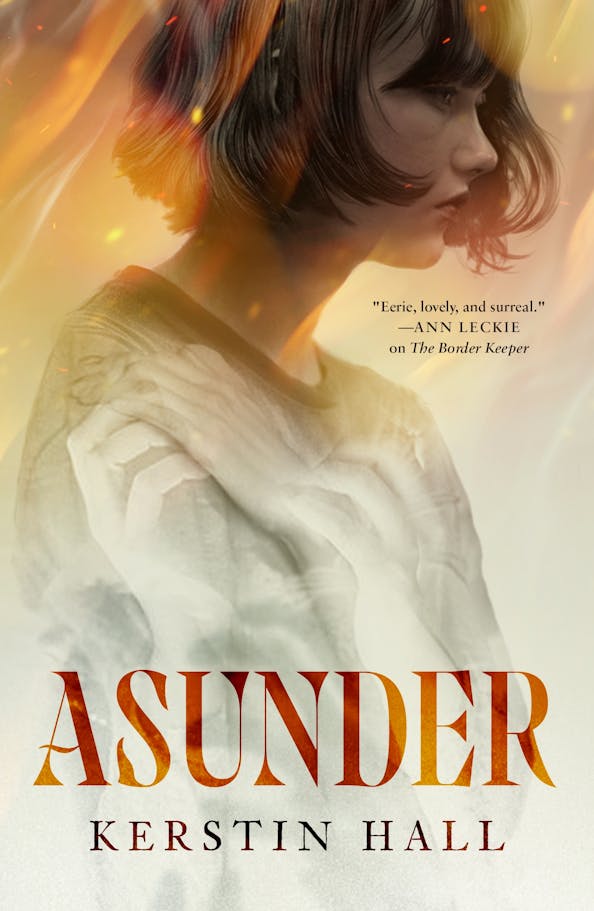
Asunder, Kerstin Hall (Tordotcom)
Find out more HERE.

This is a sometimes-thrilling, pretty consistently absorbing novel with a magic system so complex I never did completely figure out what it was all about. It’s a magic that punches you in the face starting on page one, a magic that must be unraveled as disaster looms. Meanwhile the main characters struggle with a state of possession that reads like the forced-proximity romance trope on steroids. Sometimes Hall’s novel goes off the rails. There’s a long sagging middle. Occasionally it veers into the bizarre, and not in a good way. Example: a method of mass transit that involves boarding a giant spider through its gullet and settling down to enjoy the view while the spider ambles off to the next town. Very few writers can engage in a China Miéville-level of weirdness without sounding outright silly. But just as I was starting to get bored and annoyed, Asunder brought off a stunning mid-plot surprise . Not a cheap thrills surprise, either. Not a surprise engineered by the need for a swerve in the plot–although the plot does swerve! Not the other kind of surprise just arbitrarily stuck in there because the author doesn’t know what else to do. No–this surprise rises organically from plot and character and genuinely changes the way we see both. I loved it. Throughout, big set-pieces stud the novel, gore- and horror-filled fights to the death with god-like creatures. At the end, I wasn’t really sure what had happened or exactly why. It seemed for a while that we were about to go veering off into romantasy, but Hall does not allow that. In spite of a kind of low-level confusion, I really enjoyed reading this novel.

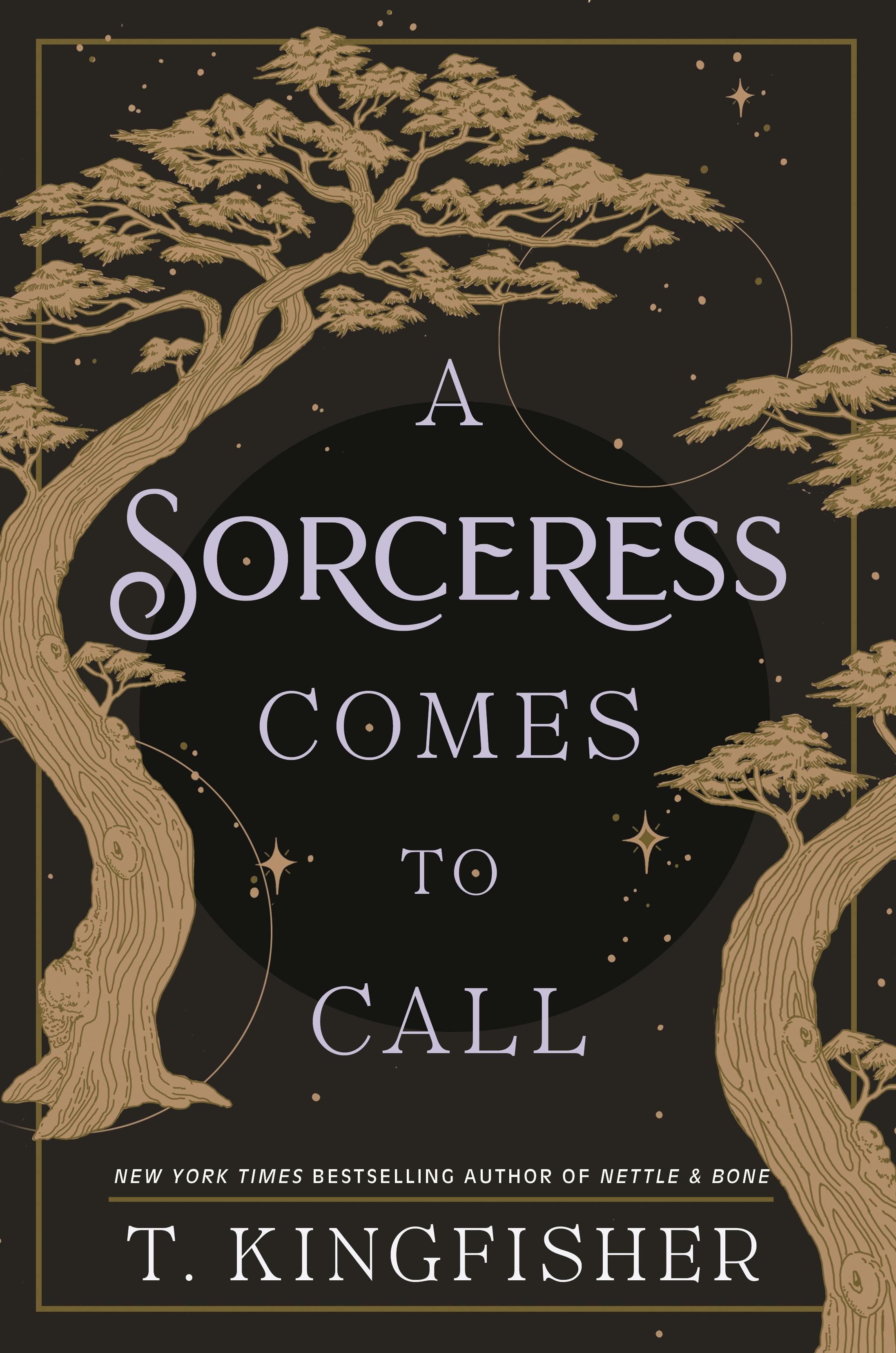
A Sorceress Comes to Call, T. Kingfisher (Tor; Titan UK)
Find out more HERE.

Let’s say a Grimms’ fairytale and a Regency romance had a baby, and that baby was a real little horror. That would be this book. It was a delight to read. In a plot riffing off the Goose-Girl fairytale, T. Kingfisher (pen name for the author Ursula Vernon) spins the tale of a sorceress and her hapless daughter who set out to insinuate themselves into an upper-crust household. The sorceress hopes to ensnare the squire of the household into marriage, mostly in order to gain enough worldly advantages for her daughter Cordelia so that Cordelia can make a brilliant match with the squire’s filthy-rich bachelor neighbor. It is a truth universally to be acknowledged etc. etc. If the mother–a horror-infused Mrs. Bennet–succeeds, mother and daughter will live in comfort for the rest of their lives. The squire and his sister won’t fare so well. In fact, they could well end up murdered. People who turn out to inconvenience the sorceress often meet that fate. And then there’s the nightmare horse who is the sorceress’s familiar, trampling anyone who gets in his mistress’s way. As mousy Cordelia finds an affection she has never known among the squire’s household and the guests at his house party, she needs to rise to the occasion, grow a spine, and defeat her murderous mother. As with Asunder, horror, magic, and magical possession drive the plot. But what a difference in tone and outcome and just about everything else. A Sorceress Comes to Call was fun from page one all the way through. I loved reading it.

THE END of Valentine Week 2025: Fairytale Fantasy, Day SEVEN

This year’s theme: RED RIDING HOOD

Here we are, at the end of Valentine Week 2025.

The novels I have featured this year:

Red Rider, by Kate Avery Ellison (2019, indie-published)—reviewed HERE

Wolves and Daggers: A Red Riding Hood Retelling, by Melanie Karsak (2018, indie published–Clockpunk Press, which seems to be owned by the author)–reviewed HERE

Beauty and the Werewolf, by Mercedes Lackey (2011, Harlequin Nocturne)–reviewed HERE

Crimson Bound, by Rosamund Hodge (2015, HarperCollins)–reviewed HERE

Scarlet, by Marissa Meyer (2013, Macmillan)reviewed HERE

TODAY:

For the Wolf, by Hannah Whitten (2021, Orbit)–quick capsule review

AND

Other interesting fictions based on Little Red

First, a capsule review:

For the Wolf, by Hannah Whitten (2021, Orbit)

I reviewed this novel for my first series of Valentine Week posts, in 2022. Find my review HERE.

A quick recap and a few thoughts: The really nice cover art screams Little Red, and a few of the superficial details do, too. But for the most part, this novel is Beauty and the Beast all the way. As we’ve seen this week, Beauty and the Beast makes a natural pairing with Red Riding Hood, and elements of both fairy tales are often seen in retellings of Red Riding Hood. I think it’s interesting that in these novels–and especially in Whitten’s–the marketing all points toward Red Riding Hood. Why not Beauty and the Beast? That’s especially true of Whitten’s novel. Would a content analysis of fairytale retellings published in 2020 and 2021 reveal a surplus of Beauty and the Beast? It’s a mystery to me why marketing departments sell readers via Little Red but the story itself goes all Beauty and the Beast on us. Could the popular culture appeal of the Disney Beauty and the Beast (which I actually really like, by the way) be so overwhelming that books and their covers need to veer away?

Whitten’s YA novel, which features many of the usual YA tropes, is about two sisters, one of whom has to be given to the wolf–some mysterious creature in the woods–in a murkily-explained ritual sacrifice. The main character gets shipped off to the wolf’s castle, where she finds a tormented beast laboring under a curse. The most interesting part of this novel, in my opinion, is the sentient forest. But see my post of 2022 for a full review.

OTHER RED RIDING HOOD FICTIONS:

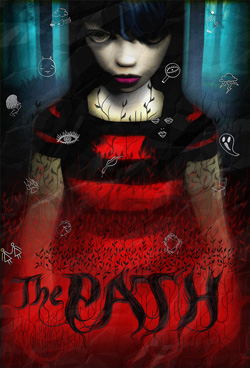
The Path, a single-player indie video game that re-invents Red Riding Hood as a parable of emerging womanhood. It is stunning, an art object all its own and a really creepy horror-themed, Freudian-infused journey. There’s only one rule to the game: “Stay on the path.” BUT in order to win the game you must: (SPOILER ALERT!) go off the path! You can get it on Steam for PC.

Into the Woods. Red Riding Hood is one of the major story lines in the wildly popular Steven Sondheim 1986 musical, and Little Red herself is one of the major characters. In 2014, Disney (did I say I wouldn’t talk about Disney in this series? I lied.) made a movie based on the musical.

Angela Carter’s amazing Red Riding Hood short stories, in her collection titled The Bloody Chamber and Other Stories (Harper & Row, 1979). There are Bluebeard retellings, Beauty and the Beast retellings, and many more, all beautiful, all strange, all completely wonderful. The main Red Riding Hood retelling is “The Company of Wolves.” It was the basis for a film directed by Neil Jordan in 1984. Two other tales in Carter’s collection are based on some version of the Red Riding Hood folktale: “The Werewolf” and “Wolf-Alice.” But “The Company of Wolves is especially superb. “See!” it ends. “sweet and sound she sleeps in granny’s bed, between the paws of the tender wolf.” Wow, what a story.

You can get this collection at Amazon in hard cover, paperback, and audiobook; in paperback at Barnes & Noble; and in ebook and audiobook formats on Apple.

HERE’S WHERE I ANNOUNCE MY FAVORITES

If we are speaking of the novels I’ve reviewed, that’s a hard one. I liked two of them–Meyer’s Scarlet and Lackey’s Beauty and the Werewolf–but I didn’t just adore any of them.

BUT I do adore that Angela Carter short story, “The Company of Wolves.” And I love the indie game The Path. If I were more of a musical comedy fan, I’d probably mention Into the Woods as well.

Valentine Week 2025: Fairytale Fantasy, Day SIX

This year’s theme: RED RIDING HOOD

A reminder–The novels I’ll review during this year’s Fairytale Fantasy series:

Red Rider, by Kate Avery Ellison (2019, indie-published)—reviewed HERE

Wolves and Daggers: A Red Riding Hood Retelling, by Melanie Karsak (2018, indie published–Clockpunk Press, which seems to be owned by the author)–reviewed HERE

Beauty and the Werewolf, by Mercedes Lackey (2011, Harlequin Nocturne)–reviewed HERE

Crimson Bound, by Rosamund Hodge (2015, HarperCollins)–reviewed HERE

Scarlet, by Marissa Meyer (2013, Macmillan)–TODAY’S REVIEWED NOVEL

For the Wolf, by Hannah Whitten (2021, Orbit)

And finally: a medley of interesting outlier pieces, all based on Little Red

TODAY’S REVIEWED NOVEL:

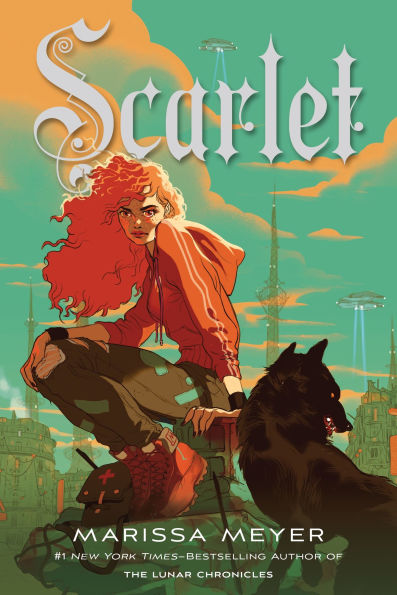
Scarlet, by Marissa Meyer (2013, Macmillan)

Buy this novel–and all the books in its series, The Lunar Chronicles–on Amazon in hard cover, paperback, ebook, and audiobook formats. If you’re a member of Kindle Unlimited, you can read it there free. At Barnes & Noble, Scarlet is available in hard cover, paperback, ebook, and audio formats, and the other books in the Lunar Chronicles as well. In addition, several of the series books (not Scarlet, though) are available in large print editions, and you can listen to the audiobook versions of several of the series books with a Barnes & Noble audiobooks subscription free–again, though, not Scarlet. Apple offers Scarlet and all the other books in the series in ebook and audio formats, and so does Kobo. For more about all these books, visit the author’s web site.

How about that, a sci-fi Red Riding Hood! This novel is set in a dystopian future where humans have settled the moon and then mutated. The moon people, led by their evil queen, want to become humanity’s new overlords. Against this setting, we have a girl with flaming red hair and a temper to match. We have a grandmother. And we have a lot of werewolf-type large buff guys. As with most of the books I’ve reviewed this week, the story may have been inspired by the Red Riding Hood folk tale, but there the resemblance ends. I keep being astonished, though, at how many of these Riding Hood retellings feature werewolves–and astonished, as I’ve said, to learn that werewolves really are part of the deep folkloric background of the tale.

Like Red Rider, the Ellison novel I reviewed on day one of Valentine Week, Meyer’s novel is set in the future, a dystopian future where werewolves play an evil role in turning the earth into a hellhole. Unlike Ellison’s novel, where the vibe is pretty much fantasy, the vibe in Meyer’s book is unmistakably SF, including all manner of SF gadgetry, including futuristic air cars and futuristic maglev trains. Scarlet is a girl who has had to learn to be tough, because she leads a tough life. When she meets a mysterious man (yep, he’s a prizefighter. . .werewolves and prizefighters. . .this must be a thing), she is drawn to him but also repelled by his strangeness. Her grandmother has been kidnapped, though, and the police are no help, so Scarlet takes help where she can find it–the help of the man named Wolf. Violence and peril ensue.

Here’s what happened when I started reading this novel. It is Book 2 of a series, and I had hoped this book, like other mid-series books, would catch me up about the doings of Book 1 in some handy little paragraph early on. Unlike the Lackey novel I reviewed a few days ago, the individual books of The Lunar Chronicles are not stand-alone novels within a larger framework, but true sequels. I soon discovered that without reading Book 1, Cinder (yep, based on Cinderella), I was at sea. Cinder, the title character of Book 1, plays a major role in this second book, too. After a lot of grumbling, I got Cinder and started all over from the beginning, Book 1, chapter 1, page 1.

I’m glad I did. The story arc of the series unfolds as a nice whole, even though Cinder’s and Scarlet’s stories, based on different fairytale tropes, have some differences. And best of all, there’s no hard cliffhanger ending at the end of Cinder. If you’ve followed this blog, you know how much I hate those. As a result, I had two great reading experiences. If I never continue to Book 3, I’ll still feel very fond of the two books I did read. And I really might continue, because the writing is good, the plot zips along, and the characters are fun. I really like Cinder and Scarlet. They are kind of anti-Disney anti-princesses. (That’s a GOOD thing.) Enjoy these books! If you do read Scarlet, though, I recommend you read Cinder first.

NEXT UP: As Valentine Week ends, I’ll do a quick mini-review of For the Wolf, by Hannah Whitten, and give you a link to my full review of a few year’s ago. I’ll also mention a whole treasure-chest of other Red Riding Hood experiences, some in book form, some not.