Valentine Week, Day Five: Fairytale Fantasy

This year, DANCE your way to Valentine’s Day! Novels based on fairytales and folktales featuring dance.

In preceding years (you can find all the posts archived on my blog, btw–just look for February!), I have posted novels based on worldwide fairytales and folk tales, and on two “literary” fairytales (Cinderella and Rapunzel). This year, I’m featuring a whole week of novels based on fairytales and folktales involving dance. Here are the posts:

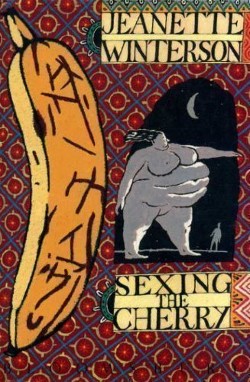
Day Six: Sexing the Cherry, by Jeanette Winterson–a final choice based on “The Twelve Dancing Princesses,” but be warned–it’s nothing like the others.

Day Seven: A wrap-up and a special exploration of the “dance mania” of the medieval period, plus a free download.

TODAY, a review of Dark Breaks the Dawn, by Sara B. Larson

Dark Breaks the Dawn fantasy novel
Find this novel in the iBooks store (just called Books on your ios device), or at the web site of the publisher, Scholastic, or at other ebook and bricks and mortar booksellers.

Dark Breaks the Dawn (2017), by Sara B. Larson, published by Scholastic, is another YA novel based on a dance theme, in this case the ballet Swan Lake. Evelayne, princess of Éadrolan, has already lost one parent, her father, to the war that rages between the two kinds of Draíolon who inhabit the divided land of Lachalonia. Early in the book (so early I’m not going to say spoiler alert!), she loses her mother the queen, too, catapulting her to the throne when everyone regards her as too young and untested and untrained to face the warlike rival kingdom of Dorjhalon. Within Lacholonia, there are two kingdoms, the Light (Éadrolan, home of the light Draíolon) and the Dark (Dorjhalon, home of the dark Draíolon). Time out of mind, the two kingdoms have worked together to keep the balance of the land–summer and winter, day and night–until the dastardly king of Dorjhalon decided to grab all the power for himself. The story of the novel is Evelayne’s coming-of-age, coming into her own as queen and warrior, and also of her awakening love for the lovely, barky Lord Tanvir. As she fights to avenge her parents and save her land, she needs cunning, might, and ingenuity. She also needs to learn how to wield her special royal powers, accessed through a gemstone embedded in her body, as well as through shape-shifting into a ritually chosen creature–in Evelayne’s case, a swan. The twist at the end poses a dilemma: Evelayne’s very strengths might prove her undoing.

First of all, as in years gone by, I should mention what I mean by “fairytale.” No fairies are necessarily involved. The term has evolved to refer to a particular magical type of folk tale that may involve fairies, princesses, and the like, but may not. (A subgenre of fantasy, involving the fae, is an entirely different matter). And sometimes, what readers have come to know as “fairytales” aren’t any such thing–not folklore, passed down anonymously through the generations and centuries, often by word of mouth, but literary creations by artists hoping to mimic the fairytale aura. I should also mention that my blog posts on this subject won’t refer to anything Disney, except in passing. The Disney take on fairytales occurs in a whole world of its own, it has its faithful fans, and I don’t intrude there.

Take a look at the ballet.

Except for the swan transformation, nothing of the plot of Tchaikovsky’s ballet features in Larson’s novel, and there’s absolutely no dancing. That left me scratching my head. Is the Swan Lake connection really just a marketing device? Yet Larson thanks a ballet studio owner in the novel’s dedication, so I guess we can say she is inspired by the Swan Lake story, even though she doesn’t overtly use much of it. Tchaikovsky had an affinity for fairytale subjects, so it’s no wonder that so many fantasy novelists have been charmed into using his work, in whatever way they choose to use it.

Of all the fantasy novels I’ve reviewed in this series of blog posts, Larson’s book is the most typical of the genre, especially for the YA readership. There’s the obligatory map at the beginning of the book. A good fantasy book has to have a map at the beginning, am I right? There are warriors wielding medieval weapons like swords and bows, and–this being fantasy, not historical fiction–magic spells. There are important battles. There are magical and/or enchanted creatures. There are tongue-twisty elvenish names. There’s a realm that does not exist in the ordinary world, and the idea of a Chosen One whose destiny is to save that realm. There are extremes of good and evil (or light and dark, in this case). In YA fantasy especially, there’s the spunky heroine, and her need to sort out her ambiguous feelings for a young man (or men). And in the subgenre of shifter fantasy, there’s some type of shift between human and beast-form. Larson’s fantasy novel sports all of these familiar tropes. I should also mention that this particular novel fits into the “high” or “epic” fantasy type, the “sword and sorcery” type (frequently seen together), and–with the shifter trope–dips a toe–just a toe–into paranormal romance.

What I liked: The writing, and the deft handling of the plot.

What I didn’t like as much: All those torturous names. And too many of them begin with the letter D! I kept having to flip back to earlier parts of the book, especially in the beginning, to make sure I knew who was who and what was what. I think this is really a legacy of Tolkien. Now, ever after, high fantasy books have to have these impossible names for everything and everyone. But remember that Tolkien, a trained philologist, thought up a hypothetical language (a hobby he had practiced for years), and then used that language to shape his novels, not the other way around. So the strange names emerge organically in Tolkien. I do think that naming is an important part of world-building, though, and I see how the author uses place names and names of people to further her world-building, which I mostly admire.

One aspect of this book I REALLY appreciated: There’s a twist at the end, but it’s no cheap-shot O. Henry-esque ending. The twist is earned. It grows naturally out of the story.

And a deal-breaker: In another book I’ve blogged about in this series, I admired the way the novel, a first book of a series, did not leave us hanging. There was no cliff-hanger. In this book, there is. Is there ever. We drop right off it. To me, this is a truth-in-advertising matter. I purchased a book, not a part of a book. A story, not a part of a story. If I’d wanted to pay for part of a story, I would have. If I’d wanted to live in the world of Dickens, spinning out his novels endlessly as newspaper serials, I would have time-traveled back there. Sure, if the book is one volume of a series, there might be loose threads and tantalizing hints at the end. (Or if you are especially skillful, and signal far enough ahead that you’re going to do it, you might be able to get away with it–witness Patrick Rothfuss’s The Name of the Wind. On the other hand, that commits you to going on. Witness the anger of his fans when he can’t seem to do that.) (Ugh, a parenthesis after a parenthesis, but–I’m not one of those angry fans. I’ll take whatever he can give us.) (And even The Name of the Wind ends with a pretty satisfying conclusion in spite of our knowing it’s just Day One of a three-day recounting of the hero’s adventures.) Larson’s book, though. It just. Stops. I can’t abide that. I will not read on.

Other readers may very well disagree. Some readers may like cliffhangers. I can’t imagine why. There are some interesting stories about cliffhangers, by the way. Tolkien famously sent The Lord of the Rings to his publisher as one enormously fat volume. The publishers figured it would never sell, so they arbitrarily chopped the book into three separate volumes to sell separately. That’s why the first two books stop so suddenly. The publishers didn’t think the three books would sell, even presented more neatly bite-sized. Were they surprised.

By contrast, T. H. White didn’t want The Once and Future King to be one enormously fat volume. He wanted three separate books. His publisher jammed them together. Go figure.

Two personal notes: I have a lot of sympathy for this writer in spite of my antipathy for cliffhangers. I write series of fantasy novels myself, and I always struggle about how to end them. Another cause for sympathy, and a little bit of trepidation: I’m writing my own swan story, nearly finished, so when I began reading this book, I got nervous I’d somehow inhale it and inadvertently copy some of it. Mine is different enough that I’m not nervous now. Mine is (VERY LOOSELY) based on the Children of Lir Irish legend, not on Swan Lake, and while I have transforming swans in mine too, they don’t transform in the same way or for the same reason as Larson’s swan does. Whew. The perils of the writing life. Oh, also–Larson has lots of readers, and I have few. So there’s that.

My experience buying this book:

I read this book through the iBook app on my iPad (actually called simply Book). Getting the book was absolutely a no-brainer, and the navigation and special features are great. I find reading ebooks this way to be a very satisfying experience. Purchasing through Amazon’s Kindle is just as easy, although not through its app, wherever you have installed it–tablet, desktop, phone, etc. Apple has arranged for its own e-reading app to be easy for users of its devices, and has made other e-reading experiences more difficult. I don’t like that. I guess, to Apple, it’s just business. But whatever, the iBook e-reading experience is great.

Valentine Week, Day Four: Fairytale Fantasy

This year, DANCE your way to Valentine’s Day! Novels based on fairytales and folktales featuring dance.

In preceding years (you can find all the posts archived on my blog, btw–just look for February!), I have posted novels based on worldwide fairytales and folk tales, and on two “literary” fairytales (Cinderella and Rapunzel). This year, I’m featuring a whole week of novels based on fairytales and folktales involving dance. Here are the posts:

Day Five: Dark Breaks the Dawn, by Sara B. Larson–a novel based on the fairytale ballet Swan Lake.

Day Six: Sexing the Cherry, by Jeanette Winterson–a final choice based on “The Twelve Dancing Princesses,” but be warned–it’s nothing like the others.

Day Seven: A wrap-up and a special exploration of the “dance mania” of the medieval period, plus a free download.

TODAY, a review of House of Salt and Sorrows, by Erin A. Craig

Find at Barnes & Noble, or at any ebook seller, or at bricks and mortar book stores.

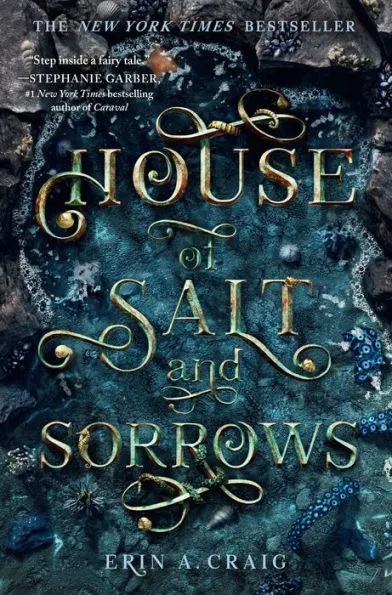
House of Salt and Sorrows (2019), by Erin A. Craig, published by Delacorte Press (an imprint of Penguin Random House), amusingly described by a review in the Wall Street Journal as a tale of “a Grimm sea.” Craig’s novel is a YA horror/gothic-tinged take on “The Twelve Dancing Princesses.” Twelve sisters have seemingly been cursed as they die off one at a time. The protagonist of the story, sister #6, Annaleigh, tells the tale in the first person, a typical YA tactic. Her four eldest sisters are dead, each in a different grisly way. Ava, dead of plague. Octavia, fallen off a ladder. Elizabeth, drowned in a bathtub. Eulalie, plunged from a cliff into the rough seas surrounding the sisters’ island home. (I know, I know. . .it sounds straight out of Edward Gorey’s Gashlycrumb Tinies: “A is for Amy who fell down the stairs;/B is for Basil assaulted by bears. . .”) Because of the supposed curse, everyone now shies away from the sisters, even the new eldest, Camille, who will inherit her father’s riches. But Annaleigh suspects murder instead. This novel serves up generous lashings of gothic horror, mystery, an ingenious invented mythology, and YA tropes like the spunky girl torn between two equally attractive boyfriends, while stirring in the fairytale magic of “The Twelve Dancing Princesses.” The distraught surviving sisters relieve their stress and grief by heading into a mysterious magic passageway for nights of forbidden dancing. Meanwhile Annaleigh confronts red herring after red herring (definite sea thing going on here in my post) as she drives toward a solution to the mystery.

First of all, as in years gone by, I should mention what I mean by “fairytale.” No fairies are necessarily involved. The term has evolved to refer to a particular magical type of folk tale that may involve fairies, princesses, and the like, but may not. (A subgenre of fantasy, involving the fae, is an entirely different matter). And sometimes, what readers have come to know as “fairytales” aren’t any such thing–not folklore, passed down anonymously through the generations and centuries, often by word of mouth, but literary creations by artists hoping to mimic the fairytale aura. I should also mention that my blog posts on this subject won’t refer to anything Disney, except in passing. The Disney take on fairytales occurs in a whole world of its own, it has its faithful fans, and I don’t intrude there.

This is a wonderful YA fantasy novel with characters to love and root for, good writing, an ingenious mythological/magic system, and then, on top of all that, horror and mystery. If you like your YA completely sweet, though, the horror might put you off. It gets intense.

I did think, however, that the “Twelve Dancing Princesses” stuff felt a bit tacked on. Was the dancing stuff really necessary to make this plot work? I get the twelve sisters dying off one by one part, and the sinister man Annaleigh meets at the magical ball. I got a bit weary of it all, I must confess, but reader! I am old! I am not the audience for YA. So young readers may love every little bit.

One aspect of this book I REALLY appreciated: it’s part of a two-book series, Sisters of the Salt, yet there is no cliffhanger ending at the conclusion of this novel, book one in the series. If you don’t plan to go on with the series, you’ll still get a satisfying reading experience. If you do go on to the next one, House of Roots and Ruin, about the youngest sister, Verity, I’m not sure how much depends on your having read book one. I doubt I’ll read it myself, but I am sure many YA readers and readers who love YA will rush to purchase it. Go for it!

The horror! The horror! I can imagine some young teens, or maybe even older readers, might get freaked out by the horror and the description of violent, grisly deaths. If this is you: be warned.

My experience buying this book:

I read this book through the Barnes & Noble app on my iPad. Getting the book, for me, was difficult enough that if I hadn’t been committed to reading on different ebook platforms, I might have given up and gone to an easier way to purchase, like Amazon’s Kindle, or even One-Click from their web site, or of course–since I’m using an iPad, Apple’s seamless iBook app. I’m sure if I had a Nook, Barnes & Noble’s dedicated reading device, buying the book there would have been just as easy as buying on my Kindle. As it was, needing to buy from the Barnes & Noble web site put one more difficulty between me and my addiction (books!). The main problem is not with Barnes & Noble. As I’ve mentioned before in this blog series, it’s a problem Apple created when it ensured that only its own iBooks store could process ebook sales directly in-app. That said–the Barnes & Noble purchase felt unnecessarily complicated. (By contrast, the Kobo process was a breeze, and the Amazon process is practically a no-brainer.) I think it took me five or six tries before I finally purchased the book on the Barnes & Noble site. That’s enough to drive an e-reading reader batty–and away. Once I did have the novel on my app, though, reading it there was a very satisfying experience–lots of intuitive tools and easy navigation.

Two great solutions. Let’s hear them again!

  • Buy a paperback or hardback copy from your local independent bookstore! (oh, all right, from a chain big box bookstore, I guess, if you just have to.) I myself am hooked on the convenience of ebooks, but you don’t have to be.
  • GET THE BOOK FROM YOUR LIBRARY. You may be able to find it there in paperback/hard cover, but in the U.S., your public library is full of free-to-read ebooks, and librarians are great at finding it for you in ebook form if you can’t find it yourself. I’m not sure about library policies in other parts of the world, though. Let’s hear it for librarians, unfairly embattled in these hard times. Who knew anyone would take out after librarians, of all selfless people? It’s like picking the wings off butterflies. Really beautiful ones, too.

Valentine Week, Day Three: Fairytale Fantasy

This year, DANCE your way to Valentine’s Day! Novels based on fairytales and folktales featuring dance.

In preceding years (you can find all the posts archived on my blog, btw–just look for February!), I have posted novels based on worldwide fairytales and folk tales, and on two “literary” fairytales (Cinderella and Rapunzel). This year, I’m featuring a whole week of novels based on fairytales and folktales involving dance. Here are the posts:

Day Four: House of Salt and Sorrows, by Erin A. Craig–another novel based on “The Twelve Dancing Princesses.”

Day Five: Dark Breaks the Dawn, by Sara B. Larson–a novel based on the fairytale ballet Swan Lake.

Day Six: Sexing the Cherry, by Jeanette Winterson–a final choice based on “The Twelve Dancing Princesses,” but be warned–it’s nothing like the others.

Day Seven: A wrap-up and a special exploration of the “dance mania” of the medieval period, plus a free download.

TODAY, a review of Jonathan Strange & Mr. Norrell, by Susanna Clarke

Jonathan Strange and Mr. Norrell, alternate history novel
Find it at Amazon.com and at other ebook sellers and bricks and motar booksellers

Jonathan Strange & Mr. Norrell, by Susanna Clarke (published in 2006 by Bloomsbury) is a massive novel set in an alternate-history version of Napoleonic England. It is fascinating, amazing, a work of genius, and a tour-de-force (in that her tone matches perfectly the writers of the day–Jane Austen, et al.). I am daunted thinking about trying to describe it in a single post, but I am focusing on one part of the novel, so that makes my task a bit easier.

The novel describes the relationship between two magicians dedicated to bringing magic back to England, where it has been long neglected. Mr. Norrell, the older established magician, is bent on hewing to exacting traditional standards, while Jonathan Strange, the younger magician, chafes under Norrell’s restrictions. Eventually, their magic plays a major role in the British effort to defeat Napoleon, but it takes a terrible toll on both men.

This novel won both the Locus and Hugo Awards for 2005. Clarke followed its success with Piranesi (2020) another highly lauded novel. It’s much shorter, too. Her struggle with chronic fatigue syndrome has affected her ability to write a sequel to Jonathan Strange. Read more about her life and career here.

The subplot, my focus for the purpose of this blog, involves Strange’s attempt to help his wife, who has been enchanted by “the gentleman with thistledown hair,” a fae who entraps her in Faeryland through a magic mirror and forces her to dance away her life. Fairly early in the novel, the gentleman with the thistledown hair (GWTH) meets Stephen the servant (major character in the novel) and whisks him away to a ball in the GWTH’s country house–more or less his fairy kingdom–called Lost-Hope. There Stephen spots Lady Pole, a noblewoman brought back to life by Mr. Norrell, who manages this by making a bargain with the GWTH. The bargain is that the GWTH will restore half the lady’s life–meaning, Mr. Norrell thinks, that she’ll just die younger than she would have. That seems like a good bargain to him; he wants to impress her influential husband with the power of his magic by assuaging the husband’s grief and bringing his dead lady back to life. Mr. Norrell thinks his service to such a powerful family will help his cause: to make magic respectable again. But with typical faerie trickery, the GWTH creates a very different fate for Lady Pole. She’ll spend the waking half of her life with her husband but the sleeping half with the fae, dancing all night at the Lost-Hope balls. Much later in the novel, Jonathan Strange’s wife, Arabella, befriends Mrs. Pole and becomes enchanted herself, leading to the novel’s conclusion.

Recapping what I mean by “fairytale”: No fairies are necessarily involved. The term has evolved to refer to a particular magical type of folk tale that may involve fairies, princesses, and the like, but may not. (A subgenre of fantasy, involving the fae, is an entirely different matter). And sometimes, what readers have come to know as “fairytales” aren’t any such thing–not folklore, passed down anonymously through the generations and centuries, often by word of mouth, but literary creations by artists hoping to mimic the fairytale aura. I should also mention that my blog posts on this subject won’t refer to anything Disney, except in passing. The Disney take on fairytales occurs in a whole world of its own, it has its faithful fans, and I don’t intrude there.

This post is too brief to go into detail, especially about such a massive book, but fairy lore is full of the enchantments cast through dancing, the folklore basis for this part of Clarke’s novel. If a mortal is enticed to dance in a fairy circle, the fairies typically take possession. Mortals who manage to get away typically find that an experience they thought might be minutes or hours long has lasted centuries instead. Another associated folkloric element of the subplot is the mirror as portal from the world of humans and rationality into the fae world of magic. I hope you see the many similarities with the folkloric elements in fairytales like “The Twelve Dancing Princesses.”

This novel is superb. It is sprawling, too; the dance elements are just one part of the tremendous whole. The fae lure into a magic realm of dangerous dancing is a major trope and handled masterfully here. I’ll spend my last post in this series discussing a related issue, the “dance plagues” of the Middle Ages, where dancing was seen as a literal ensnarement of the devil. In Clarke’s novel, the fae inhabit a land that is not quite hell, but it’s certainly hell-adjacent, and the dancers inhabit a kind of hell. Clarke is a wonderful writer. Don’t be put off by how long this novel is, if you are the kind of reader who might be. Just dive in for one of the great reading pleasures of our era.

Side note: The novel was made into a BBC mini-series. I’m not the kind of person who thinks the book is always superior to the movie–I like to think, How good is this book AS a book? And then, How good is this movie (or tv series, or whatever) AS a movie? Sometimes the movie is better. In this case, though, the book hands-down wins, because it is just so brilliant. The series is fun to watch, though.