The Nebula Awards, sponsored by the Science Fiction and Fantasy Writers Association, have announced their short-list of nominated speculative fiction published in 2024. The short-listed books nominated for best novel are:
REVIEWED IN MY LAST TWO POSTS:
- Sleeping Worlds Have No Memory, Yaroslav Barsukov (Caezik SF & Fantasy)
- Rakesfall, Vajra Chandrasekera (Tordotcom; Solaris UK)
- Asunder, Kerstin Hall (Tordotcom)
- A Sorceress Comes to Call, T. Kingfisher (Tor; Titan UK)
REVIEWED IN THIS POST:
- The Book of Love, Kelly Link (Random House; Ad Astra UK)
- Someone You Can Build a Nest In, John Wiswell (DAW; Arcadia UK)
I’m reading the short-listed books in alphabetical order by author, which means I’m coming at them randomly. The two books I’m reviewing in this post, Kelly Link’s The Book of Love and John Wiswell’s Someone You Can Build a Nest In, are two of the most clever and engaging novels I’ve read in some time. Another great pairing–both books are about love in unexpected forms, both are sweet-natured but not Lifetime/Hallmark movie sweet, and both have an interesting and subtle political underside.
The Book of Love, Kelly Link (Random House; Ad Astra UK)
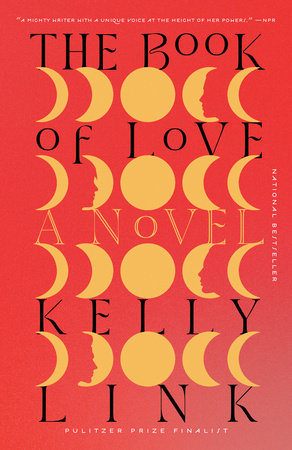
This novel had me at the moment one of the characters knocks on the door of another character RIGHT in the middle of a song she is writing, and she says, “Sit wherever, Person from Porlock.” Oh, wait. As a member (former member? have they kicked me out?) of The Porlock Society, I have to tell you the novel had me far before that moment, because that one happens in roughly the middle of the novel, and there are many fun and clever moments before that. This amazing urban fantasy novel is the story of three high school friends who have died and then suddenly find themselves sucked through a portal back into their old lives. The three, and another one who sneaks through the portal into life with them, have to compete to see which ones get to stay and live their lives, and which ones must return to the land of Death–not to mention solving the mystery of what actually catapulted them into Death’s waiting room in the first place.
I really enjoyed this novel. Considering the age of the main characters, I suppose this is YA? I don’t really know. It uses none of the usual YA tropes, and I (much, MUCH too old for YA) enjoyed it immensely. As the title tells us, this is a book about love–love of all kinds. The characters are wonderful, funny, and real. As I mentioned, the novel is sweet-natured without being saccharine or sappy. That is a true feat of magic if ever I have seen one. Magic saturates this book–old and rotting magic, newly discovered magic, magic refused–and its magic system is very ingenious. Meanwhile, the setting is perfectly realistic small-town America, with a subtle political message. You’ll know it when you see it–the moment when the statues get off their plinths, and even before then. I suppose you could think of The Book of Love as that type of portal fantasy where the fantasy beings make an incursion into the real world, rather than the reverse Harry Potter kind.
The novel perhaps goes on a bit too long, but there are a lot of moving parts and narrative threads to knit up. Besides, who can possibly resist a novel with a character who slaps a sticker on her guitar reading “This Machine Kills Gods”? The writing is really wonderful, too. I’m a sucker for that.
Someone You Can Build a Nest In, John Wiswell (DAW; Arcadia UK)
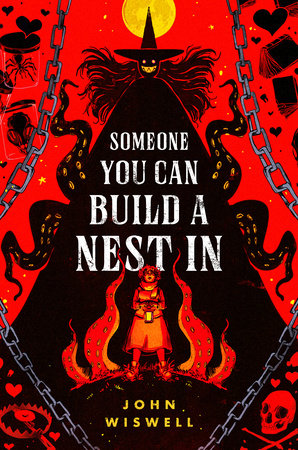
Good lord. ANOTHER sweet-natured book about love that is neither saccharine nor sappy. What are the chances? This one has all the horror trappings you could possibly desire. The main character is a monster out of your worst nightmares. You know what “monster” really means, don’t you? It comes from a Latin word meaning “to show” or “demonstrate,” and another closely-related Latin word meaning “to warn.” Monsters are the uncanny, warning of the disapproval of the gods. They are the malformed, the nightmare Other. When the Roman poet Horace wrote about Cleopatra, he called her “fatale monstrum”–fatal monster, a warning of the unnatural (her unnatural power as a woman, I suppose) and how the unnatural can tear societal norms apart.
What happens when some creature labeled a “monster” encounters love? What happens if that act rebuilds and reshapes societal norms? This novel puts its unique stamp on a fairly common horror trope, the monster who falls in love with a human. It’s much more than that, though. The novel is about Othering and the cost to society for doing so. The toll it takes on empathy and love. The difficulties and joys of found family. Radical transformation.
Reaching that point is complicated for Shesheshen the monster, and in the telling, Wiswell–like Link–scores some very clever political points. Shesheshen thinks nothing of devouring others. It’s how she lives, and now that she is mature, she needs to find a partner she trusts enough to lay her eggs in, “someone to build a nest in.” The eggs will hatch, the young will eat the nourishing, trusted partner, and the life cycle of her kind will go on. So when circumstances bring her in contact with humans as something other than a food source, she finds them endlessly mysterious. There are the rich people, she sees, and then there are the laborers. The rich people live off the efforts of the laborers. “What the laborers got out of it that kept them from eating the rich, Shesheshen didn’t understand. She was a mere monster.” As torch-wielding villagers hunt Shesheshen through the hiding places of their town, she marvels at their lives, especially their “binary system of justice that mostly served the landed,” and how their walls, built to keep the Others out, only keep the villagers in, “trapped with politicians and monsters.” If Shesheshen ever gets a guitar, we know what sticker she will put on it.
I suppose my only real beef with this book is that Shesheshen’s arc of personal growth to overcome Othering, and the arc of her beloved to overcome familial abuse, is too full of the trauma-informed self-help language of contemporary pop psych articles and books. That stuff kind of interfered with my willing suspension of disbelief. But I can see how the novel requires a delicate balance if it is going to work. In spite of that particular misgiving, I enjoyed reading Someone To Build a Nest In very much. It is a wonderful novel.
NEXT UP: I try to pick a winner. Full disclosure: the book I think should win and the book the judges pick is frequently not the same book!
 Fantastes
Pingback: Nebula Awards Coming Up Soon – Fantastes
Pingback: The Nebula Awards are IN! – Fantastes
Pingback: Hugo Awards 2025: Two More Finalists – Fantastes
Pingback: A Word About Awards – Fantastes