Six novels take a serious look at alien communication, part 6: Ursula LeGuin, The Dispossessed

Here’s the last in my series of posts reviewing six SF novels with alien communication as a main plot point:

Cover of first edition of Ursula LeGuin's novel The Dispossessed
Cover of first edition, downloaded from Wikipedia under fair use stipulations. For more about this novel, go HERE.

The Dispossessed, Ursula LeGuin, 1974

LeGuin’s amazing book in her Hainish cycle won the Nebula (1974), Hugo, Locus, and Jupiter (1975) Awards for best novel. It’s the story of a scientist from a utopian anarchist society who attempts to share new important knowledge with a neighboring militaristic society, and at great personal risk. One interesting side-issue in The Dispossessed is the brief explanation of one of LeGuin’s more enigmatic SF inventions: the faster-than-light communication device called the ansible.

It’s easy to take the ansible mention out of context, because The Dispossessed is not essentially about alien communication at all. But I am intrigued by how this device popping up repeatedly in LeGuin’s fiction–and seemingly reverse-engineered in The Dispossesed to create an origin story for it–really might be about a different communication problem entirely. This is why many readers think LeGuin’s work transcends genre, why you might need to take it out of the SF framework. I don’t mean take it out entirely. The SF genre and tropes give LeGuin the means to write about what really moves her–and us, the readers.

Throughout LeGuin’s Hainish cycle of novels, the ansible has allowed people to communicate instantaneously across stars and galaxies. The online Historical Dictionary of Science Fiction details where you can find these references in LeGuin’s fiction. Similar to the way Isaac Asimov’s invented word robot was taken up by other writers, a number of writers of SF have appropriated LeGuin’s ansible, as the dictionary entry shows. Unlike robot, ansible did not go on to become a household word. While robots are feasible, more and more so as the years roll on, faster-than-light communication is not.

Or is it? On the face of it, the ansible is a space opera-type solution similar to the one in Cinxin Liu’s The Three-Body Problem (see the preceding post). Neither is a physically possible or plausible technology, although perhaps Liu’s quantum entanglement explanation for his sophons might make it seem more so. (HERE is an argument counter to mine.)

In LeGuin’s fiction, the reader simply accepts the ansible as part of the world-building. Why do I accept such a device–or, well, “willingly suspend my disbelief” about it–in LeGuin’s novels but not in Liu’s? LeGuin’s brilliant writing and her insights into the way culture shapes communication overwhelm any skepticism I might have about an “ansible.” I don’t get sucked into the author’s vision in The Three-Body Problem as powerfully. AND YET: what we will swallow in the name of fiction varies depending on who is doing the reading, maybe more than who is doing the writing. So it may simply come down to a matter of taste that I sail right past the ansible but not the Trisolarans and their sophons.

In The Dispossessed, LeGuin suggests an origin for the ansible in the theories of her main character, a scientist. The word ansible itself doesn’t have any scientific basis. LeGuin supposedly said she had been trying to make up a term suggesting “answerable.” As The Dispossessed begins, her scientist character Shrevek is about to leave his isolated utopian anarchist home on the moon Anarres. He will travel to the moon’s planet, Urras, where he hopes to share his new theoretical understanding with a wider audience. Shrevek is motivated by the benevolent wish to do good to all humanity. As a young man, he wrote a paper on a topic known as Relative Frequency, which got him the attention of senior scientists on the moon world–but also got his work quietly suppressed. Now what LeGuin calls his General Temporal Theory is highly sought after on Urras. Beyond a fun shout-out to Einstein, LeGuin doesn’t go into detail about these theories.

Scientists on Urras flatteringly encourage Shrevek to defect to their planet, where he can be properly appreciated. Shrevek doesn’t fall for the flattery, but he does see an opportunity to disseminate his theory. Once he gets to Urras, however, he gradually realizes how deeply he is being used; that the warring powers on Urras hope to misappropriate his discovery to dominate their world and beyond. He doesn’t even write his theory down, keeping it all in his head. Otherwise, as one of the faction leaders warns him about a rival faction, “They’d have it.” And, presumably, use it for warlike ends. Trapped in this nest of rival conspirators, Shrevek has to decide how to keep his integrity intact, and his theory safe.

Among the applications of Shrevek’s theory is the faster-than-light ansible, which has made its appearance without much explanation in a number of LeGuin’s earlier Hainish novels.

I really love this book. I don’t think it answers any questions about alien communication, not really. The ansible remains a space opera device; Shrevek’s General Temporal Theory is never really described. It remains a MacGuffin, a fictional device without any inherent meaning of its own except to drive the plot. What are we to make of it, then? Why is it in the novel, and did LeGuin really mean for it to form the underpinning for her ansible communication device?

I think Shrevek’s theory should be understood more as a symbol than either an exploration of a real theory, on the one hand, or a convenient space opera trope, on the other. Here in LeGuin’s self-described “ambiguous utopia,” Shrevek’s discovery holds infinite promise for good yet is inevitably in danger of becoming corrupted, held hostage to the worst elements of human nature. Perhaps we can see Shrevek’s theory as a stand-in for the potential that inheres in our nature and keeps struggling to emerge, even while other forces attempt to buy it or destroy it.

Perhaps we readers are asked to see Shrevek’s divided planetary system as a stage to play out humanity’s age-old dilemma. The ending of the novel asks that question, I think, and the jury is out: how we will answer it and whether in our answer we will end up thriving or destroying ourselves. The communication issue is our own, the conversation we are continually holding inside ourselves and in the larger society, not some alien out-there consciousness. What is right? What is the good? And do we strive to serve the good, or our own base grasping after power and possessions? The Dispossessed is a novel of and for our times.

With that to mull over, here’s the next. . .

Speculative Fiction Advent Calendar of quotes. Quotation for Day Five, Dec. 5, 2025:

A holiday gift for you

While I am mulling over my third review of novels about alien communication, I have realized today is the start of a festive season. So here is:

A speculative fiction advent calendar of quotes: DAY ONE

What is it about Advent calendars that thrills us so? I am not talking about the religious aspect, not at all. Like Christmas in general, the secular world has seized on the Advent calendar and turned it into a really fun version of the count-down calendar.

I suppose you’ve seen something like this:

digital countdown calendar

You can find online ones, too, like (WARNING. . .WARNING. . . incoming political bias. . .) this one .

And what about fun objects like these? You don’t have to be a child to want to open all those enticing little doors.

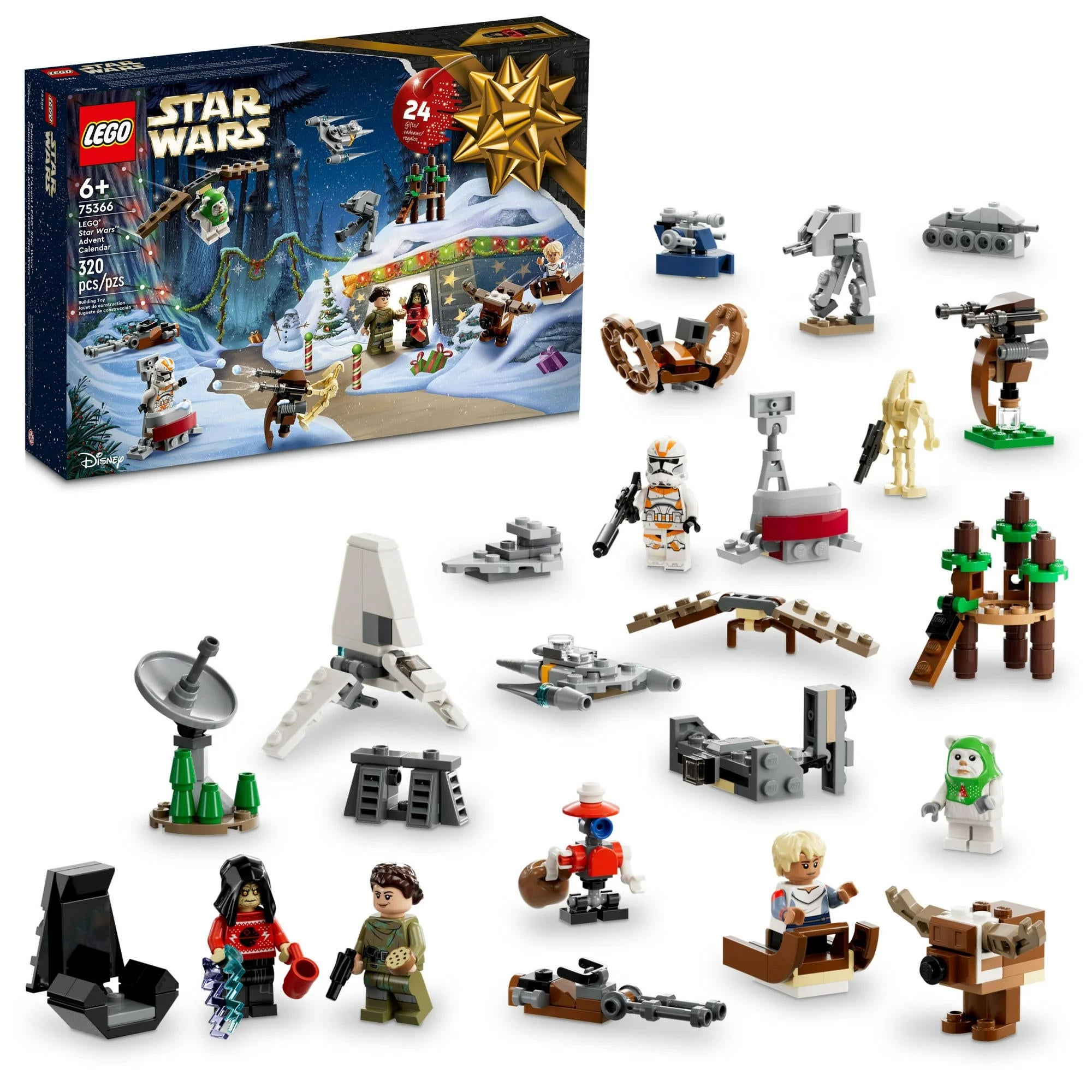
Lego Star Wars Advent calendar
See it HERE. Sadly, it is out of stock, but I nabbed one early for. . .

. . .a boy of my acquaintance. Who has just opened the first little door.

Or this one, for grown-ups:

Lush products Advent calendar
Find it HERE.

I’m partial to this one. Tiny books!

Advent calendar with mini-books
Find it HERE.

By the way–I get no revenue, advertising, referral, anything, from those links.

Advent calendars are fun! So. . . my holiday gift to you, whichever holiday you celebrate, whenever it happens to occur, or just because Happy Winter (yikes! those of you Down Under, sorry, sorry, Happy Summer): an advent calendar of great quotations from great speculative fiction, Dec. 1-Dec. 25, 2005.

HERE’S THE FIRST: DECEMBER 1, 2025

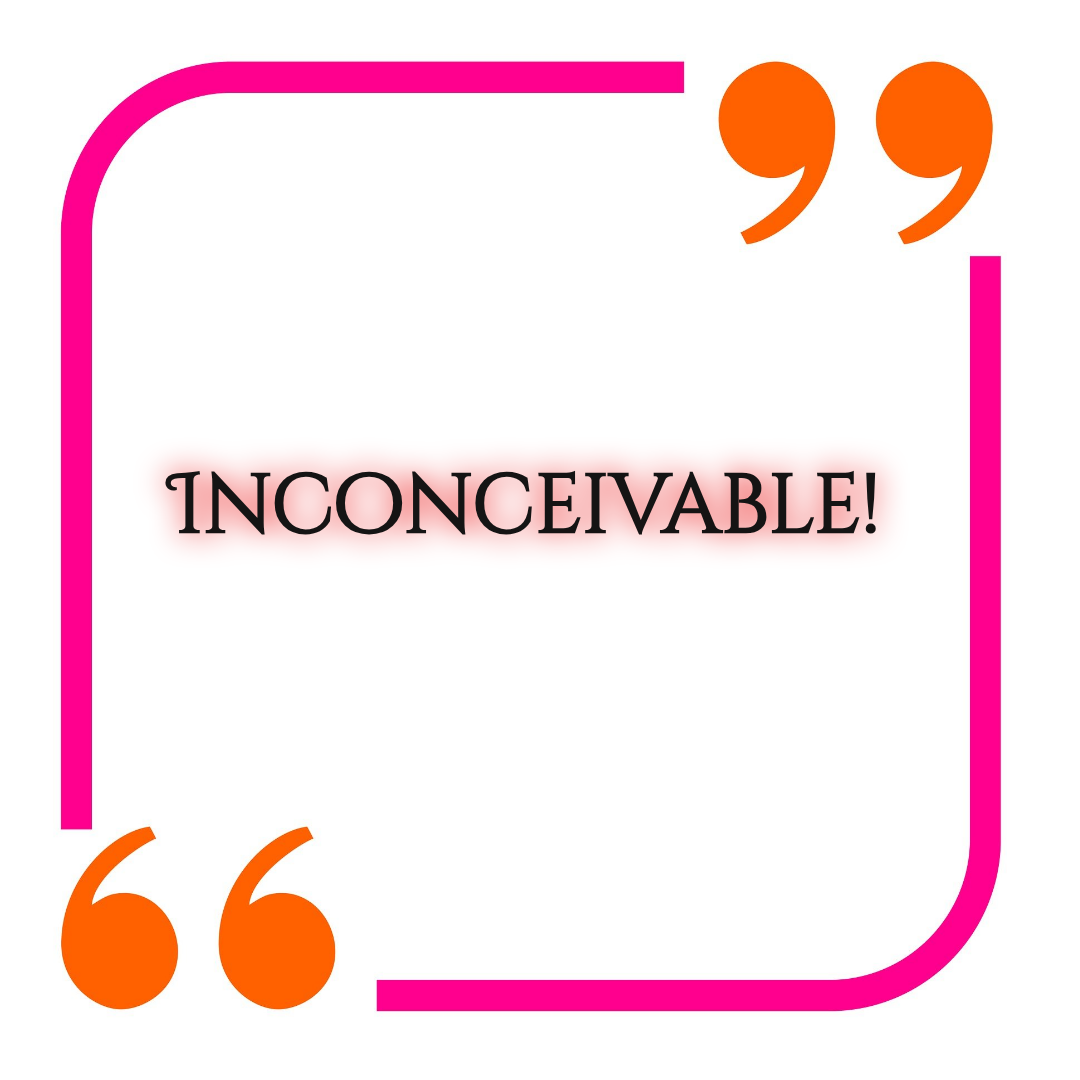
Quotation from "The Princess Bride" by William Goldman: "Inconceivable!"

The movie is INCONCEIVABLY fun! And so is the novel. Please read it if you’ve only watched the movie. Please read if you haven’t watched the movie. Please watch the movie if you. . .etc. (It’s inconceivable to me that no one has NOT watched it.) William Goldman wrote the novel in 1973, and also the screenplay for the wonderful 1987 film directed by Rob Reiner. Inconceivably talented!

cover of "The Princess Bride" by William Goldman
Get it HERE.

Quick note about the link above: I have directed you to the Bookshop.org site in hopes you will discover this amazing source of book buying splendor. The book is available through many other outlets, of course, and I urge you FIRST to 1. try your local indie bookstore OR 2. get it at your local public library (if you are a U.S.-based reader). But the great thing about Bookshop.org is that, if you need to buy a physical book online, your purchase helps the indie bookstore of your choice. And if you’re buying an ebook–it benefits that store too! A win-win if there ever was one.

However, I also noticed in previewing this post that my local indie bookstore in Albuquerque is listed as the beneficiary in the link. I’m not sure that’s what you’ll see when you open the link yourself, but if you do, you’ll have to change to an indie bookstore of your own choice. Or go ahead and keep it benefiting Page 1 Books in Albuquerque–a great little bookstore! Visit it if you’re in the area. There are other great bookstores in Albuquerque! Don’t hurt me, Bookworks! I love you too. Page 1 is closer to me as I drive down out of the mountains. (Again: I get no advertising revenue at all from this site. Any errors are mine alone, of course, but DISCLAIMER I take no responsibility for the quality of your shopping experience or any product you buy should you choose to, you know, shop.)

Coming next: I promise, my delayed review of Ray Nayler’s The Mountain in the Sea. And another quotation!

Indie-published Fantasy and SF: How to Find It

Thanks to Alice from Pixabay for this fun royalty-free illustration.

In my last post, I wondered about the big speculative fiction awards and what it means that their “best novel” awards tilt so heavily to those sold by established publishing companies. Some of the short-listed novels this year were indie-published, though–that is, they were published by very small presses or by the author herself.

In the past, indie-published novels–and especially self-published novels–were sneered at. A writer who self-published a novel would be pitied or scorned as a victim of vanity publishing–taken advantage of by predatory “publishing” companies that printed a book cheaply, charged a fortune to the naive writer, forced the writer to buy a lot of copies, and dumped them on her with no editorial or marketing services.

Scams of this type still exist, along with many other scammy, scummy publishing practices. Have you ever thought of writing your own fantasy or SF? Make sure you get to know this well-respected site that helps writers avoid traps for the unwary: Writer Beware, an invaluable service to writers everywhere, sponsored by the Science Fiction and Fantasy Writers Association.

But in the past few decades, many writers have escaped the bounds of traditional publishing. This trend comes as traditional publishing companies have increasingly fallen under the control of conglomerates whose main focus is not books; as these conglomerates have consolidated so that now there are only four or five big traditional publishers, with a corresponding shrinkage of their lists; as the conglomerates have focused increasingly on safe bets like known writers, or writers with big existing platforms (huge numbers of social media followers, for example), and celebrity writers; as the conglomerates have increasingly cut their marketing budgets for all but a few superstar performers. It’s pretty similar to what has happened in the recording industry. As a result, a lot of writers have struck out on their own, with mixed results for most. If the writer is not adept at marketing, her work tends to go unnoticed by readers. And every writer could use an editor! (Well, maybe not Shakespeare. His admirers enthused, “Shakespeare never blotted a line!” To which his colleague Ben Jonson snidely remarked, “Would he had blotted a thousand”–I guess Ben thought even the immortal Will could have used an editor.) All of the tasks of marketing and vetting fall to the writer herself, and that does not work out well for many. On the other hand, many indie-published writers do well, to the great benefit of readers.

FOR YOU, the READER–how do you discover indie-published books you’d like to read? There are ways to do that. Here are just a few speculative fiction indie-published resources:

Blogs by book lovers–a great resource! Here’s a list of one blogger’s top ten indie faves in 2024. Here’s another blogger’s take. And another, this one focusing on fantasy. I should publish my own list!

Commercial sites for book-lovers publish lists of this type. For example, the Amazon-owned site Goodreads publishes this one for SF readers.

Booksellers themselves: My new favorite bookseller platform, Bookshop.org, publishes lists like this, and other sites do as well (Amazon, Barnes&Noble, etc.)

Your friendly librarian. I can’t stress this enough. Librarians know their stuff, and they are trained to find stuff out.

This blog presents a useful list of small presses that publish speculative fiction.

Big review sites like Kirkus Reviews publish lists of indie fantasy and SF. Here’s one.

There are sites helping indie authors promote their books, such as this one for SF.

Finally: more DYI attempts within a short timeframe, such as this SF and fantasy book sale happening right now. Full disclosure, shameless self-promotion: I’m in this one! So are a lot of other people, though, so take a look.