The Arthur C. Clarke Awards short list, continued

The novels short-listed for this major speculative fiction award include:

  • Annie Bot, Sierra Greer WINNER
  • Private Rites, Julia Armfield
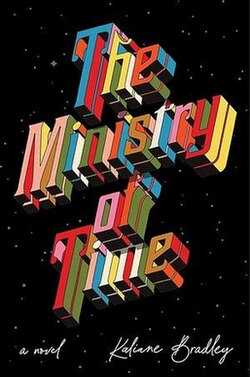
  • The Ministry of Time, Kaliane Bradley
  • Extremophile, Ian Green–reviewed in this post
  • Service Model, Adrian Tchaikovsky
  • Thirteen Ways to Kill Lulabelle Rock, Maud Woolf–reviewed in this post

In my last post, I reviewed the novels by Armfield and Bradley. This post reviews the novels by Green and Woolf.

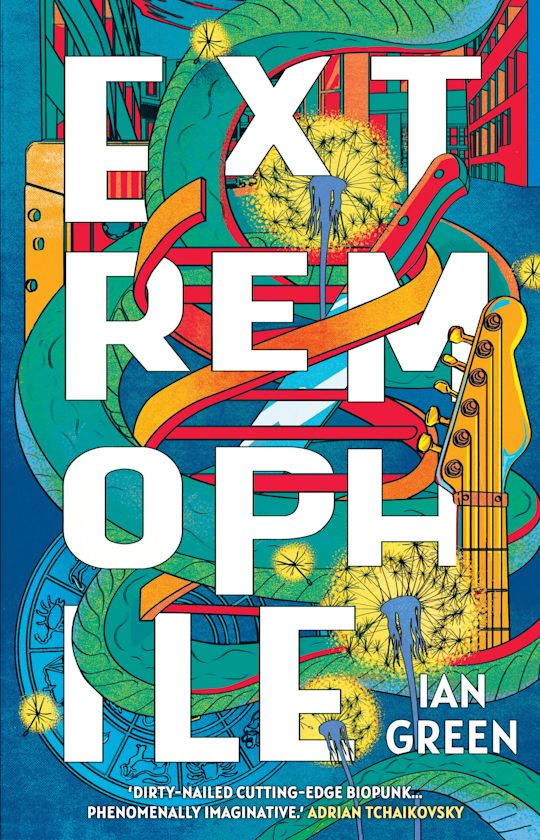
Extremophile, Ian Green (2024, Head of Zeus/Bloomsbury)
Find out more HERE. Get it HERE.

What an amazing novel. Disclaimer: I’m probably not the target audience for it–I had to look up stuff in order to read Extremophile, all the way from slang stuff like ACAB and “jilling” to science stuff like “clathrate gun.” If you know what either the slang stuff, the science stuff, or both mean without looking them up, get this book RIGHT NOW and read it. If you do have to look them up, get this book RIGHT NOW. . .etc. I started out thinking, well, if A Clockwork Orange and Snowcrash had had a baby. . . But that’s not it. That kind of pigeon-holing (talk about old slang) does this novel a huge disservice. In the end, I was thinking more about Orxy and Crake, but the book is an original.

Green has written an ingenious dystopian novel of bioterrorism, climate collapse, the punk scene of the future, and the destruction of civilization as we know it. In a London sometime after a 2038 worldwide mega-pandemic, the disaffected main character of the novel divides the world into Green, Blue, and Black. “The Greens want to save the world,” Charlie tells us, in a spectrum stretching from making your own toothpaste to the most violent acts of terrorism. The Blues don’t care about anything but profiting off the corpse of a dying world, and if that means killing or destroying or perversely toying with anyone or anything in their path, they do not flinch. The Blacks, though, have given up hope.

The three main characters are musicians with their own up-and-coming punk band, and the narrator, Charlie, is also a gifted bio-hacker much in demand for all sorts of shady projects. Charlie has a dangerous past–a mentor savagely killed by a mysterious chemical process that the novel gradually unfolds to us. Charlie’s world, inside and out, is broken, and we readers probably don’t like the chances that Charlie is going to come out of this plot intact.

Sound bleak? Not so fast. This novel is laugh-out-loud clever. In my last post, I mentioned “Chekhov’s gun,” and this novel plays in a really fun way with that concept from the title of the first chapter all the way through. It’s also an extremely violent novel, and sometimes pretty perverse, so be aware and warned if such topics put you off. The plot is a specimen of the thrill-ride heist/caper. What fascinates me about it is how much fun it is while being completely realistic about character–the way people really work inside. The supervillains have their dumb moments. So do the heroes. Charlie is a hugely engaging main character, and Parker and Zoot are admirable side-kicks. In the end, this novel is incredibly sweet-natured, with an endearing shout-out to Ursula LeGuin into the bargain. In a more cartoonish fantasy, the heroes ride to the rescue and sort everything neatly out. Instead, this novel shows us human beings with all their nuances and craziness. The world with all of its pigeons and methane bubbles and dying coral reefs. All the messiness. We are also treated to timeless words of wisdom such as: “switching lanes at the post office never got no motherfucker nothing.” So–all the messiness, plus a whole lot of fun.

The writing is superb. I always try to read a novel I’m reviewing before I read anyone else’s opinion. Then I might, especially if I don’t trust my own take on it. In the case of Extremophile, I spotted a couple of two-star reviews as I purchased the ebook. What were those readers thinking???? This novel did not win the 2025 Arthur C. Clarke Award. If I were handing out awards, I would absolutely give it one, and as many stars as they’d let me. Please do yourself a huge favor and read this book. (Unless you are prudish or squeamish. I suppose I need to say that.)

Thirteen Ways to Kill Lulabelle Rock, Maud Woolf (2024, Angry Robot)

Find it HERE.

In the near future, Lulabelle Rock is a B-list star with a sagging career. Cloning has given celebrities a handy way to extend their reach and public appeal. A star will clone herself, creating what are called Portraits, and send them out to perform any number of practical tasks, whether it be shopping, posing in designer clothes, attending splashy parties, whatever will save the star’s energy. But Lulabelle, under pressure to revive interest in her panned new film, decides her Portraits actually dilute her impact. She creates one last clone, the thirteenth, the novel’s main character. The assignment the real Lulabelle gives Portrait Thirteen: assassinate all the other fake Lulabelles.

Woolf’s novel is a stylish high-concept romp during which Number Thirteen encounters twelve different possible versions of herself. Portrait Thirteen, only minutes out of the cloning vat when we first meet her, gradually comes to understand herself. The novel drives to its inevitable end. What happens when the assassin–born for that task and that task only–turns sour on the assignment? What if she makes friends with some of the other Lulabelles? Which ones fight back, which ones succumb meekly to their fate, and which ones actually welcome it? What happens to the last Portrait Lulabelle–the lucky/unlucky thirteenth–once the other fakes have been destroyed? Most of all, how does our narrator Lulabelle, a fake herself, tell the fakery in the world–especially this world, a whole city designed for fakery–from the real? How does anyone?

The novel is entertaining. I enjoyed it. It is cartoonish, sure, but that’s what it sets out to be. I found it a bit predictable, although the various encounters with possible selves, the sleight-of-hand involving who is a good guy and who isn’t, and a twisty ending guarantee an interesting and fast-paced read.

NEXT UP: reviews of Service Model, by Adrian Tchaikovsky, and the Arthur C. Clarke prizewinning novel, Annie Bot, by Sierra Greer.

The Arthur C. Clarke Awards: Belated Post

And don’t I feel silly! I know I said I’d turn to the Hugo Awards short-listed novels next. Meanwhile–how, I’m not sure–I completely misunderstood the Clarke Awards timeline. The decision has already been made and the winner is:


Annie Bot, Sierra Greer (Borough)


Find it HERE.

The other novels on the short list include:

  • Private Rites, Julia Armfield
  • The Ministry of Time, Kaliane Bradley
  • Extremophile, Ian Green
  • Service Model, Adrian Tchaikovsky
  • Thirteen Ways to Kill Lulabelle Rock, Maud Woolf

As with all of these short-listed novels, I plan to post capsule reviews. Unlike the Nebula Award, Hugo Award, and other short lists, I’m writing these reviews after the judges have made their choice, so my posts won’t have as much of a horse-race vibe to them! All that drama about which book will be chosen–gone. But these awards lists are fantastic ways to explore some of the best recent speculative fiction, so I’ll just post my reviews and proceed as usual–and postpone the reviews of the Hugo short list.

Luckily, I had already started reading the novels on the Clarke list, so here are my first two reviews, of Private Rites, by Julia Armfield, and The Ministry of Time, by Kaliane Bradley.

Private Rites, Julia Armfield, 2024 (Macmillan/Flatiron)

Find it HERE.

Except for two aspects, this is simply a realistic novel about three squabbling sisters. They quarrel for several hundred pages, their disagreements made even worse by the terrible weather, and then they stop. However, the setting is in near-future London, where climate change has put the city mostly underwater, so the incessant rain isn’t simply a depressing backdrop to the depressing account of the sisters’ difficulties. Instead, I suppose the sisters’ difficulties and the rain become an intertwined emblem of the terrible times that have come upon the world.

There’s another aspect to the novel, too. The opening is extremely disturbing and gory, making me wonder if I were about to embark on a horror novel. Then that opening gets seemingly dropped. Now, we all know about Chekhov’s gun, don’t we? The great playwright Anton Chekhov famously said that if he puts a gun in the first act of his play, he’d better have that gun go off by the third act. So I waited patiently (and then, sorry, impatiently) through hundreds of pages of sniping and fussing and rain for the payoff promised by the gory opening. In retrospect, I can see that the seeds of the developing plot are there. But they are so muted that nothing much actually happens for a long, long time–or so it seemed to me as a reader. There’s not much rising tension, just the low-level grinding tension we may all feel when we are trapped with family members or other close acquaintances with whom we are having a long-standing, toxic set of disagreements and misunderstandings. I did admire the realistic characterizations of the sisters.

I’m thinking maybe it would have been good if at least one of the three siblings captured our sympathy, but I do appreciate how skillfully they were drawn–and I’m not a reader who has to identify with or even like any or all of the characters in a novel. Every book doesn’t have to have sympathetic characters. Some books don’t need them or would be ruined if they had them. A book like this, with a message like this, frequently does have at least one character who works as an explaining presence, though, and all of these characters seem equally, evenly confused and deluded. The message about climate change is of course sorely needed, and yes, I’m sure it will be as depressing as it seems in this novel. When the novel’s payoff finally comes, though, it is kind of too little too late for me as a reader, and–maybe I’m dense–but how and why the novel’s final events happen is as murky as the dystopian weather.

The Ministry of Time, Kaliane Bradley 2025 (Simon & Shuster)

Find it HERE.

I had read Bradley’s novel at the beginning of the year, but its details had faded a bit in my memory, so I recently re-read it–not just because of this list, either. The novel is on a number of lists recommending great recent speculative fiction. It is an immensely entertaining and skillful novel, and I enjoyed it just as much the second time as I did the first. It’s a time-travel novel drawing partly on a real incident, the fate of the English ships Erebus and Terror when the 1845 Franklin expedition to the high Arctic is lost with no survivors. But only one of the time travelers comes from that past event; others come from other pasts. The seaman from the Franklin expedition disaster is the most important but also a woman from the plague-ridden 16th century, another whose husband was guillotined in the French Revolution, several war-scarred combatants from different eras, and more. There’s even a really fun, really subtle cameo almost-appearance by the World War I poet Wilfred Owen. These voyagers from other times disconcertingly pop through a time portal into a near-future London. The novel’s main character, part of a secret government team helping the disoriented time-travelers assimilate into the present, begins to question herself and her employers as the details of the project grow ever more sinister.

Bradley’s plot and narration are intricate, the characters are fascinating, and the slow burn of evolving love is compelling. Underneath it all lurks a dangerous plot to use the unmoored, traumatized time-travelers in a scheme the main character only thinks she understands. Suspense mounts: will she puzzle out what is really going on underneath all the gaslighting, will she be able to avert the looming terrible damage to people she has come to admire and even love, and will she be able to do it all in time? We readers hurtle through a dizzy and skillfully managed amalgam of thriller plot, love story, search for identity, lost history, and threat of disastrous future. The twisty plot–unlike some–really earns its stripes.

I hate feeling manipulated by a plot with unexpected zigs and zags. Not here. Bradley gives us just enough breadcrumbs to begin figuring out, with the main character, the chilling direction of the novel’s events. The main character stands in for us, the readers, as the plot’s trap snaps shut. If that were not the case, I wouldn’t have enjoyed re-reading the novel. A twisty ending that springs itself on the reader with cheap tricks will not reward re-reading. This novel works as much because of the characters and the hows and whys of the plot as for the way the plot ends.

I have been thinking of this novel as a serious contender for prizes like the Arthur C. Clarke Award. It didn’t win this one, but it would have been a worthy choice. And it is also on the Hugo Awards short list!

Next up: Extremophile, by Ian Green, and Thirteen Ways to Kill Lulabelle Rock, by Maud Woolf.

It’s Midsummer! Older Novels of Fairy Abduction

In this series of blog posts, I celebrate Midsummer fairy madness by reviewing tales and novels of fairy abduction. Those fairies aren’t the cute little Disney-fied winged things we think they are. Fairies are dangerous. Fairies are curious. They love to grab humans and spirit them off to fairyland. Two older novels base their magic on the fairy penchant for child-stealing: Lud-in-the-Mist, by Hope Mirrlees, and The Broken Sword, by Poul Anderson.

Hope Mirrlees, Lud-in-the-Mist, 1926

Original U.S. cover

Read the e-book free through Project Gutenberg. Click HERE.

When Mirrlees wrote this fantasy novel, she had already established herself as a modernist poet and associate of the influential Bloomsbury Group of avant-garde writers including Virginia Woolf. But other kinds of writing had captured the British imagination, including the fantasy stories of Edward Plunkett, 18th Baron of Dunsany (Lord Dunsany), whom many consider the father of modern-day fantasy writing, and George MacDonald, a Scots writer with equal influence. After writing two historical novels, Mirrlees turned to fantasy, too, with Lud-in-the-Mist.

Her novel is set in a fictional quaint village governed by stodgy older politicians. Their main job is to maintain a state of absolute, boring normalcy. It’s of utmost importance, because the village borders a terrible threat, Fairyland. Fairy ways will disrupt their worthy lifestyle of shopkeeping and polite teas and every comfort of bourgeois life. The Lud-in-the-Mist establishment has created elaborate euphemisms to avoid even mentioning the fairy threat, especially the threat of fairy fruit, so enticing to human beings that it drives them mad. No polite and proper resident of the village will so much as utter the words “fairy fruit.” Underneath the normal facade of the town lurks a much more lurid and romantic past. The town’s establishment is intent on reining it in at all costs. But when the son and daughter of Lud-in-the-Mist’s mayor are both abducted into fairyland, the usually staid father sets out to rescue them.

If you read this novel, do not expect the pacing of a present-day fantasy tale. This is a long, slow read. Slow. Did I mention slow? The characters are often self-consciously cutsey, even Hobbit-like. There’s a ton of quaint “atmosphere.” I wonder if British readers take to this kind of thing better than us crass Americans? So why read it at all, you ask, unless as an historical curiosity. THIS: the language is simply gorgeous. Mirrlees was a poet, and her language in this novel is poetic in a good authentic way, not in some schlocky pseudo-archaic way. Your question, reader: do you have the patience for it? If yes, grab this book. If no, give it a miss.

Poul Anderson, The Broken Sword, 1954

Original U.S. cover

Fast-forward to a different era, the Golden Age of Science Fiction. Interesting that The Encyclopedia of Science Fiction doesn’t even mention Poul Anderson in its article on that golden age. He was a seven-time Hugo Award winner, won the Nebula three times, was named a SFWA Grand Master, and on and on. Until now, when I thought of Anderson, I thought of SF. I hadn’t read any of his novels, though. I confess it. To my surprise, I found that Anderson wrote a great deal in the fantasy genre as well. The Broken Sword is one of his earliest published novels. I’m glad I discovered this novel, and glad I have finally started reading Anderson.

The Broken Sword, published the same year as Tolkien’s Lord of the Rings, is a fantasy-Norse saga full of heroes, gods, trolls, giants, violence, swords, broken cursed swords (well, one), and all the rest. And fairies. Especially those, although the novel refers to them as elves. In this novel’s terms, I think it’s safe to say that elves and fairies are more or less the same–in the same way Edmund Spenser’s elves and fairies are two words for the same beings. More or less.

In this novel, the medieval English overlord Orm rides off leaving his new-born son unbaptized. Very unwise, because Orm has butchered an entire family of enemies, leaving only an old crone alive. Inconveniently for Orm, the crone is a witch and curses him. She sees a perfect instrument for her vengeance, Orm’s baby son. When she communicates her knowledge to Imric, an elven overlord in the overlapping parallel fairy realm, he leaps at the chance to snatch the infant and exchange it for a half-troll half-elven infant that he himself has engendered in order to have a changeling to leave in the human infant’s place. Imric raises Skafloc, the human boy, as his own in fairyland. Meanwhile, Skafloc’s mother unknowingly nurses her changeling baby, Valgard, thinking him human. Skafloc grows up the perfect elven warrior, violent but honorable. Valgard grows up the consummate human warrior, but hatred smoulders at the heart of his violent ways. We readers wait for the stand-off between these uncanny twins that will surely occur, and the cursed broken sword bides its time to unleash havoc on the world.

I think if I had encountered this novel in my younger years, I would have been enthralled. This novel of a fairy (elven) changeling turns on one of the most canonical and dangerous bits of fairy folklore–the abduction of a human child and the leaving of a fairy child in its place. The novel is also violent. The sexual parts are not graphic, but they may seem unsavory to many present-day readers. My biggest problem with the novel is its language, self-consciously archaic–so much so that in a later revision, Anderson removed a lot of that clumsy vocabulary. I read the original version, though, because I understand the revision also removes some of the sexual and violent underpinnings of the book. I wanted to read the real novel, not some whitewashed version. But the pseudo-medieval language is indeed annoying. That said–when I could clear that trashy language out of my consciousness, I found a great deal of Anderson’s description to be beautifully poetic. I really admire that aspect of the book. Then again, as the novel progresses, it is full of faux-Norse “poetry” that I could have really done without. I think of this book as a kind of flawed masterpiece. The annoying aspects kept intruding, though, so I had a tough time finishing the book.

To summarize: both novels are interesting examples of fantasy in their moment, and interesting examples of plots with fairy abduction at the center.

Next up: More recent novels with plots of fairy abduction.