My recent blog posts on speculative fiction series are hardly complete. So many books. . . so little time. I haven’t read a lot of books I should have read, or blogged about the ones I should have blogged about. But some I have left out on purpose.
WHAT I HAVE LEFT OUTAND WHY
YA series—The Hunger Games, Divergent, Twilight–I’m not going to talk about all those things. The first books in both The Hunger Games and Divergent series were lots of fun to read. After that, both series went downhill fast. And Twilight is the worst-written stuff I’ve ever read (and I did read several of them in order to understand my students’ and my own daughter’s compulsion to devour the things). The worst-written until Fifty Shades of Gray, I should say–a novel apparently inspired by Twilight. I did read Fifty Shades, too, because I was on a panel about the way it had changed publishing, and I wasn’t going to be that person who says, “Although I’ve never actually read the book, I think. . .” But ugh. It’s not even good BDSM. (Kushiel’s Dart, anyone? That first book is goofy BDSM fantasy fun, even though the rest of the series is by turns silly and drab–at least as far as I got, which was only maybe through the second in the series.)
Paranormal shifter stuff–I have read a few of these. And harem paranormal stuff. And reverse harem! And omegaverse. What is that. You see how out of touch I am? But I’m not going to talk about those, for the obvious reasons that I’ve never read one I like–because if it doesn’t have good writing, I’m out. . .but that doesn’t mean there aren’t any with good writing, only that I haven’t discovered any or looked very hard. Does that mean I’m just too straightlaced and narrow-minded? Not sure–I have indeed read some good BDSM novels, including that classic, The Story of O, and even sort of kind of tried to write one. I don’t have the credibility to do it, though. But anyhow, these paranormal and urban fantasy erotic subgenres have their dedicated fans, who need no opinions of mine.
Most romantasy. See my discussion of Sarah Maas in a preceding post. I have read some others–Rebecca Yarros, Leigh Bardugo. They’re okay, I guess. Believe me, I’m not sneering at this subgenre, or at romance. I’m a big Emily Henry and Ali Hazelwood fan. I haven’t found any romantasy that really grabs me. Yet.
AND. . .the wizard in the room. . .Harry Potter. A lot has been written elsewhere about the Harry Potter books. If I could have been a little girl all over again when those books were being published, I am sure I would have been first in line at the bookstore at midnight, with my wand, in my pointy hat. As an adult reading them to children, I haven’t found them to be that wonderful. They seem kind of derivative to me. And then there’s all the controversy, which I don’t have the time or inclination to go into here. I do like all the different flavors of jellybeans. And the messenger owls. And that train going over the Glenfinnan Viaduct, which I have seen the original of in Scotland.
It’s almost speculative fiction award season! Last year I read all the short-listed novels for the Nebula, Hugo, and Arthur C. Clarke Awards, and as many of the ones short-listed for some of the main Locus Awards as I could manage. This year I plan to read all the short-listed novels for the Nebula, Arthur C. Clarke, World Fantasy, and Hugo Awards. The Nebula short list has already been posted. I will start with those. SO. . .as I read read read, I will give the novels capsule reviews on this site. I hope you will join me, because I am planning to have a lot of fun reading these books. I am already chomping on the first.
Note: The Locus Awards have too many categories for me to do justice to. I mean, I’m a fast reader, but not that fast, and the Locus Awards include categories like horror that I just don’t cover.
The last of three posts: Classic series, Some of my Favorites, Problem series (today)–but tomorrow I’ll do a brief wrap-up about series I DON’T discuss in these posts.
So many books. . .so little time (continued)
Let’s be honest. As readers, we vary in as many ways as there are readers. Some speculative fiction series really grab us, some don’t even though we think they should, some we actually find offensive. And some. just. have. problems. Here are some speculative fiction series I find problematic, and for lots of different reasons. You may completely disagree.
Three fantasy series that have famously angered their fans
Three wonderful novels. Just wonderful. Books 2 and 3 have their problems, but they are still great, and Book I, The Lies of Locke Lamora, is superb. However, the series hasn’t continued after Book 3, in spite of promises that it will. I know some of Lynch’s fans have sent him hate mail for never writing Book 4. Leave the man alone! I love the three books we do have. Locke is a great character. The buddy duo of Locke and Jean is one of the great buddy duos of fiction. Lynch even avoids the troublesome Denna problem (see below) in Book Three, The Republic of Thieves, by turning Locke’s love interest into a (mostly) believable woman. Have I mentioned a very fun side-focus on bizarre food and drink? If Mr. Lynch never writes the fourth in the series, then so be it, and I wish him well. That said–he has been very upfront with his fans about his emotional health and the reasons for not publishing–yet–Book 4, The Thorn of Emberlain. Apparently soon to be published: three novellas set in Locke’s world, in one omnibus volume, that will serve as a kind of stepping-stone to Book 4. We fans can only hope! But as a few have pointed out, each novel in the Gentleman Bastards series can be read as a full, complete novel to itself, thus avoiding. . . (read on)
The Kingkiller Chronicles, Patrick Rothfuss (b. 1973)
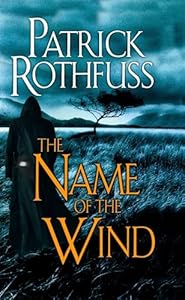
. . .the same problem afflicting Patrick Rothfuss, whose fans chafe at never getting the long-promised Book Three of his Kingkiller Chronicles series. Book One, The Name of the Wind, shouldn’t work but it does, magnificently. I have to stop everything and re-read it every now and then, in spite of Denna the love interest being one of the most annoying female characters ever written. And that iconic book cover–how many times have you seen, on a fantasy novel, a variation of that mysterious guy in the cloak? Book Two, The Wise Man’s Fear, may not be quite as good as the first, but it is a worthy sequel. Sex scenes are not this man’s forte, just saying. I’d really like to read Book Three, The Stone Door, and I do wonder why it is always promised but never published. Here’s the difference from the Scott Lynch situation: from the very beginning of The Name of the Wind, we’re told through a teaser summary and also the way Books 1 and 2 are organized (Day 1–Book I. Day 2–Book 2. Day 3????? Book 3????), that we are going to learn some important things about Kvothe, the main character, through three days of storytelling. Instead, the series just stops with Day Two, and Kvothe’s story is left dangling. On the other hand, as with Scott Lynch’s books, I’m glad of the books we do have. At least we get teasers from Rothfuss every so often–The Slow Regard for Silent Things, about a side-character in the series, is not exactly a novel or even a novella, but it is maybe one of the best meditations on OCD ever written. And there’s a great short story, “The Lightning Tree,” about my favorite character, Bast, published in the very good short fiction anthology Rogues and then again (in slightly expanded form) as a rather disingenuous standalone, The Narrow Road Between Desires.
A Song of Ice and Fire, George R. R. Martin (b. 1948)
Then there’s George R. R. Martin’s inability (refusal?) to finish his own series, A Song of Ice and Fire, maybe the most famous of these three examples, although by far not the best-written. I’m guessing that when the whole shebang got turned into the wildly-popular streaming series Game of Thrones, and when that series had to come to some kind of conclusion without benefit of Martin’s unwritten last novel, he might have found it useless to continue, or maybe too boring. That’s a shame, because the streaming HBO series finale satisfied no one. But I’m wondering how Martin actually could have written a satisfying conclusion, especially one that diverges from the show. How awkward to have two streams of a fiction–the canonical, and the slapped-together. Anyway, I have to confess that reader-me, after Book Three of the novels, was ready to stop. As for Game of Thrones, I loved it until that last bit. So as a reader, I am fairly indifferent, and as a watcher, I am disgruntled. I also feel bad for all those parents who named their little girl Daenerys without realizing she’s going to turn into a villain. That said, I admire Martin as a person for his support of creativity in New Mexico, a state where I spend about half my life. Meanwhile, on the streaming series scene, Martin’s fantasy world of Westeros lives on via the HBO series House of the Dragon, a prequel to A Song of Ice and Fire, with several other Westeros-themed projects in the production pipeline. These spinoffs are not without their own problems.
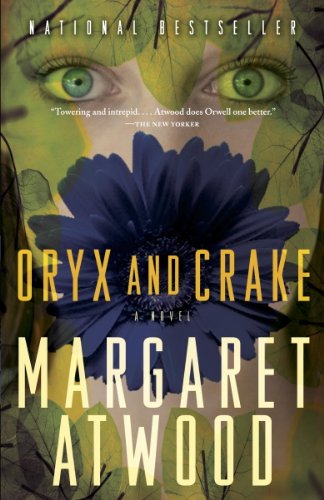
Right from the start, let’s acknowledge this: Margaret Atwood is a force. She is a writer acclaimed worldwide, with numerous awards to her name. She has won the prestigious Booker Prize twice. She is a spokeswoman for Canadian literature, feminism, and the environment. Her novel The Handmaid’s Tale (1985) is so iconic that you don’t even need to read it to know all about it, and when crowds of women show up wearing red dresses and white bonnets, no one needs to explain to anyone why they are wearing those clothes and what they mean. Find out about that here–a bit dated, because similar protests continue. But if you do read the novel, you know you’ve read a classic of English-language literature. Meanwhile, the HBO streaming series based on the novel has reached millions of new audience members. I remember being blown away when I read the novel back in 1985. At that time, I knew nothing about Margaret Atwood. That experience led me to go out and read every Atwood book I could get my hands on. I even wrote an academic article on her, probably best forgotten. So I love that book, and I am a big admirer of Atwood’s fiction. That led me in 2003 to read her equally brilliant novel, Oryx and Crake. See my review of it here, in my blog post on eco-lit. In 2009, she published The Year of the Flood. Both of these novels are classics of eco-themed dystopia, hugely important for everyone to read, especially in America, especially right now. (The Canadians, including of course Atwood, seem to have their eco-act more together.) But when Atwood turned those two novels, fairly loosely related, into a series with the publication of a third novel, Maddaddam (2013), I think she made a misstep. The first two novels are so brilliant. By contrast, this third seems rushed and ill-thought-out–to me, anyway. I can’t help thinking about the first two Godfather movies and how outstanding they are. Then Godfather III turned out to be a sad come-down. None of this takes away from the brilliance of the first two, though. Atwood has now written The Testaments (2019), a sequel to the enormously famous and influential Handmaid’s Tale, making those two novels into a duology of sorts. Even though The Testaments is not the towering literary and cultural achievement that The Handmaid’s Tale has come to be, it’s still very good, and I enjoyed reading it. For me, Atwood’s dystopian novels rank: Handmaid’s Tale/Oryx and Crake tied for first (both frequent visitants on banned books lists in the more ignorant, intolerant, and self-righteous areas of the U.S.), Year of the Flood a close second, The Testaments a distant third, and Maddaddam and some others, like The Heart Goes Last, just meh. Atwood is such a prolific novelist, though, that some of her books are bound to be better than others. (I think by contrast of another brilliant contemporary novelist, Marilynne Robinson, whose output is slow, the novels coming very far apart.) When Atwood is great, though, she is GREAT. Read some of her realistic novels, too, not just the dystopian ones–especially Cat’s Eye and The Robber Bride–wonderful novels!
Series I liked just okay. Sorry!
The Daevabad Trilogy, by Shannon A. Chakraborty (b. 1985)
I liked the books in the series just fine. So why would I call the series problematic? So unfair! It’s because I love Chakraborty’s stand-alone novel, The Adventures of Amina al-Sarafi, so much more. The series books are a let-down. VERY UNFAIR! It’s not that I hated her Daevabad series. I enjoyed a lot of it. I did find myself getting a bit tired of the main character by the end, very tired of the torn-between-two-lovers trope, and a bit skeptical of the magic. This may be because the series has more of a YA feel and I am an older (oh, all RIGHT, old) reader, so it doesn’t resonate with me as much. The Adventures of Amina al-Sarafi, on the other hand, gave me more fun than a reader has any right to have. Read the series, sure, but go read her standalone! These books are all set in an Arabian-Nights fantasy world, very refreshing after the umpteenth Tolkien clone milking Western and Northern European mythologies and folkways. The Adventures of Amina al-Sarafi was short-listed for the 2024 Hugo Award, and I thought it was worthy of winning. See my review here.
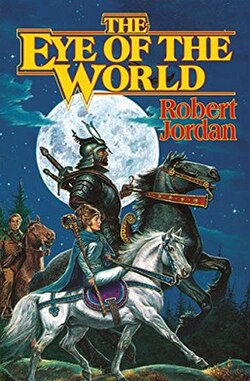
Speaking of the umpteenth Tolkien clone. . .After the first one or two novels in Jordan’s series, beginning with The Eye of the World (1990), these just got tedious. And they are long. And they are not very well written. And there is an entire shelf of the things. Sorry, fans. I didn’t like the Amazon streaming series, either. Call me a grinch, but it all seems like a tired Tolkien-esque rehash.
The whole series goes by the title of the first, and there are four more. They are all known fondly by their many, many fans as ACOTAR. I nearly stopped at the first book, which was very “damsel in distress,” especially when the hot rescuer-hero kept throwing up red flags for abuse. At a friend’s nagging, I read the second, which I liked better. But after that. . .I don’t know. I didn’t believe in the characters’ bathrooms, or their sweaters (I do know how odd that sounds), and while hot sex with enormous buffed-up bats was kind of intriguing, I got worn out. But really–the hot bats were pretty ingenious. I myself am trying to write a novel where several of the hot guys are birds, and that presents some problems. I mean, bats are mammals, at least. And I did read all of the ACOTAR books. They were originally classified as YA, but because of their sexual content, they are more appropriately classified as New Adult. Maas more or less invented the new wildly popular hybrid genre called romantasy, and this series is the most famous romantasy series of all time. See my blog post on fae fiction.
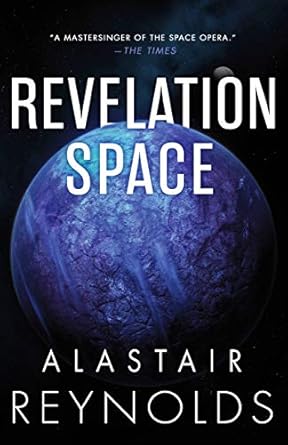
What do you do with a complete mismatch between you the reader and the book or series you’re trying to read? You can try to educate yourself better about that particular book/series. I have done this many times in my academic career. Shocking, I know, but I don’t like Dickens–yet I educated myself to appreciate Dickens. But yeah, I don’t think I’m up to hard SF, and so Reynolds’s very highly regarded series–and all of the many other hard SF very highly regarded novels he has written–leaves me cold. This is on me. We all have our blind spots, and here is one of mine. Apparently readers who really know about these things do love this SF tetralogy and other books by Reynolds, so don’t go by me. Also, I don’t really enjoy sentient ship stories–except Ann Leckie’s! And Wall-E. One of fiction’s true supervillains? Auto the Wall-E ship’s autopilot. If you are a Reynolds fan, you will be getting pretty exasperated with me right about now, so I will shut up.
I was kind of intrigued by the first one, A Discovery of Witches (2011), a historical fantasy/time travel novel, and I kind of liked the Netflix streaming series, although only because of Matthew Goode’s sexy vampire, not whoever played the main character. I liked the inventiveness about vampire culture in the trilogy (now gone on to a sixth book). I liked the exploration of Renaissance alchemy, especially since the author, a scholar working in the history of science, knows what she’s talking about. I was relieved that in the second novel the author didn’t go after some ridiculous conspiracy theory about Shakespeare while being perfectly fine about his shortcomings (he’s not a god, after all), I loved the fictionalization of the whole School of Night group, and I loved the appearance of Lady Mary Herbert, Countess of Pembroke (Sir Philip Sidney’s sister) as a character. But after the first one or two of these novels, the series began to sag, in my opinion, especially after a scene of magically conjured Fourth of July fireworks, which just seemed silly. I did learn a lot about the Yellow Fever epidemic of 1793 in Philadelphia. That was interesting. Other readers love these books and the romantasy elements in them, so if this is you, go for it.
These very popular historical fantasy/time travel novels are too soapy. Really. But some of it is fun. However, some of it is rapey. Don’t let me get on my high horse about it, because I confess it, I have kind of obsessively read all but the most recent one. Whew, there are nine, with apparently one more planned. I have also watched all but the latest iteration of the streaming series, also hugely popular. When I went as a tourist all over the Scottish Highlands, half the other tourists were there because they had read the books, seen the series, or both. Everyone has a guilty pleasure, and until recently, this was one of mine. I think I’ve burned out on it, though. It seems to have spawned an entire industry of historical bodice-ripping romance featuring lusty Highlanders. In kilts. Always kilts.
Series that are a hard NO for me
The Chronicles of Thomas Covenant,The Unbeliever, Stephen R. Donaldson (b. 1947)
I read Lord Foul’s Bane (1977), the first book of the first series, only because I had promised a friend I would. There are two trilogies and a tetralogy, but I didn’t make it past that first book. Some have labeled these books “high fantasy.” Technically, they are portal fantasy–at least the first book is–because during an auto accident, a mysterious slip between worlds catapults the main character from our own realistic setting into the fantasy realm. That was interesting, but the unapologetic misogyny extending to unapologetic rape made me ill. Don’t get me wrong. Rape is an actual occurrence, real people commit it and are victimized by it, and no author should shy away from writing about that or any other aspect of the world and human nature. (Some disagree with me there.) So how is Donaldson’s fiction any different from Gabaldon’s? It’s the attitude toward rape that repels me in Donaldson’s book. I will say that leprosy (Hansen’s Disease) as a metaphor for the main character’s problem is an intriguing device, but even that is pretty dated (and maybe insulting?), and I was just not going to continue this repellent series.
One Second After, William R. Forstchen (b. 1950)
See my review. I don’t like this man’s politics, and I blame that kind of politics for the terrible Constitutional and national crisis in the U.S. today. So no, not gonna go on with this series set after a nuclear incident wipes out the country. Attitudes like the ones espoused in this novel are already on their way to wiping out the country, no nukes needed. If the author’s politics don’t trouble you, or if you share them, you may like his novel and its siblings, but Alas, Babylon, by Pat Franks, while older, is a lot better and covers similar ground. As you see, I pull no punches in this blog.
The second of three posts: Classic series, Some of my Favorites (today), Problem series
So many books. . .so little time (continued)
And so hard to decide! Here are some favorites. I’m adding a third post in a day or two with series I find problematic. Strangely, among those problematic series are some of my favorite reads. So wait for it, and realize “problematic” doesn’t necessarily mean “bad” or DNF.
Note: as you’ll notice, I’m a U.S. reader, and some of my thoughts about these books arise from that. Also, this is a blog, not some scholarly treatise, so it’s full of my own opinions. Yours may vary!
A FEW FAVORITES
I’m listing them alphabetically by author because I can never decide which I love most.
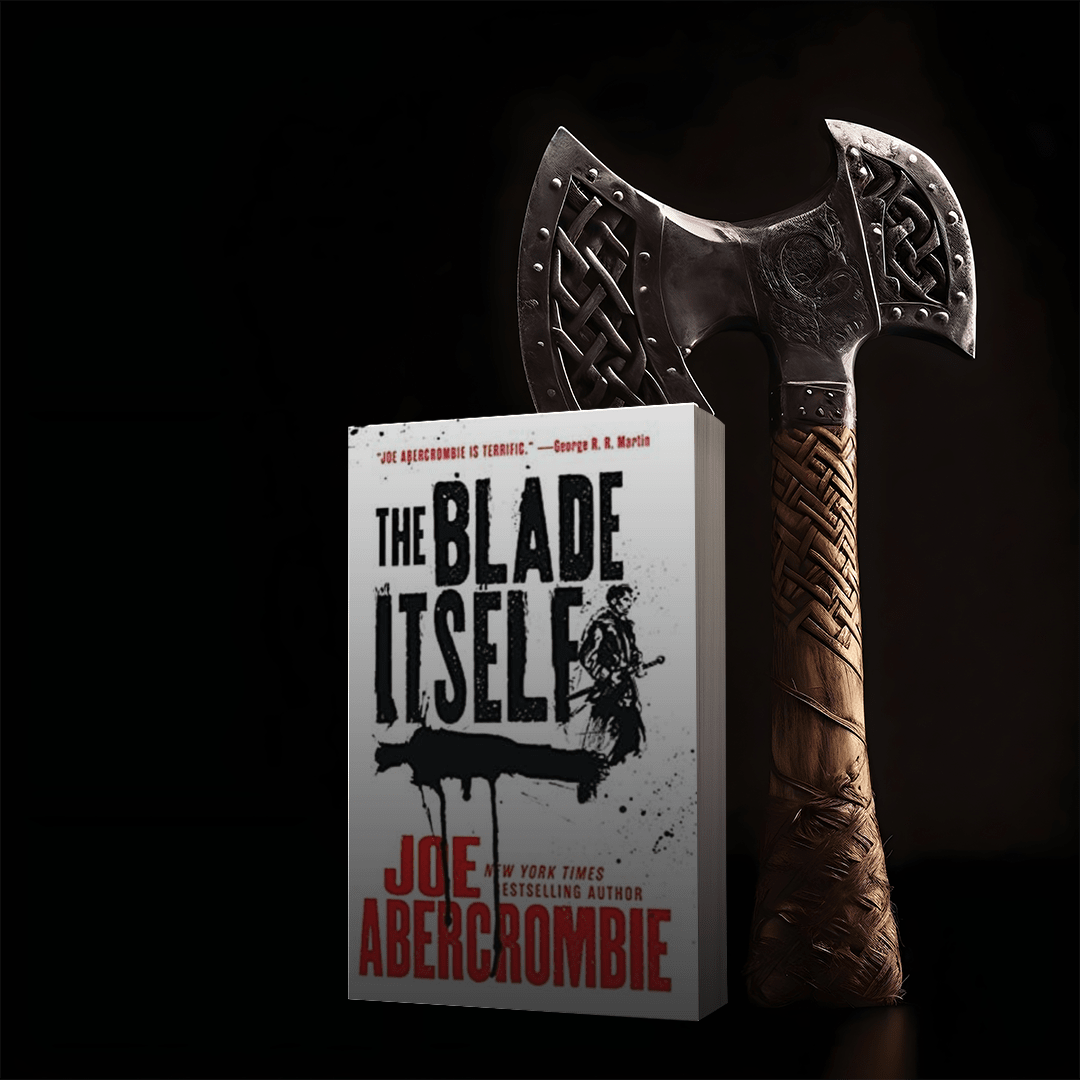
What a great series! Start with Book One, The Blade Itself. If you love dark fantasy, and a lot of violence, and you haven’t read these books, you have a treat in store. You will discover some great characters in The First Law series and all of its spin-offs. Logen Ninefingers (say one thing for Logen, he’s a great character)! The Dogman (not THAT Dogman lol), and his strange and intriguing daughter Rikke! Inquisitor Glokta, one of the best, most complex villains ever written, and his by turns hard-nosed and appealing daughter Savine! The hapless Orso! The amazing warrior woman Monzcarro! It’s hard to stop listing them. They just keep coming. There’s plenty of action, sometimes seeming like a cross between action film and comic book, but always a thrill. The plotting is great, featuring lots of magic and other favorite fantasy tropes, but the plots also make their own fascinating commentary on history, from Viking Age medieval settings through to the beginnings of the Industrial Revolution–even reflecting obliquely on our own times. See my earlier review here. But I think the characters are what make this trilogy, the two follow-up series, and all of the series-adjacent novels in the world of the First Law among the best I’ve read. Abercrombie is touring right now to introduce The Devils, book one of a new series. If he comes to your area and if you are as big a fan as I am, go to this event! I’m all signed up for one here in Albuquerque, on May 15th. Because I’m a writer based in the U.S., my link is to the U.S. tour, but there is a European tour as well. NOTE: I’m a reader of books, not a listener, but friends of mine who consume their fantasy via audiobook tell me the narrator of Abercrombie’s books is superb.
Abraham has written other fantasy novels in other series, and as half of the team calling itself James S. A. Corey, he co-writes the hugely popular novels on which the Hugo-Award-winning SF streaming series The Expanse is based. I love The Long Price Quartet most, though. Its South Asian-inspired setting is fascinating. The tetralogy gains true depth and verisimilitude through its focus on economics and technology as factors just as important as military action when nation-states collide. And–unlikely as it sounds!–poetry. All the characters are wonderful, but his character Seedless has to be one of the most ingenious literary creations I’ve ever encountered in the pages of fiction. These books are entertaining, but they are deep, not the usual an orc a wizard and an elf walk into a castle stuff. I got introduced to these novels through a great short story by Abraham, “The Meaning of Love,” published in the anthology Rogues and was grabbed right away by its unusual setting, very similar to the one in The Long Price Quartet. See my review here for more thoughts about this amazing four-book series and how it truly is a series for our dangerous times.
Can I call this a series? Let me call this a series! It’s one of the greatest bunch of novels–all related–I’ve ever read. The writing is superb. The events of these ten SF novels take place over millennia but in the same universe, and from time to time, story-lines and characters intersect. The world-building is masterful. Which is my favorite? It’s so hard to pick. Consider Phlebas, the first I read, completely blew me away, but is it the best? They’re all great. Consider Phlebas was the kind of book that drove me right out to buy every single one of the author’s other books–an experience I haven’t had since my Patrick O’Brian craze. The order of reading can be a bit difficult to discern. Here’s a web site that can help with that, and here’s one with a slightly different take. Another consideration: the Amazon web site lists nine books, but there is actually another one. I usually read e-books, but I needed to order two of the books, used in paperback, to get all of them. That situation may have changed by now. Banks, who died in 2013, was a prolific writer not only of these amazing SF books but of realistic fiction as well, and his realistic novels are equally celebrated. I’ve blogged about Banks before, here, and here, and here. He’s apparently the favorite writer of several would-be oligarchs, but I can’t help that. He’s great.
Parable of the Sower/Parable of the Talents, Octavia Butler (1947-2006)
Butler’s duo of novels is so prescient, so important to American readers in their depiction of a dystopia we seem to be approaching at warp-speed, that it is practically a crime not to read them. In fact, The Parable of the Sower, published in 1993, imagines a 2024 that cut much too close to the truth, and 2025 seems to be getting worse. In our current dystopic climate, her novels–and especially this one–are on a number of banned book lists. Why do certain readers find them disturbing–because they do cut too close to the truth? and these readers don’t want to know the truth, or find it somehow threatening? Fiction doesn’t exist to sooth overly-sensitive souls stuck in their own world-views. I personally think fiction is prophetic–good fiction–in its capacity to speak truth to power. That doesn’t mean you have to be sucked down the rabbit hole of just anyone’s fiction. You need to exercise your critical judgment, as with anything else. As Plato pointed out long ago and as Hitler’s propagandists demonstrated, fictions do present the danger that they can mislead or even corrupt if you read or consume them, or any information, uncritically. So exercise your critical judgment here, and engage your empathy. Studies have shown that readers of fiction actually enhance their capacity for empathy, which is the quality that helps human beings act in a caring and fair way instead of simply lusting after power and advantage, the strong over the weak. (The novel’s main character is a person who struggles because she has too much empathy–and then she triumphs because of it.) Butler’s novels are good fiction, well-written and thought-provoking. Look around you. You’ll probably see her warnings coming to life before your very eyes. What a tragedy she died so young, before she could give us more novels as important as these, such as a planned third novel in the series. What a tragedy we don’t have any further wisdom from her to help us navigate through this troubled moment in our history.
The Farseer Trilogy, Robin Hobb (b. 1952)
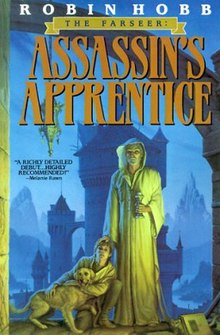
Original cover art. Source: Wikipedia. Copyright is a bit uncertain–Spectra (US), or cover artist Michael Whelan.
How to have fun reading fantasy. These are the kinds of books you might have read as a kid, under the covers with a flashlight. The kinds of books you want to binge before a fire with a cup of hot chocolate. By that, I don’t mean that these books are “cozy.” They just give you that thrilling feeling you get when you go to a rousing good movie and the credits begin to roll. This first Farseer trilogy, and many other related novels all set in the author’s imagined Realm of the Elderlings, are a treat to read. What great characters–especially the two that drive the series, Fitz, a boy of mysterious parentage who becomes an assassin, and the enigmatic Fool. Who is the Fool? What is the Fool? The quest for identity elevates these novels above others that simply go for the adventure. In several interlocking series, the Farseer novels entice the reader into an entire richly-realized world of magic, dragons, warfare, pirates, palace conspiracy, you name it. Every fantasy situation, character, and trope a fantasy reader could want, with good writing into the bargain. Catnip to cats. Visit Robin Hobb’s web site to find out more. With such a far-ranging fantasy world, reading order becomes important. Here’s a good guide.
The Life and Times of Corban Loosestrife, Cecelia Holland (b. 1942)
Holland, a highly acclaimed writer of historical fiction, turned to historical fantasy in this series, but the history is very accurate. The six novels of the series cover the full range of Viking Age exploration, beginning with young Corban Loosestrife’s exile from his home in Ireland after Viking raiders murder most of his family members and make off with his twin sister. In his quest to find his sister, Corban heads west, ending up in North America. The first three books, The Soul Thief, The Witches’ Kitchen, and The Serpent Dreamer, take us through Corban’s adventures in the 10th Century British Isles, Scandinavia, and North America. The last three, Varanger, The High City, and Kings of the North, follow Corban’s son and nephew on their own journey, beginning with the part of the world later to be known as Russia, to Constantinople, and then back to Britain. At first, I was entertained by these books but not enthralled. Around Book IV, I began to be enthralled. My problem, paradoxically, was my love of two of her best stand-alone novels, Floating Worlds (SF–see my review here) and Until the Sun Falls (historical fiction). They are both superb. But eventually the mixture of history, magic, and legend in the Corban Loosestrife series grabbed me and didn’t let go. Holland is a very prolific writer. While I haven’t loved every book of hers I’ve read, Floating Worlds and Until the Sun Falls are two of my favorite books ever, and I ended up getting deeply attached to the Corban Loosestrife characters and settings. Her body of work is rich and complex, and most of her novels are historical fiction. I always maintain historical fiction is just another kind of speculative fiction, but my blog isn’t really about that, so I’ll leave it alone.
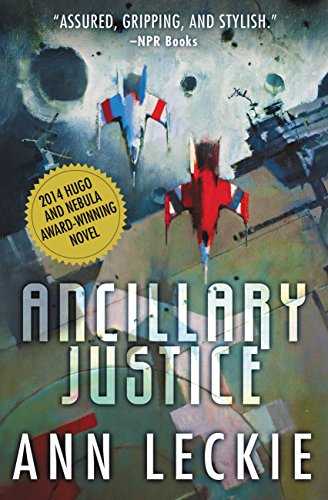
Leckie’s Imperial Radch series, which won the 2024 Hugo Award for best series, includes Hugo and Nebula Award winner Ancillary Justice and the sequels Ancillary Sword, and Ancillary Mercy. These intricately plotted and beautifully detailed SF novels do an outstanding job of exploring alien consciousnesses, worlds and times and customs very distant from ours, and making us believe they are real. She uses the trope of the sentient ship to great effect. These become people we care about, not just machines. When the humanoid world of the main characters comes into conflict with an almost unimaginably alien opponent, the tension rises. I have to confess, when I read the first book of the series, I didn’t just fall in love with it. See my review here. Partly that’s because I don’t particularly like the sentient ship trope (except in Wall-E!) Partly that’s because reading is a weird process. You might read a book but not be in the right mood for that particular book. Have you ever had that experience? When Leckie’s series won the Hugo for best series last year, I decided I needed a re-do. I re-read Ancillary Justice and blitzed right on through the other two. I came away struck dumb with admiration. What a great series! I’m glad I made myself re-read that first book. Actually, once I got started on my re-read, I didn’t need any “making myself.” I zipped right along, completely enthralled. Other series-adjacent books further extend the great world-building of the main trilogy. Leckie’s recently-published Translation State, a series-adjacent and very fine novel, was short-listed for the 2024 Nebula award. See my review here.
Miéville is a one-of-a-kind writer. He writes speculative fiction, but no one quite knows how to categorize it. Bizarro? Slipstream? New Weird? Whatever you call it, it’s brilliant, and his novels have won every major speculative fiction award out there. He explores a world parallel to ours full of the extreme and the strange, yet these fictional worlds pull our focus right back to our own time and place and our own difficulties. A number of series-adjacent novels are set in the same world. It is strangely parallel to our own world–and strangely not. None of New Croubozon books are exactly sequels, although some characters show up in more than one of the novels. Perdido Street Station is the one most like a horror novel. The Scar (my personal favorite) has plenty of weird stuff but deeply-imagined characters who behave like actual human beings, not cardboard cutouts, with the complex motivations that the best fictional characters exhibit. The Iron Council is actually more of an enormous prose poem than a novel, so reader beware if you don’t like that kind of thing. I do, although it seemed a bit excessive here. Miéville’s writing rivals the best today, in any genre, and it’s all not only brilliant speculative fiction but brilliant social commentary. My other favorites are his stand-alone novels Embassytown, which I need to re-read, and The City and the City. Note: See above, about oligarchs loving the books I love noooooo. Here‘s what Mieville has to say about that. Now I feel better. And worse.
His Dark Materials, Philip Pullman
Find out more HERE. Book cover of first edition, presented here under Fair Use doctrine, source: Wikipedia.
Pullman’s series is the anti-Narnia. Some readers will like that; others will distrust it. Whatever you think about that, the trilogy is the gripping saga of a young girl on a quest to rescue her imperiled friends in the steampunk-flavored England of a parallel universe. During her journey of discovery, she begins to figure out what her mysterious uncle is up to, and whether he is threatening the collapse of the world. Is he a dark force or a hero? And who is she, anyway? Her story is also a quest for identity. The first book, The Golden Compass (titled Northern Lights in the U.K.), was made into a disappointing movie, sadly for the many readers who adore Pullman’s books. They have a great follow-up series to console them: The Book of Dust. If the Narnia books were inspired in part by Milton and Spenser, here’s the William Blake version of Milton, “Milton is of the Devil’s party and doesn’t know it” (see this and this). The first series seems at first glance to be a book for children, and Pullman has indeed written many children’s books. But His Dark Materials–while it does have talking armored polar bears and the like–is more than that, certainly far more than an entertaining story for children, and the second series takes the main character into young adulthood. Both series deal with some big ideas about the nature of authority, the composition of the universe, and matters of good and evil. Pullman himself has disdained the distinction between literature for children and any other kind, and he rejects the label “atheist” while exploring a complex approach to religion that make a lot of orthodox Christians turn pale.
The Mars Trilogy, Kim Stanley Robinson (b. 1952)
Find it (and the other two volumes of the trilogy) HERE.
Wow, what a series. Even my persnickety physicist son-in-law loves these books, and he hates any SF that tries to sneak physical impossibilities and goofy improbabilities past the reader. This, in spite of the books being written in the ’90s–and so to some extent dated. But Robinson is one of the most intriguing writers today, and these books are powerful. Nebula Award-winning Red Mars (1992) is the first, then Hugo and Locus Award-winning Green Mars (1993) and Blue Mars (1996). As the red planet becomes increasingly terraformed, the explorers who have settled on the planet must deal with the vast physical problems they’ve set out to solve, but also the thorny and terrible sociological and political–and personal–problems arising from their decisions. Meanwhile, those left to struggle on a dying, dysfunctional Earth play their own part in a tense, evolving political quagmire. Okay, and then go on to The Ministry for the Future (2020) and prepare to be devastated. Or any of his other novels.
Thanks to these artists for the original royalty-free images of the first two posts in my blog on speculative fiction series:












 Fantastes
You must be logged in to post a comment.