Speculative Fiction Series: Some of my favorites

TODAY: Favorite Speculative Fiction Series

The second of three posts: Classic series, Some of my Favorites (today), Problem series

And so hard to decide! Here are some favorites. I’m adding a third post in a day or two with series I find problematic. Strangely, among those problematic series are some of my favorite reads. So wait for it, and realize “problematic” doesn’t necessarily mean “bad” or DNF.

Note: as you’ll notice, I’m a U.S. reader, and some of my thoughts about these books arise from that. Also, this is a blog, not some scholarly treatise, so it’s full of my own opinions. Yours may vary!

A FEW FAVORITES

I’m listing them alphabetically by author because I can never decide which I love most.

First Law, Joe Abercrombie (b. 1974)
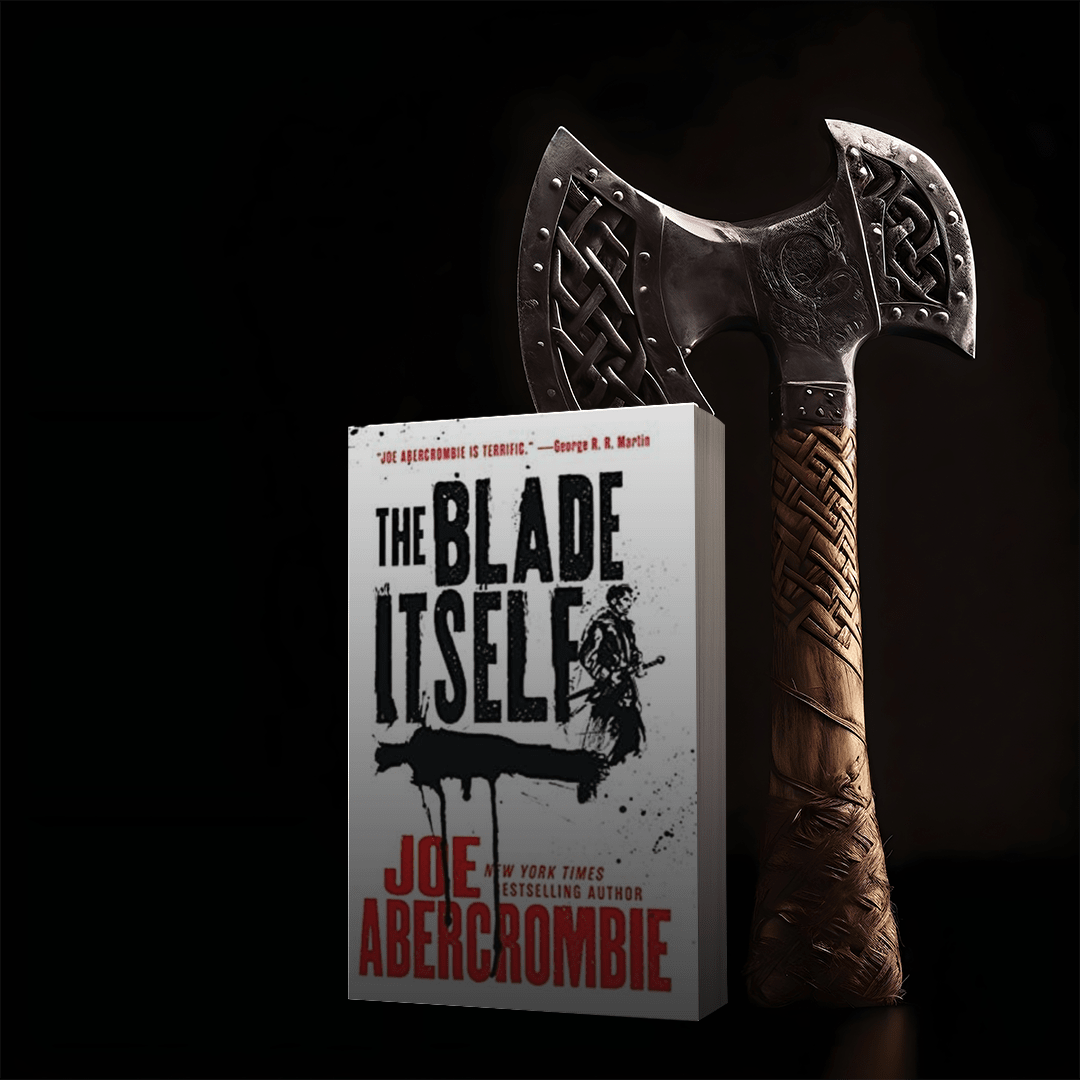
Find out more HERE.

What a great series! Start with Book One, The Blade Itself. If you love dark fantasy, and a lot of violence, and you haven’t read these books, you have a treat in store. You will discover some great characters in The First Law series and all of its spin-offs. Logen Ninefingers (say one thing for Logen, he’s a great character)! The Dogman (not THAT Dogman lol), and his strange and intriguing daughter Rikke! Inquisitor Glokta, one of the best, most complex villains ever written, and his by turns hard-nosed and appealing daughter Savine! The hapless Orso! The amazing warrior woman Monzcarro! It’s hard to stop listing them. They just keep coming. There’s plenty of action, sometimes seeming like a cross between action film and comic book, but always a thrill. The plotting is great, featuring lots of magic and other favorite fantasy tropes, but the plots also make their own fascinating commentary on history, from Viking Age medieval settings through to the beginnings of the Industrial Revolution–even reflecting obliquely on our own times. See my earlier review here. But I think the characters are what make this trilogy, the two follow-up series, and all of the series-adjacent novels in the world of the First Law among the best I’ve read. Abercrombie is touring right now to introduce The Devils, book one of a new series. If he comes to your area and if you are as big a fan as I am, go to this event! I’m all signed up for one here in Albuquerque, on May 15th. Because I’m a writer based in the U.S., my link is to the U.S. tour, but there is a European tour as well. NOTE: I’m a reader of books, not a listener, but friends of mine who consume their fantasy via audiobook tell me the narrator of Abercrombie’s books is superb.

The Long Price Quartet, Daniel Abraham (b. 1969)

Find out more HERE.

Abraham has written other fantasy novels in other series, and as half of the team calling itself James S. A. Corey, he co-writes the hugely popular novels on which the Hugo-Award-winning SF streaming series The Expanse is based. I love The Long Price Quartet most, though. Its South Asian-inspired setting is fascinating. The tetralogy gains true depth and verisimilitude through its focus on economics and technology as factors just as important as military action when nation-states collide. And–unlikely as it sounds!–poetry. All the characters are wonderful, but his character Seedless has to be one of the most ingenious literary creations I’ve ever encountered in the pages of fiction. These books are entertaining, but they are deep, not the usual an orc a wizard and an elf walk into a castle stuff. I got introduced to these novels through a great short story by Abraham, “The Meaning of Love,” published in the anthology Rogues and was grabbed right away by its unusual setting, very similar to the one in The Long Price Quartet. See my review here for more thoughts about this amazing four-book series and how it truly is a series for our dangerous times.

The Culture, Iain Banks (1954-2013)

Find the books HERE.

Can I call this a series? Let me call this a series! It’s one of the greatest bunch of novels–all related–I’ve ever read. The writing is superb. The events of these ten SF novels take place over millennia but in the same universe, and from time to time, story-lines and characters intersect. The world-building is masterful. Which is my favorite? It’s so hard to pick. Consider Phlebas, the first I read, completely blew me away, but is it the best? They’re all great. Consider Phlebas was the kind of book that drove me right out to buy every single one of the author’s other books–an experience I haven’t had since my Patrick O’Brian craze. The order of reading can be a bit difficult to discern. Here’s a web site that can help with that, and here’s one with a slightly different take. Another consideration: the Amazon web site lists nine books, but there is actually another one. I usually read e-books, but I needed to order two of the books, used in paperback, to get all of them. That situation may have changed by now. Banks, who died in 2013, was a prolific writer not only of these amazing SF books but of realistic fiction as well, and his realistic novels are equally celebrated. I’ve blogged about Banks before, here, and here, and here. He’s apparently the favorite writer of several would-be oligarchs, but I can’t help that. He’s great.

Parable of the Sower/Parable of the Talents, Octavia Butler (1947-2006)

Find out more HERE.

Butler’s duo of novels is so prescient, so important to American readers in their depiction of a dystopia we seem to be approaching at warp-speed, that it is practically a crime not to read them. In fact, The Parable of the Sower, published in 1993, imagines a 2024 that cut much too close to the truth, and 2025 seems to be getting worse. In our current dystopic climate, her novels–and especially this one–are on a number of banned book lists. Why do certain readers find them disturbing–because they do cut too close to the truth? and these readers don’t want to know the truth, or find it somehow threatening? Fiction doesn’t exist to sooth overly-sensitive souls stuck in their own world-views. I personally think fiction is prophetic–good fiction–in its capacity to speak truth to power. That doesn’t mean you have to be sucked down the rabbit hole of just anyone’s fiction. You need to exercise your critical judgment, as with anything else. As Plato pointed out long ago and as Hitler’s propagandists demonstrated, fictions do present the danger that they can mislead or even corrupt if you read or consume them, or any information, uncritically. So exercise your critical judgment here, and engage your empathy. Studies have shown that readers of fiction actually enhance their capacity for empathy, which is the quality that helps human beings act in a caring and fair way instead of simply lusting after power and advantage, the strong over the weak. (The novel’s main character is a person who struggles because she has too much empathy–and then she triumphs because of it.) Butler’s novels are good fiction, well-written and thought-provoking. Look around you. You’ll probably see her warnings coming to life before your very eyes. What a tragedy she died so young, before she could give us more novels as important as these, such as a planned third novel in the series. What a tragedy we don’t have any further wisdom from her to help us navigate through this troubled moment in our history.

The Farseer Trilogy, Robin Hobb (b. 1952)
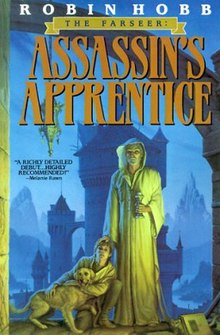
Original cover art. Source: Wikipedia. Copyright is a bit uncertain–Spectra (US), or cover artist Michael Whelan.

How to have fun reading fantasy. These are the kinds of books you might have read as a kid, under the covers with a flashlight. The kinds of books you want to binge before a fire with a cup of hot chocolate. By that, I don’t mean that these books are “cozy.” They just give you that thrilling feeling you get when you go to a rousing good movie and the credits begin to roll. This first Farseer trilogy, and many other related novels all set in the author’s imagined Realm of the Elderlings, are a treat to read. What great characters–especially the two that drive the series, Fitz, a boy of mysterious parentage who becomes an assassin, and the enigmatic Fool. Who is the Fool? What is the Fool? The quest for identity elevates these novels above others that simply go for the adventure. In several interlocking series, the Farseer novels entice the reader into an entire richly-realized world of magic, dragons, warfare, pirates, palace conspiracy, you name it. Every fantasy situation, character, and trope a fantasy reader could want, with good writing into the bargain. Catnip to cats. Visit Robin Hobb’s web site to find out more. With such a far-ranging fantasy world, reading order becomes important. Here’s a good guide.

The Life and Times of Corban Loosestrife, Cecelia Holland (b. 1942)

Find them HERE.

Holland, a highly acclaimed writer of historical fiction, turned to historical fantasy in this series, but the history is very accurate. The six novels of the series cover the full range of Viking Age exploration, beginning with young Corban Loosestrife’s exile from his home in Ireland after Viking raiders murder most of his family members and make off with his twin sister. In his quest to find his sister, Corban heads west, ending up in North America. The first three books, The Soul Thief, The Witches’ Kitchen, and The Serpent Dreamer, take us through Corban’s adventures in the 10th Century British Isles, Scandinavia, and North America. The last three, Varanger, The High City, and Kings of the North, follow Corban’s son and nephew on their own journey, beginning with the part of the world later to be known as Russia, to Constantinople, and then back to Britain. At first, I was entertained by these books but not enthralled. Around Book IV, I began to be enthralled. My problem, paradoxically, was my love of two of her best stand-alone novels, Floating Worlds (SF–see my review here) and Until the Sun Falls (historical fiction). They are both superb. But eventually the mixture of history, magic, and legend in the Corban Loosestrife series grabbed me and didn’t let go. Holland is a very prolific writer. While I haven’t loved every book of hers I’ve read, Floating Worlds and Until the Sun Falls are two of my favorite books ever, and I ended up getting deeply attached to the Corban Loosestrife characters and settings. Her body of work is rich and complex, and most of her novels are historical fiction. I always maintain historical fiction is just another kind of speculative fiction, but my blog isn’t really about that, so I’ll leave it alone.

Imperial Radich, Ann Leckie (b. 1966)
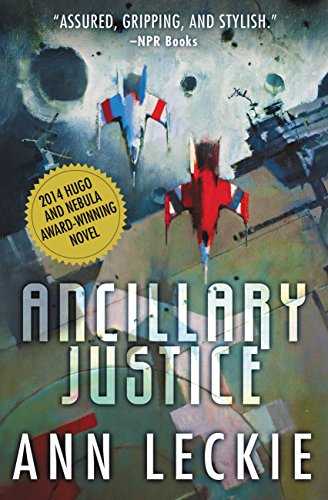
Find out more HERE.

Leckie’s Imperial Radch series, which won the 2024 Hugo Award for best series, includes Hugo and Nebula Award winner Ancillary Justice and the sequels Ancillary Sword, and Ancillary Mercy. These intricately plotted and beautifully detailed SF novels do an outstanding job of exploring alien consciousnesses, worlds and times and customs very distant from ours, and making us believe they are real. She uses the trope of the sentient ship to great effect. These become people we care about, not just machines. When the humanoid world of the main characters comes into conflict with an almost unimaginably alien opponent, the tension rises. I have to confess, when I read the first book of the series, I didn’t just fall in love with it. See my review here. Partly that’s because I don’t particularly like the sentient ship trope (except in Wall-E!) Partly that’s because reading is a weird process. You might read a book but not be in the right mood for that particular book. Have you ever had that experience? When Leckie’s series won the Hugo for best series last year, I decided I needed a re-do. I re-read Ancillary Justice and blitzed right on through the other two. I came away struck dumb with admiration. What a great series! I’m glad I made myself re-read that first book. Actually, once I got started on my re-read, I didn’t need any “making myself.” I zipped right along, completely enthralled. Other series-adjacent books further extend the great world-building of the main trilogy. Leckie’s recently-published Translation State, a series-adjacent and very fine novel, was short-listed for the 2024 Nebula award. See my review here.

New Croubozon, China Miéville (b. 1972)

Find out more HERE.

Miéville is a one-of-a-kind writer. He writes speculative fiction, but no one quite knows how to categorize it. Bizarro? Slipstream? New Weird? Whatever you call it, it’s brilliant, and his novels have won every major speculative fiction award out there. He explores a world parallel to ours full of the extreme and the strange, yet these fictional worlds pull our focus right back to our own time and place and our own difficulties. A number of series-adjacent novels are set in the same world. It is strangely parallel to our own world–and strangely not. None of New Croubozon books are exactly sequels, although some characters show up in more than one of the novels. Perdido Street Station is the one most like a horror novel. The Scar (my personal favorite) has plenty of weird stuff but deeply-imagined characters who behave like actual human beings, not cardboard cutouts, with the complex motivations that the best fictional characters exhibit. The Iron Council is actually more of an enormous prose poem than a novel, so reader beware if you don’t like that kind of thing. I do, although it seemed a bit excessive here. Miéville’s writing rivals the best today, in any genre, and it’s all not only brilliant speculative fiction but brilliant social commentary. My other favorites are his stand-alone novels Embassytown, which I need to re-read, and The City and the City. Note: See above, about oligarchs loving the books I love noooooo. Here‘s what Mieville has to say about that. Now I feel better. And worse.

His Dark Materials, Philip Pullman

Find out more HERE. Book cover of first edition, presented here under Fair Use doctrine, source: Wikipedia.

Pullman’s series is the anti-Narnia. Some readers will like that; others will distrust it. Whatever you think about that, the trilogy is the gripping saga of a young girl on a quest to rescue her imperiled friends in the steampunk-flavored England of a parallel universe. During her journey of discovery, she begins to figure out what her mysterious uncle is up to, and whether he is threatening the collapse of the world. Is he a dark force or a hero? And who is she, anyway? Her story is also a quest for identity. The first book, The Golden Compass (titled Northern Lights in the U.K.), was made into a disappointing movie, sadly for the many readers who adore Pullman’s books. They have a great follow-up series to console them: The Book of Dust. If the Narnia books were inspired in part by Milton and Spenser, here’s the William Blake version of Milton, “Milton is of the Devil’s party and doesn’t know it” (see this and this). The first series seems at first glance to be a book for children, and Pullman has indeed written many children’s books. But His Dark Materials–while it does have talking armored polar bears and the like–is more than that, certainly far more than an entertaining story for children, and the second series takes the main character into young adulthood. Both series deal with some big ideas about the nature of authority, the composition of the universe, and matters of good and evil. Pullman himself has disdained the distinction between literature for children and any other kind, and he rejects the label “atheist” while exploring a complex approach to religion that make a lot of orthodox Christians turn pale.

The Mars Trilogy, Kim Stanley Robinson (b. 1952)

Find it (and the other two volumes of the trilogy) HERE.

Wow, what a series. Even my persnickety physicist son-in-law loves these books, and he hates any SF that tries to sneak physical impossibilities and goofy improbabilities past the reader. This, in spite of the books being written in the ’90s–and so to some extent dated. But Robinson is one of the most intriguing writers today, and these books are powerful. Nebula Award-winning Red Mars (1992) is the first, then Hugo and Locus Award-winning Green Mars (1993) and Blue Mars (1996). As the red planet becomes increasingly terraformed, the explorers who have settled on the planet must deal with the vast physical problems they’ve set out to solve, but also the thorny and terrible sociological and political–and personal–problems arising from their decisions. Meanwhile, those left to struggle on a dying, dysfunctional Earth play their own part in a tense, evolving political quagmire. Okay, and then go on to The Ministry for the Future (2020) and prepare to be devastated. Or any of his other novels.

Image by <a href=”https://pixabay.com/users/travelphotographer-3989469/?utm_source=link-attribution&utm_medium=referral&utm_campaign=image&utm_content=5902990″>Laurentiu</a&gt; from <a href=”https://pixabay.com//?utm_source=link-attribution&utm_medium=referral&utm_campaign=image&utm_content=5902990″>Pixabay</a&gt;

Image by <a href=”https://pixabay.com/users/janbaby-3005373/?utm_source=link-attribution&utm_medium=referral&utm_campaign=image&utm_content=2030780″>Jan Alexander</a> from <a href=”https://pixabay.com//?utm_source=link-attribution&utm_medium=referral&utm_campaign=image&utm_content=2030780″>Pixabay</a&gt;

Image by <a href=”https://pixabay.com/users/kascreates-1427481/?utm_source=link-attribution&utm_medium=referral&utm_campaign=image&utm_content=1511507″>Kerryn</a&gt; from <a href=”https://pixabay.com//?utm_source=link-attribution&utm_medium=referral&utm_campaign=image&utm_content=1511507″>Pixabay</a&gt;

The Thrill of the Series

TODAY: Classic Speculative Fiction Series

The first of three posts: Classic series (today), Some of my Favorites, Problem series

ONE THING: A series of stories set in that world, so I have the illusion, at least, that I’ll never have to leave it.

For me the reader, this accounts for the appeal of a book series. For me the writer, it also accounts for that appeal. For me the writer, I’ll live in my book world a lot longer than any reader, because it will keep populating in my imagination, and I’ll have time to write only some of that down. But I’ll have all of it in my head.

Speculative fiction especially grabs its readers through series. I feel like I should do a lot more reading before I write this post and two more related posts about speculative fiction series. So many books. . .so little time!

SOME OF THE CLASSICS

The Lord of the Rings, J.R.R. Tolkien

Source: the Tolkien Society web site, photographer Pamela Chandler

Tolkien (1892-1973) is the man who wrote the epic fantasy series that started modern-day fantasy. The Lord of the Rings trilogy is totally immersive and hugely influential. The writing is not my favorite, but that hardly matters. Peter Jackson made wonderful movies of the three main volumes (psst, originally written as one mammoth volume, in case you’re wondering why the first and second just stop cold), and Tolkien produced tons of other material that you could think of as series-adjacent. The Tolkien universe is so huge and complex that only its most avid fans know how to thread through it all, from The Hobbit, a beloved children’s book, all the way to a multitude of related books and stories that only the initiate know about. Here’s a helpful web site if you need a guide. Tolkien himself was a fascinating man. He was a celebrated scholar of Anglo-Saxon at Oxford University, the man who brought Beowulf to the attention of the world. He populated his worlds of imagination from his scholarly knowledge and his lifelong fascination with languages, building his fantasy world from the inside out. “Here’s an interesting way language could work, and here’s an interesting potential language that could come out of that. Now, what kind of people would speak such a language, and what kind of world would they live in?” That seemed to have been his thinking. His military service in World War I and his ardent Roman Catholicism also shaped his writing. For a quick read, learn more through the Tolkien Society, and for a deep dive, get Humphrey Carpenter’s 1977 biography. Carpenter also wrote an interesting book about Tolkien and the Inklings, his literary circle: The Inklings: C. S. Lewis, J. R. R. Tolkien, Charles Williams and Their Friends (1979).

The Chronicles of Narnia, C. S. Lewis

The most famous of the Narnia books. Find them all here.

Lewis (1898-1963) was Tolkien’s friend, academic colleague, and fellow Inkling. The Narnia books, like Tolkien’s The Hobbit, are notable classics of children’s literature. The first, The Lion, the Witch, and the Wardrobe, has been a must-read for generations of children, their gateway (wardrobe portal?) into fantasy. With a few exceptions, the other six novels are rather preachy and Christian-apologetic. Lewis was a great scholar of Renaissance English literature, the man who almost single-handedly resurrected literary interest in Edmund Spenser and John Milton (very important to me personally, since that’s my academic field). He also wrote a lot of religious tract-like material beloved of the Religious Right, although he was a faithful Anglican his whole life. Some Religious Right outfit made pretty bad movies from several of the books in the series, but fans can hope Greta Gerwig’s Narnia streaming series gets off the ground. The reading order of the Narnia books isn’t quite as complicated as for Tolkien’s entire body of fantasy work, but it does have its complications. There are two ways to do it: chronologically according to story line, or by publication date. Here is a helpful guide. Unlike Tolkien, and more like most fantasy writers, Lewis wrote from the outside in. He imagined his fantasy world, and then he fleshed it out. The way he was led to do that has roots in his childhood and relationship with his much-loved older brother. Humphrey Carpenter’s book about the Inklings (see above) is a good place to start if you want to do a deep dive, and so is Jack: A Life of C. S. Lewis, by George Sayer. For a quick unbiased overview, see the official C. S. Lewis web site. An evangelical Christian take on Lewis can be found here or here or here. His own book, Surprised by Joy, is a good introduction to both his life and his religious beliefs. The film Shadowlands (1993) explores many of these issues and is really well-done. It was based on a stage play and an earlier BBC televised production which might be even better than the more well-known Anthony Hopkins-Debra Winger film. Mark Saint-Germaine’s 2009 play Freud’s Last Session, imagining a meeting and debate between Sigmund Freud and Lewis, is really great, too, if you ever have a chance to see it. I was lucky enough to attend an off-Broadway production. Lewis wrote prolifically about religious subjects, but he did write other fiction, including an SF series for adults, the Space Trilogy, which is even more indebted to ideas from Spenser and Milton than the Narnia books–not to mention a big academic controversy of the day.

The Time Quintet, Madeleine L’Engle

Image in the public domain, accessed through Wikimedia Commons

A Wrinkle in Time, an SF book for young adults, had a hard road to publication, especially since most SF books of the time did not have female main characters. It went on to win the Newbery Medal among many other awards, and its author, Madeleine L’Engle (1918-2007), wrote four sequels: A Wind in the Door, A Swiftly Tilting Planet, Many Waters, and An Acceptable Time. L’Engle wrote a second, related series and other novels exploring similar ground. Like Lewis, L’Engle was a committed Christian and attended mostly Episcopal churches (The Episcopal Church being the U.S. branch of Anglicanism). She was especially associated with the Episcopal Cathedral of St. John the Divine in Manhattan. Her books explore religious themes congruent with her belief in Christian universalism. I don’t find them as preachy and doctrinaire as the Narnia books, but then my own ideas about religion tilt more in her direction than in his. Some evangelical readers find L’Engle’s books offensive because of her universalism. I think they are great books for young girls to read–an intelligent and spunky young girl is the main character, and L’Engle’s religious ideas are expansive and generous. That’s just me. You, Reader, can make up your own mind. The first of these novels was made into a sadly unsuccessful movie. Learn more about L’Engle by visiting her official web site. Her obituary in the Times of London, accessed through the Wayback machine, is a good way to find out more as well.

The Hainish Cycle, Ursula LeGuin

LeGuin (1929-2018) wrote deeply-involving novels with convincing and fascinating anthropological underpinnings. The daughter of an anthropologist and a writer, she pioneered soft SF, less concerned with hardware and technology, more concerned with imagining different cultures. Her writing is brilliant, lauded by the literary world in general as well as within speculative fiction. The Left Hand of Darkness (1969), one of the Hainish SF novels, won both the Hugo and Nebula Awards in 1970 and is one of the best, most affecting books I have ever read. She wrote many other kinds of books, including the beloved coming-of-age fantasy novel A Wizard of Earthsea (1968), the children’s series Catwings, the brilliant short story “The Ones Who Walk Away from Omelos,” and more. She must hold some kind of record for the number of her major speculative fiction awards–Hugo, Locus, Nebula, others–during a lifetime of influential and highly acclaimed writing. She was heavily influenced by ideas from anthropology and sociology and by Jungian and Taoist thought. She incorporated feminist ideas about gender and sexuality into her writing well before most were very well-informed about such matters, and crusaded for political tolerance and the rights of authors steamrolled by big publishing companies and platforms (See this and this). Learn more through her official web site. The influential literary critic Harold Bloom wrote a detailed critique of her work, which he hugely admired.

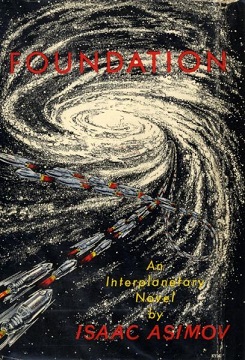
Foundation, Isaac Asimov

Original cover of the first book, 1951

Asimov (1920-1992) was a scientist educated at Columbia University, with a professorship at Boston University, and he poured his knowledge and varied interests into his SF books, some of the best from the Golden Age of SF. The Foundation trilogy won a 1966 Hugo award as best all-time series. Asimov followed the trilogy up with further Foundation novels organized in a number of related series. A streaming series was based on his Foundation world-building. Here’s a terrible confession: I have never been able to get through the Foundation novels. I will say there are standalone Asimov books I’ve loved, especially a deep fondness for Pebble in the Sky (1950) and The Stars, Like Dust (1951)–and I admired but found flawed The Gods Themselves, which won the 1972 Hugo, Nebula, and Locus Awards in a boffo trifecta. Whatever I may think, Asimov’s influence on speculative fiction was and remains immense and his output, prolific. His envisioning of a galaxy-wide empire is the precursor to many another SF book or series of books–and movies and all the rest–world-building that features a galactic empire and its wide-ranging conflicts. Asimov has said he was inspired by Gibbons’s Rise and Fall of the Roman Empire and Thucydides’s history of the Peloponnesian War. Among several other terms he invented, the word “robotics” is probably the most well-known and widely used, and he was a true Renaissance man, writing academic science, popular science, mystery, children’s books, popular history, dirty limericks, and on and on. Hmm, maybe we should conduct a contest to see whether his number of speculative fiction awards beats out Ursula LeGuin’s. He has an impressive list of them. His political views and his behavior frequently roused controversy. To learn more about Asimov, you can’t do better than heading to this web site.

The Dune Saga, Frank Herbert

Find it here.

After a career in journalism, the largely self-taught Herbert (1920-1986) began selling stories to SF magazines. With his ground-breaking novel Dune (1965), he achieved fame as one of the New Wave of SF writers. The structure of Dune is innovative–episodes of adventure involving the novel’s main character are interspersed with purported anthropological, historical, and ecological accounts of the culture of his planet, part of a far-flung galactic empire. I found this first book of the series pretty brilliant, with its invented history/anthropology sandwiched between thrilling action sequences. It won the 1965 Nebula award and shared the Hugo in 1966. I could barely get through the next in the series, Dune Messiah, and I didn’t bother reading the other four sequels, the writing was so bad. But many readers love them. You may be among those fans. He died before he could finish the last in the series. Whatever you think about it, the Dune saga is a hugely influential SF series, with innovative world-building and a forward-thinking emphasis on ecology, one of Herbert’s lifelong passions. The Dune universe has tempted several different movie-makers to have a go at it. The latest films, directed by Denis Villeneuve, divided the first book into two parts and have been extremely successful. The second book of the series, Dune Messiah, is in the early stages of production, although it will be the third in the film trilogy. Villeneuve says he won’t go past that book to any later books in the series, which I think is a wise choice. I enjoyed the first of Villeneuve’s films very much, but the second only so-so. (No, really–were you convinced by Timothée Chalamet and Austin Butler going at it as supposedly the best fighters in the universe? Me neither.) But people keep trying to make movies out of this material. Even the crazy 1984 David Lynch version has its rabid fans. Herbert, a complicated man, opposed the Viet Nam War but was a lifelong Republican. Many would call him libertarian. For more about Herbert and the Dune saga, see this web site maintained by his son Brian Herbert and Kevin Anderson. The two have collaborated on fiction that furthers the Dune universe.

Valentine Week 2025: Fairytale Fantasy, Day SIX

This year’s theme: RED RIDING HOOD

A reminder–The novels I’ll review during this year’s Fairytale Fantasy series:

Red Rider, by Kate Avery Ellison (2019, indie-published)—reviewed HERE

Wolves and Daggers: A Red Riding Hood Retelling, by Melanie Karsak (2018, indie published–Clockpunk Press, which seems to be owned by the author)–reviewed HERE

Beauty and the Werewolf, by Mercedes Lackey (2011, Harlequin Nocturne)–reviewed HERE

Crimson Bound, by Rosamund Hodge (2015, HarperCollins)–reviewed HERE

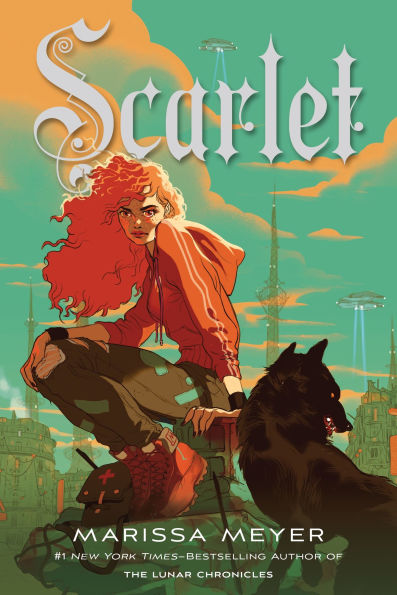
Scarlet, by Marissa Meyer (2013, Macmillan)–TODAY’S REVIEWED NOVEL

For the Wolf, by Hannah Whitten (2021, Orbit)

And finally: a medley of interesting outlier pieces, all based on Little Red

TODAY’S REVIEWED NOVEL:

Scarlet, by Marissa Meyer (2013, Macmillan)

Buy this novel–and all the books in its series, The Lunar Chronicles–on Amazon in hard cover, paperback, ebook, and audiobook formats. If you’re a member of Kindle Unlimited, you can read it there free. At Barnes & Noble, Scarlet is available in hard cover, paperback, ebook, and audio formats, and the other books in the Lunar Chronicles as well. In addition, several of the series books (not Scarlet, though) are available in large print editions, and you can listen to the audiobook versions of several of the series books with a Barnes & Noble audiobooks subscription free–again, though, not Scarlet. Apple offers Scarlet and all the other books in the series in ebook and audio formats, and so does Kobo. For more about all these books, visit the author’s web site.

How about that, a sci-fi Red Riding Hood! This novel is set in a dystopian future where humans have settled the moon and then mutated. The moon people, led by their evil queen, want to become humanity’s new overlords. Against this setting, we have a girl with flaming red hair and a temper to match. We have a grandmother. And we have a lot of werewolf-type large buff guys. As with most of the books I’ve reviewed this week, the story may have been inspired by the Red Riding Hood folk tale, but there the resemblance ends. I keep being astonished, though, at how many of these Riding Hood retellings feature werewolves–and astonished, as I’ve said, to learn that werewolves really are part of the deep folkloric background of the tale.

Like Red Rider, the Ellison novel I reviewed on day one of Valentine Week, Meyer’s novel is set in the future, a dystopian future where werewolves play an evil role in turning the earth into a hellhole. Unlike Ellison’s novel, where the vibe is pretty much fantasy, the vibe in Meyer’s book is unmistakably SF, including all manner of SF gadgetry, including futuristic air cars and futuristic maglev trains. Scarlet is a girl who has had to learn to be tough, because she leads a tough life. When she meets a mysterious man (yep, he’s a prizefighter. . .werewolves and prizefighters. . .this must be a thing), she is drawn to him but also repelled by his strangeness. Her grandmother has been kidnapped, though, and the police are no help, so Scarlet takes help where she can find it–the help of the man named Wolf. Violence and peril ensue.

Here’s what happened when I started reading this novel. It is Book 2 of a series, and I had hoped this book, like other mid-series books, would catch me up about the doings of Book 1 in some handy little paragraph early on. Unlike the Lackey novel I reviewed a few days ago, the individual books of The Lunar Chronicles are not stand-alone novels within a larger framework, but true sequels. I soon discovered that without reading Book 1, Cinder (yep, based on Cinderella), I was at sea. Cinder, the title character of Book 1, plays a major role in this second book, too. After a lot of grumbling, I got Cinder and started all over from the beginning, Book 1, chapter 1, page 1.

I’m glad I did. The story arc of the series unfolds as a nice whole, even though Cinder’s and Scarlet’s stories, based on different fairytale tropes, have some differences. And best of all, there’s no hard cliffhanger ending at the end of Cinder. If you’ve followed this blog, you know how much I hate those. As a result, I had two great reading experiences. If I never continue to Book 3, I’ll still feel very fond of the two books I did read. And I really might continue, because the writing is good, the plot zips along, and the characters are fun. I really like Cinder and Scarlet. They are kind of anti-Disney anti-princesses. (That’s a GOOD thing.) Enjoy these books! If you do read Scarlet, though, I recommend you read Cinder first.

NEXT UP: As Valentine Week ends, I’ll do a quick mini-review of For the Wolf, by Hannah Whitten, and give you a link to my full review of a few year’s ago. I’ll also mention a whole treasure-chest of other Red Riding Hood experiences, some in book form, some not.