It’s A Midsummer Night’s Eve: Fairy Abduction, Anyone?

I write this blog post on the evening of June 24th, which is the traditional date of midsummer celebrations all across Europe, even if it’s not the date of the actual summer solstice (and misleading as well, since that moment marks the beginning of summer in the Northern hemisphere, not the middle of it). In many countries, June 24th is St. John’s Day, commemorating John the Baptist. Midsummer Night’s Eve, I suppose, was actually last night, the evening before St. John’s Day. In some countries, the day of celebration is June 25th.

A quick personal reflection: this time last year I had just returned from a month-long sojourn in Porto, Portugal. If only I had stayed another month! Porto has one of the most colorful St. John’s Day celebrations, featuring the sniffing of leeks (???), the eating of sardines (well, sure, it’s Porto, isn’t it?), and the whacking of strangers with toy hammers (???????).

With that out of the way: in my own perverse celebration of Midsummer, on to three pretty recent novels of fairy abduction. They are: A Court of Thorns and Roses, by Sarah Maas (2015), Spinning Silver, by Naomi Novik (2018), and The Cruel Prince, by Holly Black (2018). All three might be thought of as YA, but I question that categorization. A Court of Thorns and Roses started out being thrust into the YA box, but then–especially because of the graphic sexual content–it was re-classified NA (New Adult), and by now it is in a category all its own, the hugely successful engendering of a new fantasy/romance hybrid, romantasy. Spinning Silver has a very adult feel about it–not in the sexual way but in the deftly mature way the novel handles themes, characters, intricate plotting, and above all, excellent writing. I suppose The Cruel Prince really is YA. More about that to come.

A Court of Thorns and Roses, Sarah Maas (2015)

Find it HERE.

What can I say about this novel that hasn’t already been said? I did try. See my review for last year’s midsummer fairy reads HERE. This novel and its sequels spawned an entire hybrid and hugely popular genre, romantasy, so much so that it actually goes by its widely-recognized initials, ACOTAR. The sex is hot. The fairies in all their shapes and iterations are hot. The main character starts out very much an abducted damsel in distress, but in later books, she grows a spine. So if you read Book One and are put off, just go on to read Book Two. Then if you really love it, keep reading. There are a bunch of them. I have to give the novel and its siblings a lot of credit for creating an intriguing and intricately described fairyland with elaborate customs, politics, and (did I mention this?) hot sex. I got sick of it/didn’t believe in it after a while, with its bathrooms apparently by Kohler, but okay, I kept reading. This book, along with all the many books it has influenced, is a true publishing force. With many another fan, you may want to cry out to the various incredibly buff fairies of ACOTAR, Steal me next! Steal me! Steal me!

Spinning Silver, Naomi Novik (2018)
Find it HERE.

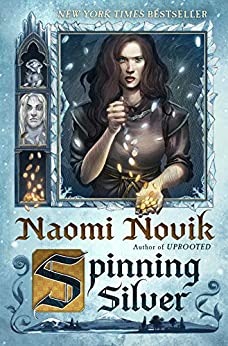
I really admire this novel. It’s one of those books based on a fairy tale, but that’s misleading. Yes, it is based on the Rumpelstiltskin folk tale collected by the Brothers Grimm, but it is also a fascinating historical novel with fantasy elements. And in addition: fairy abduction. I won’t review this one at length because I already have, in my series of blog posts on novels that are fairytale retellings. See my review HERE. It’s a wonderful book. The main character is a spunky young woman, but I really don’t associate the novel with the all too frequent trivialities of YA. (You can see I have some prejudices about YA. You may not share them! I probably have them because I’m old and grouchy.) The fairies are as morally ambiguous as they always are. Delightful read.

The Cruel Prince, Holly Black (2018)

Find it HERE.

This brings me to The Cruel Prince, a novel I hadn’t read until now. I probably put off reading it because it is, indeed, YA (and its title is a little clunky). But I enjoyed this novel immensely, even though I’m not exactly the audience for it. I say that, and then I reflect that many, many readers of YA are adults. This is a good one, folks! Black’s novel is unlike Spinning Silver and ACOTAR in one important respect. Those two novels are what’s known as “second world fantasy” or “high fantasy.” This simply means that such stories are set from the get-go in a world far, far away from ours. Although–now that I think about it–novels of fairy abduction like those might actually transition from a “second world” (the fantasy world of the novel) into a “third world,” the parallel universe of fairyland, sometimes separated by a physical border, other times by some type of mystical transition from one realm to the other.

The Cruel Prince is different. This novel is portal fantasy, “low fantasy,” where the action begins in our own world and then transports the characters to a different realm (think Harry Potter). The fairy world of The Cruel Prince seems to exist side-by-side with the real world, too, again like Harry Potter. The characters can come and go. The fairy foster-father of the main character intrudes on her childhood world to murder her human parents and abduct her and her two sisters to his estate in fairyland. He is one of the fairy gentry there. Not a spoiler–this happens in one of the first scenes of the book. Such a gory beginning and such an exotic location as fairyland don’t prevent the main character from nipping across to the real world for a visit to Target. She reads as a real teen-aged girl. A teen-aged girl living a very strange life.

I know I keep mentioning Harry Potter, but this novel is actually nothing like Harry Potter, believe me. Black’s novel is full of court intrigue of the most delicious, well-plotted kind. It has a whiff of dark academia fantasy as the main character attends a sort of high school for fairy combat and lore, and more than a hint of horror. Think about that beginning. The foster father is a type of fairy known as a “red cap,” extremely violent and dangerous, known for dipping his cap in the blood of his victims. There’s the usual torn-between-two-lovers YA trope, handled here very subtly. And there’s the push-pull between the main character’s humanity and the fairy culture she aspires to blend into–especially poignant since the fairies, famously, are so amoral and dangerous that everything in the reader may scream “get out!” Besides, after reading Mirrlees (see my earlier post), I was especially intrigued that Black includes the dangers of eating fairy fruit as a hideous reference to the worst kind of drug addiction. I was also intrigued by the main character’s protective measures of Mithridatism. (Hint: you have to read to the last stanza to find out.)

Best of all, this is a first book in a series WITHOUT A CLIFF-HANGER ENDING!!!!! If you have followed my blog, you know how much I hate these. It’s the one thing (well, okay, also bad writing) that makes me refuse to go on with a series. Black is considerate of her readers. Sure, it’s clear there’s more story to come. But she doesn’t just chop us off at the knees. I plan to read on. This book was lots of fun, and Black is a very good, very satisfying writer.

WHAT NOW? Now I will move on to my reviews of the novels short-listed for the Hugo Award 2025.

It’s Midsummer! Older Novels of Fairy Abduction

In this series of blog posts, I celebrate Midsummer fairy madness by reviewing tales and novels of fairy abduction. Those fairies aren’t the cute little Disney-fied winged things we think they are. Fairies are dangerous. Fairies are curious. They love to grab humans and spirit them off to fairyland. Two older novels base their magic on the fairy penchant for child-stealing: Lud-in-the-Mist, by Hope Mirrlees, and The Broken Sword, by Poul Anderson.

Hope Mirrlees, Lud-in-the-Mist, 1926

Original U.S. cover

Read the e-book free through Project Gutenberg. Click HERE.

When Mirrlees wrote this fantasy novel, she had already established herself as a modernist poet and associate of the influential Bloomsbury Group of avant-garde writers including Virginia Woolf. But other kinds of writing had captured the British imagination, including the fantasy stories of Edward Plunkett, 18th Baron of Dunsany (Lord Dunsany), whom many consider the father of modern-day fantasy writing, and George MacDonald, a Scots writer with equal influence. After writing two historical novels, Mirrlees turned to fantasy, too, with Lud-in-the-Mist.

Her novel is set in a fictional quaint village governed by stodgy older politicians. Their main job is to maintain a state of absolute, boring normalcy. It’s of utmost importance, because the village borders a terrible threat, Fairyland. Fairy ways will disrupt their worthy lifestyle of shopkeeping and polite teas and every comfort of bourgeois life. The Lud-in-the-Mist establishment has created elaborate euphemisms to avoid even mentioning the fairy threat, especially the threat of fairy fruit, so enticing to human beings that it drives them mad. No polite and proper resident of the village will so much as utter the words “fairy fruit.” Underneath the normal facade of the town lurks a much more lurid and romantic past. The town’s establishment is intent on reining it in at all costs. But when the son and daughter of Lud-in-the-Mist’s mayor are both abducted into fairyland, the usually staid father sets out to rescue them.

If you read this novel, do not expect the pacing of a present-day fantasy tale. This is a long, slow read. Slow. Did I mention slow? The characters are often self-consciously cutsey, even Hobbit-like. There’s a ton of quaint “atmosphere.” I wonder if British readers take to this kind of thing better than us crass Americans? So why read it at all, you ask, unless as an historical curiosity. THIS: the language is simply gorgeous. Mirrlees was a poet, and her language in this novel is poetic in a good authentic way, not in some schlocky pseudo-archaic way. Your question, reader: do you have the patience for it? If yes, grab this book. If no, give it a miss.

Poul Anderson, The Broken Sword, 1954

Original U.S. cover

Fast-forward to a different era, the Golden Age of Science Fiction. Interesting that The Encyclopedia of Science Fiction doesn’t even mention Poul Anderson in its article on that golden age. He was a seven-time Hugo Award winner, won the Nebula three times, was named a SFWA Grand Master, and on and on. Until now, when I thought of Anderson, I thought of SF. I hadn’t read any of his novels, though. I confess it. To my surprise, I found that Anderson wrote a great deal in the fantasy genre as well. The Broken Sword is one of his earliest published novels. I’m glad I discovered this novel, and glad I have finally started reading Anderson.

The Broken Sword, published the same year as Tolkien’s Lord of the Rings, is a fantasy-Norse saga full of heroes, gods, trolls, giants, violence, swords, broken cursed swords (well, one), and all the rest. And fairies. Especially those, although the novel refers to them as elves. In this novel’s terms, I think it’s safe to say that elves and fairies are more or less the same–in the same way Edmund Spenser’s elves and fairies are two words for the same beings. More or less.

In this novel, the medieval English overlord Orm rides off leaving his new-born son unbaptized. Very unwise, because Orm has butchered an entire family of enemies, leaving only an old crone alive. Inconveniently for Orm, the crone is a witch and curses him. She sees a perfect instrument for her vengeance, Orm’s baby son. When she communicates her knowledge to Imric, an elven overlord in the overlapping parallel fairy realm, he leaps at the chance to snatch the infant and exchange it for a half-troll half-elven infant that he himself has engendered in order to have a changeling to leave in the human infant’s place. Imric raises Skafloc, the human boy, as his own in fairyland. Meanwhile, Skafloc’s mother unknowingly nurses her changeling baby, Valgard, thinking him human. Skafloc grows up the perfect elven warrior, violent but honorable. Valgard grows up the consummate human warrior, but hatred smoulders at the heart of his violent ways. We readers wait for the stand-off between these uncanny twins that will surely occur, and the cursed broken sword bides its time to unleash havoc on the world.

I think if I had encountered this novel in my younger years, I would have been enthralled. This novel of a fairy (elven) changeling turns on one of the most canonical and dangerous bits of fairy folklore–the abduction of a human child and the leaving of a fairy child in its place. The novel is also violent. The sexual parts are not graphic, but they may seem unsavory to many present-day readers. My biggest problem with the novel is its language, self-consciously archaic–so much so that in a later revision, Anderson removed a lot of that clumsy vocabulary. I read the original version, though, because I understand the revision also removes some of the sexual and violent underpinnings of the book. I wanted to read the real novel, not some whitewashed version. But the pseudo-medieval language is indeed annoying. That said–when I could clear that trashy language out of my consciousness, I found a great deal of Anderson’s description to be beautifully poetic. I really admire that aspect of the book. Then again, as the novel progresses, it is full of faux-Norse “poetry” that I could have really done without. I think of this book as a kind of flawed masterpiece. The annoying aspects kept intruding, though, so I had a tough time finishing the book.

To summarize: both novels are interesting examples of fantasy in their moment, and interesting examples of plots with fairy abduction at the center.

Next up: More recent novels with plots of fairy abduction.

It’s Midsummer! Have you been abducted by a fairy yet?

For the past few years at Midsummer, I’ve posted my recommendations for speculative fiction with fairies. June 20th is this year’s summer solstice ushering in the season of summer in the geographical (astronomical) sense. Midsummer, Midsummer Eve–these have been recognized and celebrated by humans since there were humans. I’m speaking of the Northern hemisphere, of course, for in the Southern, the same dates on the calendar begin the tilt into winter.

But in this northern half of the globe, even very ancient people have taken note of this day of the year when the sunlight lasts longest and the night is shortest. In western and northern Europe, ancient peoples erected stone circles as a kind of clock and calendar to track the moment. The English monument Stonehenge is the most well-known of these. Find out more here. The Wikipedia entry will give you a great overview, as well as many sources for follow-up. Certain structures in Meso-America, such as the Pyramids of the Moon and Sun in Teotihuacán, Mexico, may serve a similar function. Find out more about them here.

Sunrise at Stonehenge, summer solstice 2005. Source: CC BY-SA 2.0, https://commons.wikimedia.org/w/index.php?curid=195581
Pyramid of the Moon, Teotihuacán, Mexico. Source: Smithsonian Magazine.

Ancient peoples used such structures for practical reasons. But folklore grew up around the coming of summer, especially in a non-scientific age. The light lengthening, the darkness shrinking, the veil between the known and the shivery unknown thinning–irresistible. In western and northern European cultures, fairies are said to come out at Midsummer to do their mischief. People in those cultures mark this most fascinating and most dangerous time of year through a variety of celebrations, festivals, and of course stories. For a quick summary, take a look here.

Storytellers before writing, or before writing was widespread, passed these legends and practices along orally in what we call folktales or fairytales or folk songs. As European cultures gained literacy, storytellers wrote the legends down. Traditionally, most of these Midsummer celebrations took place on June 24 or 25, a bit later than the actual scientific solstice (June 20 or 21). Many of these traditions and stories involved or referenced the fair folk. The fairies, in their alternate world usually invisible to the rest of us.

Now it’s my turn. How shall I, in this blog, celebrate Midsummer fairy madness?

What is more fairy-mischievous than abducting a hapless human and whisking it away to fairyland?

Folklore

Folktales, folksongs, fairytales–many feature people taken by fairies off to fairyland. One of the most well-known is the Scots folktale/folksong Tam Lin. In the story, a young woman picks a flower in forbidden territory. Tam Lin magically appears and takes her virginity. When she gives birth, she reveals that the father is Tam Lin. And who is he? He’s a human abducted by the fairy queen into the land of fairy. After many trials and tribulations, the young woman rescues him from fairy bondage, and he becomes her knight. The ballad, listed as Child Ballad 39 and number 35 in the Roud Folk Song Index, is known in many variations. Here’s a good one.

Literature

The absolute classic of the fairy-abduction genre is, in the English-speaking world, William Shakespeare’s 16th century play A Midsummer Night’s Dream, one of his most beloved. In this play about fairy magic in general and the magic of love, an ordinary guy gets stolen by the fairy queen Titania to be her paramour–except that her jealous fairy king Oberon has blinded her eyes to the ordinary guy’s less than ordinary physique. Oberon has sent his minion Puck to magically skew Titania’s judgment so that she, the most powerful and elegant of fairies, has fallen for a crude unlettered silly man. As an extra turn of the screw, Oberon has magically fastened an ass’s head on the poor human, a “rude mechanical” named Peter Quince.

Image uploaded from this site.

Oberon’s jealousy began when Titania, who has abducted a human boy for a plaything, refuses to give him up to the fairy king, who covets the boy for himself (for what purpose? don’t ask, and Shakespeare didn’t go there). Meanwhile, this fairy plot intersects with the bumbling buffoonish efforts of the “rude mechanicals” to put on a play at the wedding of their own human king. It also intersects with human King Theseus’s efforts to make wise decisions for his subjects while putting on a big do to celebrate his marriage to a foe he has subdued in battle, the warrior woman Hippolyta. More abduction. Finally, the fairy craziness intersects with two interchangeable pairs of lovers stumbling around a magical forest trying to figure out which one loves which other one, and why. The play is a work of genius, and huge fun, as the scales fall from the eyes of all the characters, human and fairy, and they see how inappropriately they have fallen in love, yet how irresistible love is.

Ain’t it the truth. As the play itself notes (Act V, scene 1), “The lunatic, the lover and the poet/Are of imagination all compact.” All share the same crazy rush of emotion. And I, along with the play, blame the fairies.

Here’s an even older story from the same region, England

Another compelling tale of fairy abduction! Sir Orfeo, an anonymous 13th/14th century Middle English poem, repackages the Greek myth of Orpheus and Eurydice. In the hands of this unknown poet, the myth becomes a cautionary tale about the dangers of falling asleep under a tree at Midsummer when the fairies are on the prowl.

In the Greek myth, if you recall, Orpheus the great musician mourns his dead wife Eurydice so terribly that the gods grant him permission to go to the underworld to rescue her. The gods set one condition: if Orpheus looks back to see if Eurydice is following him, she’ll slide back into Hades forever. He does, and the story ends tragically.

The medieval English poet takes the story and gives it a different twist. In his version, Orpheus the harper becomes Sir Orfeo–still a harper, but also a medieval knight, and the lord of his lands. His wife Herodys (Eurydice) does not die but is abducted when she falls asleep (at midsummer! at the woo-woo hour of noon!) and the fairy king spots her. He takes her through a portal in a rock to fairyland. Like Orpheus, Sir Orfeo wanders the world looking for his lost love and playing sad songs. One day he comes upon the fairies parading into their rock, and in their train, he recognizes his wife Herodys. He follows them into fairyland. His music so enchants and moves the fairy king that he allows Herodys to go back to the human realm with her husband. They live happily ever after! Not only that, but the steward Sir Orfeo puts in charge of his lands while he wanders around for years and years is a faithful steward–not the evil guy so many of these fairytale stewards turn out to be–and he gives Sir Orfeo his kingdom back. What an HEA.

If you can find it, the translation I like best is by none other than that great scholar J. R. R. Tolkien. Here’s how to find it. This is hard Middle English, unlike Chaucer’s, which anyone can read with a bit of effort (because it’s the Middle English that evolved into our own modern English). So unless you are a very good scholar of Middle English, a translation is a good idea.

WHAT DO PRESENT-DAY WRITERS DO with the fairy-abduction story? For a midsummer treat, go on to my next few posts for novels that explore that very tricksy matter.