Hugo Awards 2025: Two Finalists for Best Novel

The Hugo Awards for 2025 will be announced on August 16, 2025 at Seattle WorldCon.

The finalists for best novel:

  • A Sorceress Comes to Call by T. Kingfisher (Tor)
  • Service Model by Adrian Tchaikovsky (Tordotcom)
  • Alien Clay by Adrian Tchaikovsky (Orbit US, Tor UK)
  • Someone You Can Build a Nest In by John Wiswell (DAW)

Disclaimer: I only review the novels. Go to the Hugo Awards web site to find all the other finalists in many categories. Great reading experiences await!

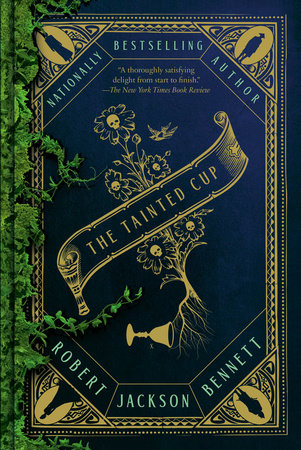
The Tainted Cup by Robert Jackson Bennett (Del Rey, Hodderscape UK)
Find it HERE.

If you love fantasy AND mystery novels, this is the book for you. The cover tells you so, with its intricate design reminiscent of some embossed volume of Sir Arthur Conan Doyle. The cover does not lie. In the tradition of the best mystery novels, The Tainted Cup introduces the eager reader to a duo of detectives working a seemingly unsolvable mystery: the murder of a nobleman by vicious tree. So–a touch of horror as well.

The detectives are one of the genre’s truly delicious odd couples. Ana Dolabra, a mysterious older eccentric detective-genius, never leaves her house but sits blindfolded in her room filled with books and puts the clues together. Her wet-behind-the-ears assistant, Din, has to fight skepticism by other officials and his own insecurities, meanwhile navigating the eccentric Ana’s crazy requests and encounters. This is a novel that could have been set on Baker Street but instead inhabits an alien landscape with death by the murderous afore-mentioned tree, horrifying gigantic sea-beasts, and officials magically altered so they can do things like remember every single detail of a scene or even page that their eyes fall upon. This novel is also one of a crop of many recent books with protagonists who deal with disabilities, and Bennett handles the topic very well.

The point-of-view character, Din, is an engaging person with many fears and worries. “Of all the Sublimes who could have been my assistant, why did it have to be the one with a forty-span stick up his ass?” grumbles Din’s perhaps stark raving mad but undeniably brilliant master, Ana. As we settle into Din’s head, though, we realize how much the world misjudges him, and why. There’s a hint of romance, too. The characters are fascinating. The world-building and magic systems are very well-done. And this novel sports my favorite feature, a novel with a sequel but no cliff-hanger ending. The Tainted Cup is a satisfying read all by itself. I feel enticed to read on to the sequel, A Drop of Corruption, Book Two in Bennett’s Shadow of the Leviathan series, but not bludgeoned or tricked into doing so.

Bennett’s novel was also short-listed in the fantasy novels category of the 2025 Locus Awards, although it didn’t win, and it is short-listed in the best novel category for this year’s World Fantasy Awards, to be announced on Nov. 2, 2025. More about both the Locus and World Fantasy Awards in later posts.

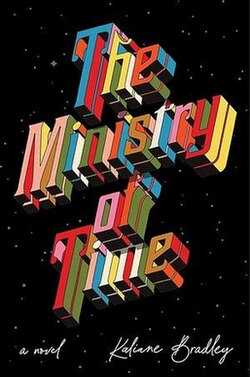
The Ministry of Time by Kaliane Bradley (Avid Reader Press, Sceptre)
Find it HERE.

The Ministry of Time was short-listed for both the 2025 Arthur C. Clarke Awards in the novels category, and in the best first novel category for the 2025 Locus Awards.

I reviewed this novel in my posts about this year’s Arthur C. Clarke Awards. Find my review HERE. I should also note that in that review, I entered a wrong link to the novel. I’ve since corrected the error in the earlier post. This post gives you the correct link, too. Apologies!

To summarize very briefly: Bradley’s novel is wonderful, ingenious, and thrilling. I loved it.

GREAT NEWS for lovers of this book! I’m so pleased to see that the BBC has recently created a dramatic series based on The Ministry of Time. Find out more HERE. Also HERE. When can we watchers in the U.S. hope to see it? When? When?? Note: There’s a Spanish HBO series of the same name and roughly the same premise from 2015. Don’t confuse that one with this.

The Hugo Awards–and the Usual Controversies

The Hugo Awards for 2025 are soon to be announced. Here is the list of finalists for best novel:

  • The Tainted Cup by Robert Jackson Bennett (Del Rey, Hodderscape UK)
  • The Ministry of Time by Kaliane Bradley (Avid Reader Press, Sceptre)
  • A Sorceress Comes to Call by T. Kingfisher (Tor)
  • Service Model by Adrian Tchaikovsky (Tordotcom)
  • Alien Clay by Adrian Tchaikovsky (Orbit US, Tor UK)
  • Someone You Can Build a Nest In by John Wiswell (DAW)

The winner will be announced on August 16, 2025 at Seattle WorldCon. That means you, Reader, have time for some catch-up reading if you haven’t gotten around to all these wonderful novels. I had a fairly easy job of it, since several of the novels on the Hugo list were also short-listed for the Nebula and Arthur C. Clarke awards, and I had already read them before the Hugo finalists were announced.

Disclaimer: I only review the novels. Yet so many wonderful reading experiences await in the other categories! Go to the Hugo Awards web site to find them all.

In the next several posts, I’ll review the short-listed Hugo Awards nominees for best novel.

As always, I need to mention the latest controversy roiling the Hugos. It seems one of these rears its ugly head every year or so. Last year’s controversy was about alleged censorship related to the WorldCon host for the 2024 awards, China. This year’s is about AI. How trendy. Several officials of WorldCon have resigned over the brouhaha. Briefly: In order to cut down on workload BUT ALSO to deal with possible sensitivity issues in the U.S., the WorldCon officials vetted their panel of judges using ChatGPG. Unfortunately, these AI tools are notoriously unreliable, and often seem to reflect possible prejudices. The use of the tool may have helped out with the workload, but how trustworthy was the resulting panel? The decision to use AI for this purpose was also hugely tone deaf, considering the widespread distrust and animus that the SF community feels toward such tools. Find an account of the controversy HERE.

AI in general, and especially for writers, is a magnet for controversy. The Hugos controversy, thankfully, didn’t involve any use of AI by writers, but it does (or did, until WorldCon took corrective action) impugn the integrity of the award, one of the longest-standing, most respected awards for speculative fiction. As a writer myself, I found this blog post–on the Hugo controversy specifically and the use of AI by writers generally–to be especially interesting. How far should the literary world and individual writers go in embracing these tools flooding into the creative process?

For myself, I don’t use it–I say. Then I think again. But I never use grammar checkers, because in my experience they are dead wrong too much of the time and give bad advice even when they are (sort of) right. Good grammar–good. Good grammar used slavishly–wooden writing. (You see those two sentence fragments I just used?) I do use spell checkers, although not all the time. When I do, I use them very judiciously. They too can provide misleading or just wrong advice. I’d rather risk the occasional typo, which comes to us all. And those are very, very basic uses of Al. Generative AI to write a novel? Horrible, horrible idea. Generative AI to plot a novel, organize time, create marketing copy, and so on? Iffy at best.

AND THEN I climb down off my high horse to realize I have sometimes used AI-generated illustrations for this very blog. I am resolving right now not to resort to that in the future. More problematic for me: As a starving artist, I can’t afford to hire a voice actor to narrate my novels. Do I use AI-generated voices, especially considering how many consumers of fiction get their jollies from audiobooks and not the kind you process with your eyeballs? I’m thinking about it. Am I wrong? Am I a hypocrite? The horror! The horror!

NEXT UP: Reviews of short-listed novels by Robert Jackson Bennet and Kalianne Bradley.

Two More for the Hugos

In a previous post, I gave pocket reviews of four novels short-listed for the 2024 Hugo Award for best novel. Earlier, I had posted more extensive reviews. That’s because those four novels had already been short-listed for the 2024 Nebula, Locus, and Arthur C. Clarke awards, and two of them had won awards from those organizations. This year’s Hugo Awards committee selected two more novels to short-list:

  • The Adventures of Amina al-Sirafi by Shannon Chakraborty (Harper Voyager, Harper Voyager UK)
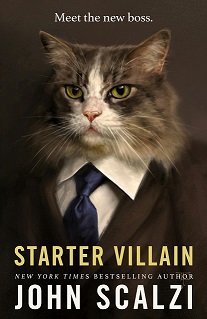
  • Starter Villain by John Scalzi (Tor, Tor UK)

Here are my reviews for both:

The Adventures of Amina al-Sirafi by Shannon Chakraborty (Harper Voyager, Harper Voyager UK)

Find out more HERE.

This novel is a fine swashbuckling pirate adventure full of magical creatures, good humor, and a colorful main character who describes herself as “a criminal, a sinner, a foul-mouthed middle-aged woman with a bad knee.” Sent on a dangerous quest by a rich and powerful noblewoman, the pirate Amina al-Sirafi reunites with her treacherous demon husband and sails the seas like Sinbad.  I loved the background of this novel, set in the Horn of Africa, the Indian Ocean, and other similar places, with its polyglot cast of characters. I love the idea of a novel that blithely sails past ageism, ableism, northern European fantasy tropes, and stodgy gender norms to pilot its own rolicking path. I’m really no judge, but the authentic feel of the Islamic culture lends depth and sincerity to the tale. I liked this novel as well as the first volume of the author’s popular Daevabad Trilogy–maybe better–and a lot better than the other two volumes in that trilogy.

I could easily see this book winning the Hugo Award for best novel of 2024. Do I think it is better than one of the other short-listed novels, Vajra Chandrasekera’s The Saint of Bright Doors, which won the Nebula for best novel and the Locus for best novel by a first-time author? I don’t. However, to say that is to compare apples to oranges. The Saint of Bright Doors is a serious book about deep problems of urbanization, government malfeasance, corrupt politics, cults of personality run amuck, and the like, while The Adventures of Amina al-Sirafi is a delightful romp through a Sinbad the Sailor world. I’m not saying Chakraborty’s book is a lightweight–not at all. But I’m thinking awards committees frequently tilt toward the book that possesses the gravitas. Whatever. I loved The Adventures of Amina al-Sirafi. What a book! What a read!

Starter Villain by John Scalzi (Tor, Tor UK)

Find out more HERE.

Another delightful read! This one reminds me quite a bit of Matt Dinniman’s indie-published LitRPG novel Dungeon Crawler Carl in its use of cat characters who upstage all the humans. The voice is really fun–a down and out man tells his own story. He has inherited his mysterious uncle’s business. Turns out the uncle was a super-villain, so the main character, who has never had a violent moment in his day, must exhibit the necessary chops. Lucky for him, the cats are in his corner. I enjoyed every page of this novel. In fact, I laughed out loud through most of it. It did seem a bit rushed at the end, though–as if, having created this marvelous set-up, the author couldn’t quite figure out how it should all go down. I thought about that. Then I put my no-doubt brilliant critical insight aside. Who cares about that when you’re having so much fun?

That wraps up all my reviews for the Hugo short-listed novels. Now it’s only a matter of waiting for the judges’ decision, which should come down any time now. In the meantime, if you haven’t read all of these books, get going! They are all great, and some of them are great fun.