The 2026 Philip K. Dick Award: My own take

In less than a month, the Philadelphia Science Fiction Society judges’ decision about the winner of the 2026 Philip K. Dick Award will be announced at Norwescon‘s annual conference on April 3, 2026. I always enjoy reading the short-listed novels for these speculative fiction awards, so if you are doing that too and you’re reading through this list, you have only a few more weeks to finish up.

I also wonder why I have so much fun doing this. Partly it’s because these lists introduce me to great speculative fiction I may have otherwise missed. I’m not all that knowledgeable, just an avid reader encountering some amazing fiction. Yes, I did study literature in grad school, but not THIS literature. I’m enthralled. I want to know more. These lists are part of my self-directed course syllabus, I guess.

Partly, though, I’m always awestruck at the variety of speculative fiction out there, and the variety of ways readers approach it. Not all readers approach it the way I do, and so the judges may very well pick a book that I wouldn’t pick. YOU, dear reader, may very well pick a book I wouldn’t pick.

This list is especially challenging. It’s all apples and oranges. I don’t envy the judges. I just finished judging a statewide poetry contest posing a similar challenge, and I thought I’d lose my mind. But then I, in the privacy of my own head, one individual reader among many, had the luxury of making my own choice for this award. And I found I had no trouble at all.

Again, the Nominees:

I enjoyed six of these books in, I really do believe, six very different ways. One book stood out, though. That book is:

Uncertain Sons and Other Stories by Thomas Ha (Undertow Publications)
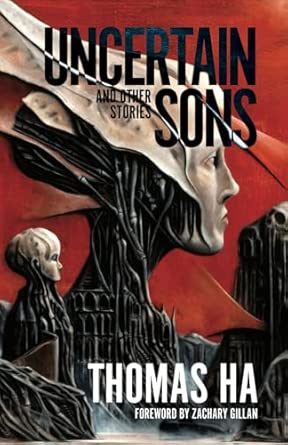
cover of Uncertain Sons and Other Stories, by Thomas Ha

You can read my review of it HERE, if you missed it in this series of posts. But really, get yourself a copy and read THAT. It is amazing. If the judges pick Ha’s collection of short fiction, I’ll feel gratified, but they could pick any of the others. You might pick any of the others. After all, it’s not a horse-race, even if these awards have that feel.

. . . I’m begging you . . . READ THIS BOOK.
2026 Philip K. Dick Award Nominee: CASUAL

The Nominees

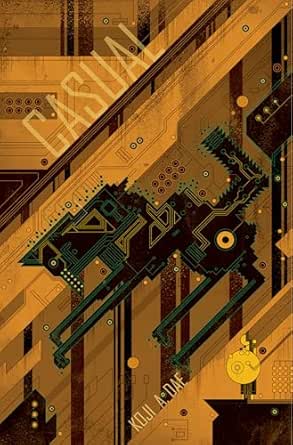
Casual by Koji A. Dae (Tenebrous Press)

book cover of Casual, by Koji Dai
Find out more HERE.

Casual is a compelling novel about trauma and abuse, set in a future Bulgaria, where the Haves live in the crystal-paved luxurious New Sofia deep underground, while the Have-Nots have to make do with crumbling Old Sofia (a city, I discovered, that has been continuously inhabited for around 7000 years). In the far future of this novel, it is still inhabited, but anyone living there wishes they weren’t. Pollution and disaster have made Old Sofia–and much of the world–almost unlivable.

Into this bleak world, the narrator, Valya, is about to bring a child, a girl. Valya will be a single mother. Just before realizing she was pregnant, she had had a bitter break-up with the father. She hasn’t told him about their child and plans to keep it that way. Yet she desperately needs help and support. She is addicted to a device, Casual, implanted in her brain by her psychiatrist to enable her to cope with her crippling anxiety, but her obstetrician wants her to remove it for the baby’s sake. Valya is torn between concern for her baby’s well-being and concern for her own terrible mental health challenges.

Casual is not a drug but it acts like one. It is an implanted gaming device plunging the user into a virtual-reality landscape tailored to that particular user’s needs. The game has settings sensing how much anxiety the patient is experiencing and automatically adjusts the game experience to soothe the anxiety.

As Valya’s pregnancy progresses, the novel reveals more and more of her backstory, helping us understand the roots of her anxiety and how her ill-chosen relationships, especially with the baby’s father, stem from her deep and troubled history.

If not for the setting and the device of the implanted game, this novel would be one among many about traumatized women and how they cope with trauma and come to understand its sources. The marketing labels the book “horror.” I don’t see that. As I understand it, horror exposes the reader to uncanny and disturbing events and atmosphere, especially those arising from the supernatural. However, in the subgenre of psychological horror, this disturbing atmosphere originates in the inner lives of the characters, so I suppose this novel is that sort. As I think I’ve mentioned, I don’t read much horror, although some fantasy and SF vehicles cross over into horror, and many works of horror have strong elements of fantasy and SF. I’m thinking, for example, of the Ridley Scott film Alien, the Bram Stoker novel Dracula, and many others. As for psychological horror, a classic example might be Charlotte Perkins Gilman’s short story “The Yellow Wallpaper.”

Maybe we shouldn’t quibble over labels here and simply note them as marketing devices. Certainly Valya’s deep-seated trauma and the symptoms arising from it are horrific. The abuse in Margaret Atwood’s The Handmaid’s Tale is horrific, too. I think of Casual as a novel more in that vein than in a book like, say, Christina Henry’s fantasy/horror crossover, Alice.

The picture Casual draws of a woman tormented by abuse is skillful and compelling. I only wish that the author had further developed the many hints of the nature and depth of Valya’s torment. I was left with a lot of questions: The motivations of the baby’s father. The motivations of the medical device company wanting to capitalize on Valya’s vulnerability–and where does it get the clout it has to avoid accountability? and why does it have that clout? The role of Valya’s new friend vs. her old childhood friend. What the reader is supposed to make of the hints that women in New Sofia have trouble conceiving. Exactly why–because I’m not completely sure–Valya acts as she does at the end. Most of all, I’d like to understand more about the nature of Valya’s trauma. By the end of the novel, we readers come to know the facts of it, but I want to know more about the whys–and how deep it goes, how many people were involved in it. I’d also like to know why, in the technical sense, the novel ends the way it does. Are we to expect a sequel? Or are we meant to go on wondering?

In spite of all these questions I’m left with, I did enjoy reading the book and thought it dealt in a sensitive and deft way with some very troubling topics. These are some of the most urgent of our time: power dynamics between men and women, corporate control of a citizenry, our addiction to screens and other technology, the nature of suppressed trauma and the silence surrounding it, the dynamics of abuse, divisive forces creating a population of the pampered rich and the left-behind poor with no middle ground. And also: climate change and its effects, although as a reader I’m not completely sure climate change is the source of the disaster that has befallen the novel’s bleak world.

Up next: The Immeasurable Heaven by Caspar Geon (Solaris)

Two more novels short-listed for the Nebula

The Nebula Awards, sponsored by the Science Fiction and Fantasy Writers Association, have announced their short-list of nominated speculative fiction published in 2024. The short-listed books nominated for best novel are:

REVIEWED IN MY LAST POST:

REVIEWS STILL TO COME:

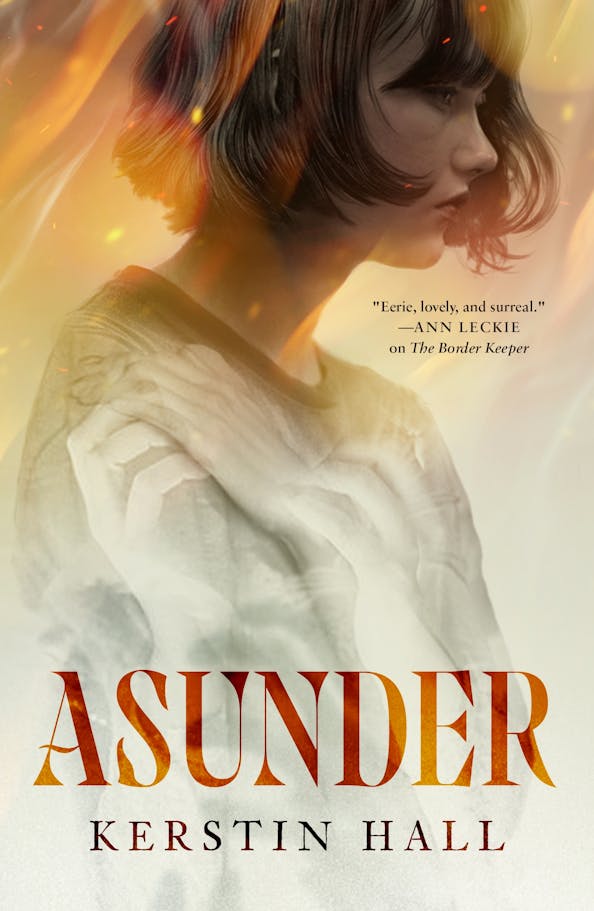
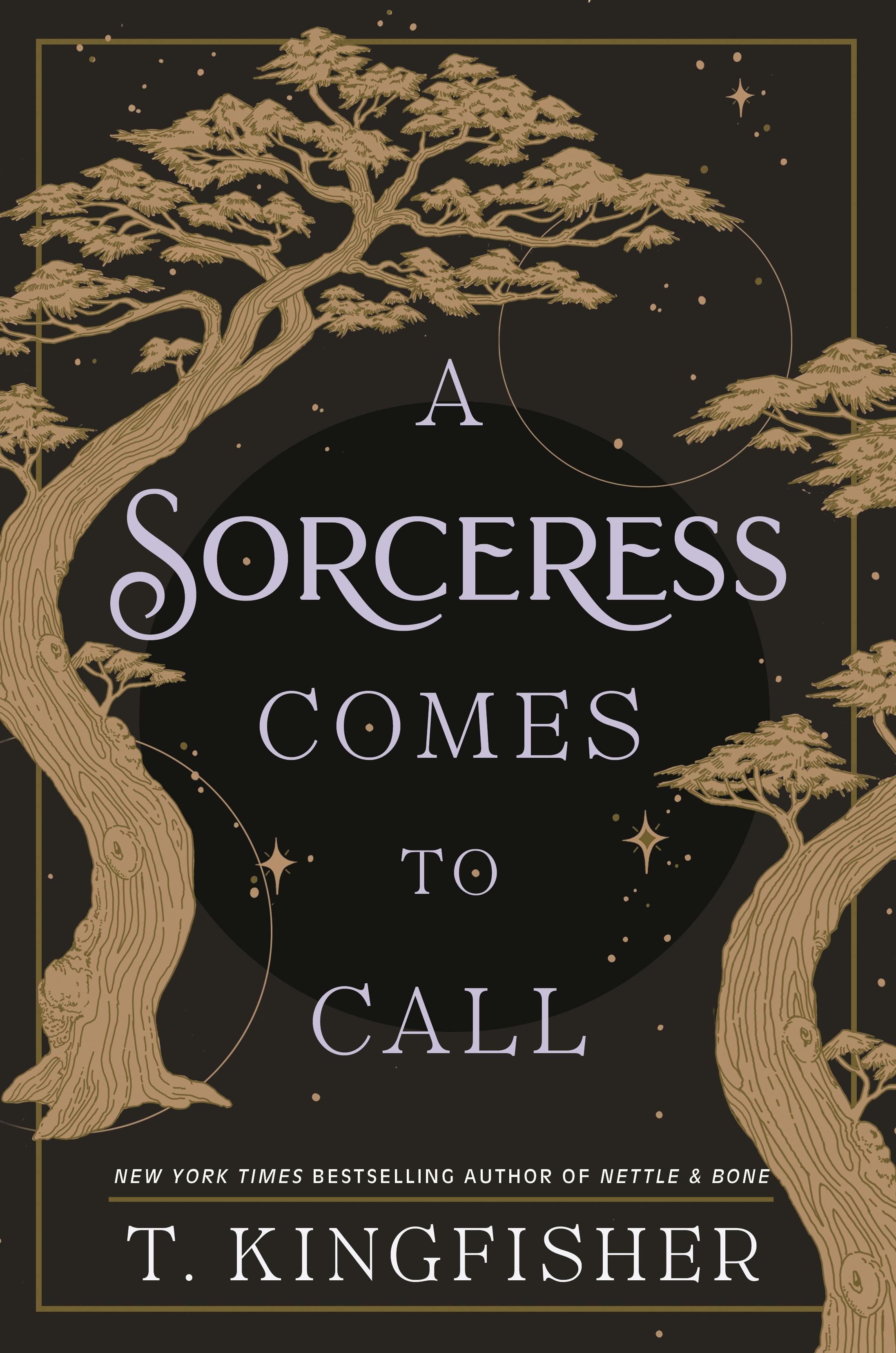
I’m reading the short-listed books in alphabetical order by author, which means I’m coming at them at random. The two books I’m reviewing in this post, Asunder, by Kerstin Hall, and A Sorceress Comes to Call, by T. Kingfisher, certainly do make an interesting pair. Both involve intricate systems of magic, and both involve the matter of possession–one person taking over another’s body. There the resemblance ends.

Asunder, Kerstin Hall (Tordotcom)

Find out more HERE.

This is a sometimes-thrilling, pretty consistently absorbing novel with a magic system so complex I never did completely figure out what it was all about. It’s a magic that punches you in the face starting on page one, a magic that must be unraveled as disaster looms. Meanwhile the main characters struggle with a state of possession that reads like the forced-proximity romance trope on steroids. Sometimes Hall’s novel goes off the rails. There’s a long sagging middle. Occasionally it veers into the bizarre, and not in a good way. Example: a method of mass transit that involves boarding a giant spider through its gullet and settling down to enjoy the view while the spider ambles off to the next town. Very few writers can engage in a China Miéville-level of weirdness without sounding outright silly. But just as I was starting to get bored and annoyed, Asunder brought off a stunning mid-plot surprise . Not a cheap thrills surprise, either. Not a surprise engineered by the need for a swerve in the plot–although the plot does swerve! Not the other kind of surprise just arbitrarily stuck in there because the author doesn’t know what else to do. No–this surprise rises organically from plot and character and genuinely changes the way we see both. I loved it. Throughout, big set-pieces stud the novel, gore- and horror-filled fights to the death with god-like creatures. At the end, I wasn’t really sure what had happened or exactly why. It seemed for a while that we were about to go veering off into romantasy, but Hall does not allow that. In spite of a kind of low-level confusion, I really enjoyed reading this novel.

A Sorceress Comes to Call, T. Kingfisher (Tor; Titan UK)

Find out more HERE.

Let’s say a Grimms’ fairytale and a Regency romance had a baby, and that baby was a real little horror. That would be this book. It was a delight to read. In a plot riffing off the Goose-Girl fairytale, T. Kingfisher (pen name for the author Ursula Vernon) spins the tale of a sorceress and her hapless daughter who set out to insinuate themselves into an upper-crust household. The sorceress hopes to ensnare the squire of the household into marriage, mostly in order to gain enough worldly advantages for her daughter Cordelia so that Cordelia can make a brilliant match with the squire’s filthy-rich bachelor neighbor. It is a truth universally to be acknowledged etc. etc. If the mother–a horror-infused Mrs. Bennet–succeeds, mother and daughter will live in comfort for the rest of their lives. The squire and his sister won’t fare so well. In fact, they could well end up murdered. People who turn out to inconvenience the sorceress often meet that fate. And then there’s the nightmare horse who is the sorceress’s familiar, trampling anyone who gets in his mistress’s way. As mousy Cordelia finds an affection she has never known among the squire’s household and the guests at his house party, she needs to rise to the occasion, grow a spine, and defeat her murderous mother. As with Asunder, horror, magic, and magical possession drive the plot. But what a difference in tone and outcome and just about everything else. A Sorceress Comes to Call was fun from page one all the way through. I loved reading it.