Now that the planet is burning up, it’s no accident that novelists are writing about it–especially as devastating fires sweep down on the LA area while I’m writing this post.
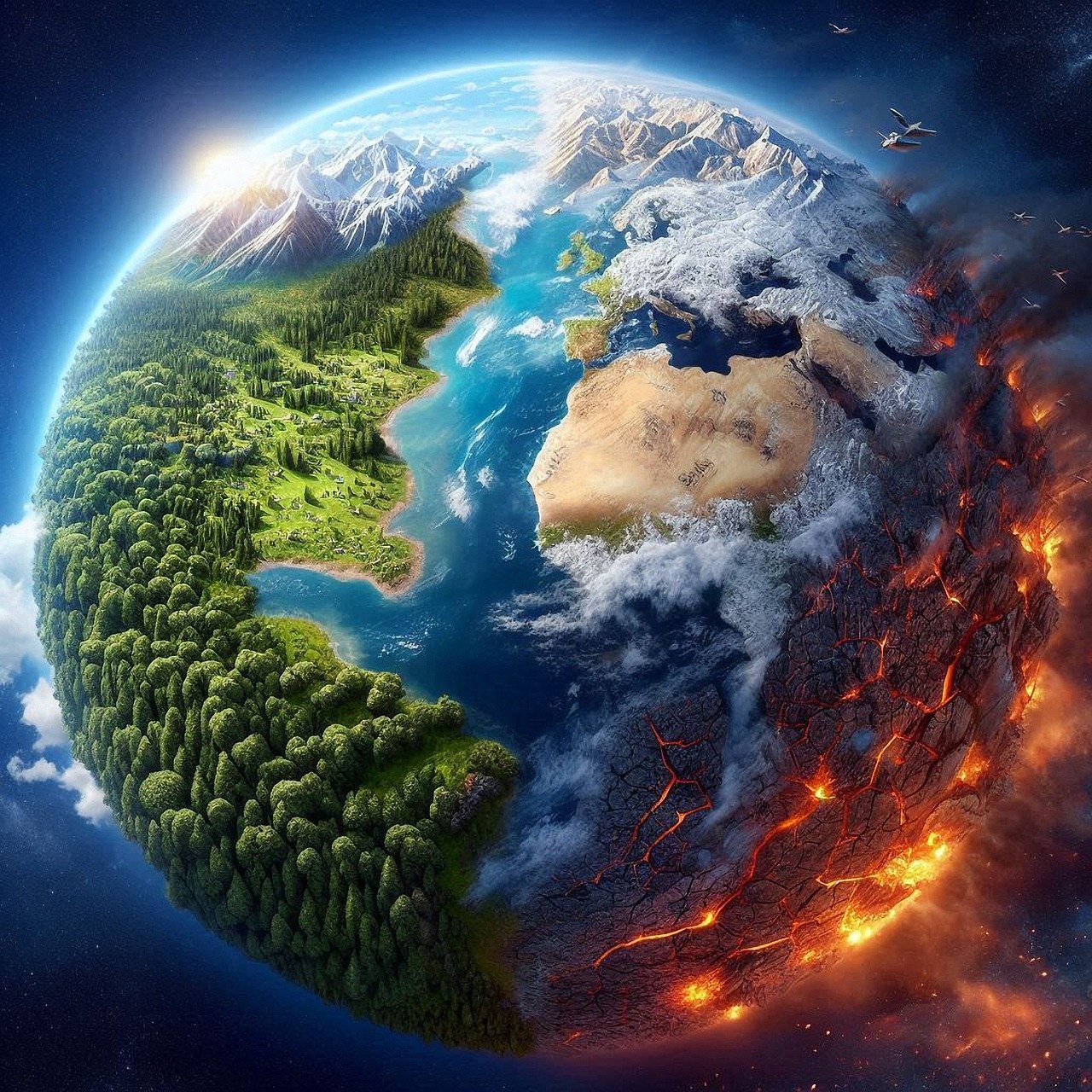
Completely understandable we’re using speculative fiction to explore climate collapse and ecological destruction. Fictions of all types, written, imagistic, patternings of all kinds such as poetic and musical, cinematic, gamer (fun and serious), even legal, even (one might argue) scientific hypotheses, illustrate a common human defensive practice. We try out thoughts, emotions, habits of thinking, situations by using a speculative microcosm, a little laboratory. We build an imaginary world, peer into it, maybe find ourselves entertained by it, but always, even if we are barely aware of it, use it to understand and comfort ourselves, even find solutions to our distress. In the best, most immersive fictional experiences, we discover empathy. Through this human impulse to explore the “little world” of the fiction, we encounter reality in the larger world, and (given the evidence of the Lascaux cave paintings of the Upper Paleolithic and similar finds) we always have.
Novelists as well as writers and creators in other forms increasingly turn to the type of speculative fiction variously termed eco-lit, ecology literature, green literature–to mention a few of its labels. True, all fiction is speculative. A lot of eco-lit is “realistic,” mimicking life as experienced by real people in real historical moments and real places. I’m thinking of Ann Pancake’s Strange as This Weather Has Been (2007), a novel about communal and family breakdown in Appalachia as mountain-top removal mining destroys not only the physical environment but a way of life. An earlier example, Peter Matthiessen’s At Play in the Fields of the Lord (1965), shows the damage a technologically advanced and arrogant culture can do to an indigenous culture and its life-giving environment. One of the most powerful recent books in this vein is the Pulitzer Prize-winning novel The Overstory, by Richard Powers.
Readers and publishers categorize other recent compelling eco-lit– novels, films, and storytelling in other media ( such as The Last of Us and Fallout 76–video games translated into long-form streaming series)–as speculative fiction. This is speculative fiction as it is usually understood, especially dystopian fiction and science fiction (the sub-genre sometimes snarkily referred to as Cli-Fi). These fictions may be set on a near-future earth under threat of climate collapse, or on other planets, or in the far-future. Environmental disaster in these fictional settings can be either the main problem or the consequences of a different problem (nuclear war, for example). If you’re looking for a good list of green-lit/eco-lit novels to read, you might start with the one published by The Guardian in 2020. It’s a bit dated now, but this is a great list. And here is a wonderful eco-lit web site.
Here are six very compelling speculative eco-lit novels–three older novels that have become classics of the genre, and three more recent novels. Of course there are many others. The ones on this list are all superb, and they all address environmental issues, all in different ways. I haven’t posted here in a while–reading other kinds of stuff. It’s time for some speculative fiction!
Take a look at my mini-reviews of these books and the other sources I’ve listed, and other lists of great eco-fiction. Then get reading.
There are many more of these eco-themed speculative novels to read and ponder. Older novels such as J.C. Ballard’s fever-dream of a book, The Drowned World (beware repellant racial stereotypes, though–and its misogyny–never have I encountered a more passive, purely decorative heroine). Newer novels such as Omar El Akkad’s American War. More coming all the time. With the hurricane damage, the fire damage, the inundation of our coastal areas, it’s past time to think deeply about these matters, and fiction–although no substitute for determined action to change the world–is one of the ways we can try out these ideas most empathetically, even energize ourselves for direct action.
Here’s my list:
- Ursula LeGuin, The Word for World is Forest (1972)
- Octavia Butler, The Parable of the Sower (1993)
- Margaret Atwood, Oryx and Crake (2003)
- Paolo Bacigalupi, The Water Knife (2016)
- Kim Stanley Robinson, The Ministry for the Future (2020)
- Annalee Newitz, The Terraformers (2023)
Earlier novels . . .
Ursula LeGuin, The Word for World is Forest (1972)

The matchless Ursula LeGuin wrote this Hugo Award-winning novella in the ’70s. It’s a quick read incorporating many of the themes of her longer novels: clash of cultures, encountering “the other,” and in this book especially, the devastating impact of colonialism on environment. In this novel, an encroaching, colonizing civilization possesses advanced technology able to overwhelm a colonized world without that technological advantage. In this prescient novel, the civilization with the advanced technology is out to destroy its victim’s environment for profit. It’s not a fair fight.
I say prescient, but of course the novel looks backward as well. I’m thinking of the chapter in Jared Diamond’s Pulitzer Prize-winning Guns, Germs, and Steel explaining how in 1532 the Spaniard Francisco Pizarro and his band of only hundreds, with hardly any damage to themselves, could take over the massive Inca civilization. They employed powerful technological advantages–the gun and the domesticated horse–for the ultimate enrichment of Spain. Weird to think of a horse as “technology,” I know, but read Diamond’s book–so interesting despite flaws of overstatement and overgeneralization.
LeGuin’s short novel is part of her Hainish cycle, published between her masterpieces The Left Hand of Darkness and The Dispossessed.
Octavia Butler, Parable of the Sower (1993)

Butler’s profoundly moving dystopian novel is the tale of a young “empath” (a person who preternaturally feels others’ pain as if experiencing it herself) who lives in a near-future gated community outside Los Angeles. The carefully maintained defenses of the “haves” fall to the desperation of the “have-nots.” Fleeing as her relatively safe home succumbs to violence, the main character, Lauren Olamina, makes her way north through a ravaged environment. She marries a charismatic man working for a more just society. Together they establish the utopian community Acorn on principles that Lauren envisions, a new religion she calls Earthseed. The novel not only explores the consequences of climate change on the environment but especially the socioeconomic pressures of social injustice exacerbated by climate change. One of those near-future dystopian novels that makes us cringe the more Butler’s predictions mirror present-day circumstances.
Margaret Atwood, Oryx and Crake (2003)
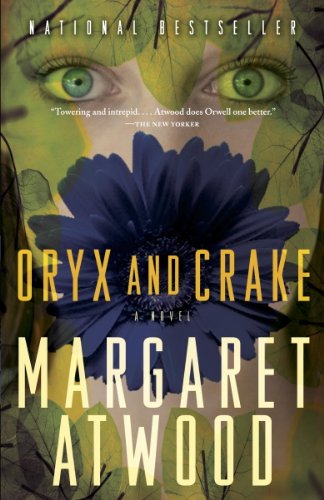
Some critics loved this book when it was first published. Others were dismissive. I thought it was brilliant when I first read it. Re-readings have only made me admire it more. People think of The Handmaid’s Tale as Atwood’s most prophetic novel (which, interestingly, has a climate-collapse backstory). Oryx and Crake rivals that novel’s prescience. Sadly, Oryx and Crake holds the distinction of being one of the most banned books in American schools. Dystopia is already here, folks. Keep ’em ignorant and maybe they won’t notice their whole world is collapsing.
Oryx and Crake is a novel about a future America devastated by environmental collapse caused by corporate greed, misplaced use of advanced technology in the service of that greed, and disinformation designed to cover up the impending devastation. Sound familiar? It also anticipates a certain Big Pharma scandal involving a company distributing and heavily promoting drugs causing a terrifying health crisis that benefits the company more and more handsomely the more they deny their role in creating it. Sound familiar?
When the novel begins, the narrator is one of the last humans alive–as far as he knows, the very last. Not so the terrifying genetically engineered creatures escaped from their controlled experiments, now thriving in the wild and hunting him. Their savagery is matched only by the savagery of the environment in which he is slowly starving to death. It’s a novel about the price paid by a society valuing STEM training unchecked by education in the humanities, a society where greed runs rampant over any sort of morality, technology trumps human empathy. In a really intriguing way, Oryx and Crake is also a Robinsonade. It’s a wonderful novel. Everyone should read it, especially kids in school. Apparently a bunch of school boards disagree with me there.
Many readers love the sequel, Year of the Flood, even more (maybe better called a companion book, because it involves different characters). I love them both but Oryx and Crake most. Unfortunately the much-later-written third novel in the trilogy, MaddAddam, doesn’t really measure up, although it does connect some dots and tie up some narrative threads.
On to more recent novels. . .
Paolo Bacigalupi, The Water Knife (2016)

At first gasp, Bacigalupi’s novel is a thriller that just happens to be set in the near-future and just happens to involve a horrific fight over water rights in the intermountain West. The PR for the novel calls it Mad Max meets Chinatown. The Mad Max part not so much, I’m thinking. The novel doesn’t present a post-apocalyptic landscape resembling Mars but a credibly and terribly degraded version of what we see around us every day. I’d say the novel is Breaking Bad meets Chinatown, with water instead of crystal meth the substance so desired people will kill for it and betray their best friends for it in the most vicious and depraved ways. There’s the same sense of impending dread and violence, the same sickening spiral into actual and incredibly sadistic violence. At one point, I was so disturbed I had to stop reading.
I found the novel a bit hard to get into. The first half hops from character to character to character so fast the novel feels out of focus. Midway through, though, the story finds its footing. I buckled up for a wild and violent ride. I ended up liking the novel although not just loving it. I found the characters interesting but a bit too brittle and unlikeable. If you read it, you may disagree, especially if you are a fan of the suspense-thriller genre (as I am not) with its hard-boiled, hard-nosed macho characters. But I CAN like such a read. Or show. I’m thinking of Breaking Bad again–we WANT to like Walter White, even when he turns out to be a monster. Who is a more compelling (can I say relatable? and at the same time monstrous?) character than Gus Fring? I still want to know more about his back-story. And don’t get me started on Better Call Saul, different but equally superb. I’m not sure whether Bryan Cranston or Bob Odenkirk is more revered around here. Vince Gilligan for sure. Which brings me to. . .
For me, the most relatable thing about The Water Knife is not its characters but its setting, both the physical setting and the political and socioeconomic backdrop. I’m perched right now in the Sandia Mountains of New Mexico just east of Albuquerque, where I spend about a third of my time, thinking how the LA fires could have as easily started here. How, if they did, all of us up here would be (literally) toast. I’m sitting here thinking about the politics of the Colorado River and who controls its water, with New Mexico apparently the last-stop step-sister of the Colorado River Compact. I’m thinking about how I drive by the settings for Breaking Bad and Better Call Saul every day, and how the news suggests those violent series have not strayed far from the truth. I’m thinking about recent natural disasters–the LA fires, the hurricane devastation in the Appalachians, and all the rest–and how tied they are to climate change, how much fuel for disinformation they occasioned and still are, how much distrust in the federal government is building because of it, how much finger-pointing is going on, how dangerously states seem to be pitted against states these days.
The Water Knife deals with all of these issues, especially the Balkanization of the U.S. into warring, barricaded combat zones beholden to near-feudal billionaire overlords or well-heeled absentee landlords from other nation-states. Meanwhile, a weakened federal government is powerless to stop the carnage. Bottom line: The Water Knife isn’t some illustrated filled-out Powerpoint with cardboard characters, like some other novels based on contemporary problems. It is a powerful, important book that really rewards the reading.
Kim Stanley Robinson, The Ministry for the Future (2020)

Whew. Where can I even start? This book is a must-read. The opening is one of the most horrific I’ve ever read. Strangely, you can’t call this near-future novel dystopian, because it presents a hopeful message. The conditions of the plot are about as dystopian as it gets, though.
The novel begins with a major heat wave in India that kills twenty million people, a scale almost impossible to imagine. We see this scene from the close-in perspective of a humanitarian aid worker devastated and irrevocably changed by his experience as one of the few survivors. He sets out to assassinate a highly-placed member of an international agency charged with the near-impossible task of mitigating the increasing, increasingly terrible climate disasters assailing the world. As the planet careens past its tipping point, both characters–the aid worker and his target–are changed and deepened.
I love character-driven fiction, and I love Robinson’s characters. Read as many of his books as you can get your hands on! His characters always seem completely human, flaws and all. Flawed human beings living through dangerous times on a damaged planet heading for ultimate disaster–a thrilling if sobering read.
The Los Angeles Review of Books calls this novel Robinson’s grimmest, and “not an easy read” (I tore through it, myself) and Robinson, nevertheless, as “our culture’s last great utopian.” The reviewer takes issue with Robinson’s method. In a manner reminiscent of Dos Passos, Robinson interlards the plot with snippets of many different types of writing–newspaper accounts, bureaucratic reports, and the like. I don’t know–I went with it. The characters seemed real to me and because of this method, the world-building did too. In clumsier hands, it wouldn’t have worked. But Robinson is not a clumsy writer.
Stephen Frug’s review of the novel also critiques its modernist collage of narrative types but concludes that The Ministry for the Future is above all a political novel. That seems on the nose to me. Frug’s most interesting charge, though, is that by setting his novel in the very near future, Robinson risked real events outrunning the fictional ones–which, Frug persuasively argues, is exactly what has happened. Robinson’s novel, as Frug points out, deals very little with the actual political and social forces opposing climate action right now–yet surely those forces would have played an outsized role if the events of the novel were taking place in the contemporary world. And here it comes, people–the near-future, rapidly turning into the present.
I loved Robinson’s novel anyway. I am in good company. In 2020, Barack Obama called it one of his favorite books of the year. Mr. Obama is a reader I really trust, too. Other books on his list are Jack, by the inimitable Marilynne Robinson (no kin to Kim Stanley–and good lord, read ALL of her books), as well as James MacBride’s amazing Deacon King Kong (read all of his). So I stand by my opinion.
Annalee Newitz, The Terraformers (2023)

Bacigalupi’s novel is set in the near-future on Planet Earth. Robinson’s is set in the scary REALLY near-future. But Newitz’s novel is set in the far-future, and not even on our own planet. It is still one of the most compelling examples of eco-fiction I’ve read. Talk about using a fictional world as a laboratory for ours. The politics of this novel, the use of bureaucratic regulations as a tool for ecological repair while others are using it as a weapon of ecological destruction–amazing.
I actually reviewed this novel this summer, when I was reading as many of the short-listed novels for the big speculative fiction prizes as I could. See my review here. Newitz’s novel was short-listed for the 2024 Nebula Award. Although it didn’t win, I thought it was marvelous, all the more since it’s a novel that really shouldn’t work as a novel–it covers a thousand years in the terraforming of a planet. Novels really are about character, one of their signature traits, and you’d think if a writer wanted to explore a time period that long, involving a thousand years’ worth of characters, the writer should maybe break down and write nonfiction instead. This novel works, though. The characters are marvelous, perhaps because the planet itself becomes the main character. I won’t go on and on about this great novel. I could! But I already did, so please see my earlier review. Damn, Newitz’s novel should have won an award.
MORE BOOKS!
Just the same, the novels that did win several of those awards had a climate focus, too, and they are just terrific. I could have posted reviews of them here too, especially The Saint of Bright Doors, by Vajra Chandrasekera, The Mountain in the Sea, by Ray Nayler, and In Ascension, by Martin MacInnes. In fact, I already did. See those reviews in my earlier posts, too, and read the novels. They are great!



 Fantastes
You must be logged in to post a comment.