
TODAY: Problem Series
The last of three posts: Classic series, Some of my Favorites, Problem series (today)–but tomorrow I’ll do a brief wrap-up about series I DON’T discuss in these posts.
So many books. . .so little time (continued)
Let’s be honest. As readers, we vary in as many ways as there are readers. Some speculative fiction series really grab us, some don’t even though we think they should, some we actually find offensive. And some. just. have. problems. Here are some speculative fiction series I find problematic, and for lots of different reasons. You may completely disagree.
Three fantasy series that have famously angered their fans
Gentleman Bastards, Scott Lynch (b. 1978)

Three wonderful novels. Just wonderful. Books 2 and 3 have their problems, but they are still great, and Book I, The Lies of Locke Lamora, is superb. However, the series hasn’t continued after Book 3, in spite of promises that it will. I know some of Lynch’s fans have sent him hate mail for never writing Book 4. Leave the man alone! I love the three books we do have. Locke is a great character. The buddy duo of Locke and Jean is one of the great buddy duos of fiction. Lynch even avoids the troublesome Denna problem (see below) in Book Three, The Republic of Thieves, by turning Locke’s love interest into a (mostly) believable woman. Have I mentioned a very fun side-focus on bizarre food and drink? If Mr. Lynch never writes the fourth in the series, then so be it, and I wish him well. That said–he has been very upfront with his fans about his emotional health and the reasons for not publishing–yet–Book 4, The Thorn of Emberlain. Apparently soon to be published: three novellas set in Locke’s world, in one omnibus volume, that will serve as a kind of stepping-stone to Book 4. We fans can only hope! But as a few have pointed out, each novel in the Gentleman Bastards series can be read as a full, complete novel to itself, thus avoiding. . . (read on)
The Kingkiller Chronicles, Patrick Rothfuss (b. 1973)
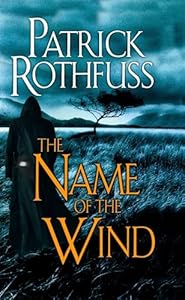
. . .the same problem afflicting Patrick Rothfuss, whose fans chafe at never getting the long-promised Book Three of his Kingkiller Chronicles series. Book One, The Name of the Wind, shouldn’t work but it does, magnificently. I have to stop everything and re-read it every now and then, in spite of Denna the love interest being one of the most annoying female characters ever written. And that iconic book cover–how many times have you seen, on a fantasy novel, a variation of that mysterious guy in the cloak? Book Two, The Wise Man’s Fear, may not be quite as good as the first, but it is a worthy sequel. Sex scenes are not this man’s forte, just saying. I’d really like to read Book Three, The Stone Door, and I do wonder why it is always promised but never published. Here’s the difference from the Scott Lynch situation: from the very beginning of The Name of the Wind, we’re told through a teaser summary and also the way Books 1 and 2 are organized (Day 1–Book I. Day 2–Book 2. Day 3????? Book 3????), that we are going to learn some important things about Kvothe, the main character, through three days of storytelling. Instead, the series just stops with Day Two, and Kvothe’s story is left dangling. On the other hand, as with Scott Lynch’s books, I’m glad of the books we do have. At least we get teasers from Rothfuss every so often–The Slow Regard for Silent Things, about a side-character in the series, is not exactly a novel or even a novella, but it is maybe one of the best meditations on OCD ever written. And there’s a great short story, “The Lightning Tree,” about my favorite character, Bast, published in the very good short fiction anthology Rogues and then again (in slightly expanded form) as a rather disingenuous standalone, The Narrow Road Between Desires.
A Song of Ice and Fire, George R. R. Martin (b. 1948)

Then there’s George R. R. Martin’s inability (refusal?) to finish his own series, A Song of Ice and Fire, maybe the most famous of these three examples, although by far not the best-written. I’m guessing that when the whole shebang got turned into the wildly-popular streaming series Game of Thrones, and when that series had to come to some kind of conclusion without benefit of Martin’s unwritten last novel, he might have found it useless to continue, or maybe too boring. That’s a shame, because the streaming HBO series finale satisfied no one. But I’m wondering how Martin actually could have written a satisfying conclusion, especially one that diverges from the show. How awkward to have two streams of a fiction–the canonical, and the slapped-together. Anyway, I have to confess that reader-me, after Book Three of the novels, was ready to stop. As for Game of Thrones, I loved it until that last bit. So as a reader, I am fairly indifferent, and as a watcher, I am disgruntled. I also feel bad for all those parents who named their little girl Daenerys without realizing she’s going to turn into a villain. That said, I admire Martin as a person for his support of creativity in New Mexico, a state where I spend about half my life. Meanwhile, on the streaming series scene, Martin’s fantasy world of Westeros lives on via the HBO series House of the Dragon, a prequel to A Song of Ice and Fire, with several other Westeros-themed projects in the production pipeline. These spinoffs are not without their own problems.
“Godfather III” syndrome
Maddaddam, Margaret Atwood (b. 1939)
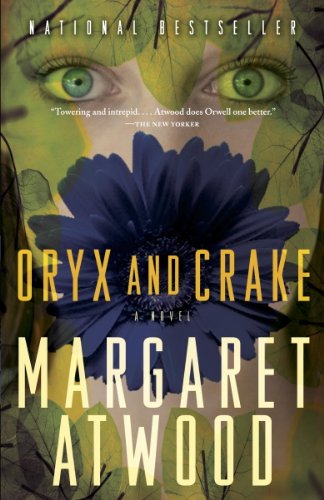
Right from the start, let’s acknowledge this: Margaret Atwood is a force. She is a writer acclaimed worldwide, with numerous awards to her name. She has won the prestigious Booker Prize twice. She is a spokeswoman for Canadian literature, feminism, and the environment. Her novel The Handmaid’s Tale (1985) is so iconic that you don’t even need to read it to know all about it, and when crowds of women show up wearing red dresses and white bonnets, no one needs to explain to anyone why they are wearing those clothes and what they mean. Find out about that here–a bit dated, because similar protests continue. But if you do read the novel, you know you’ve read a classic of English-language literature. Meanwhile, the HBO streaming series based on the novel has reached millions of new audience members. I remember being blown away when I read the novel back in 1985. At that time, I knew nothing about Margaret Atwood. That experience led me to go out and read every Atwood book I could get my hands on. I even wrote an academic article on her, probably best forgotten. So I love that book, and I am a big admirer of Atwood’s fiction. That led me in 2003 to read her equally brilliant novel, Oryx and Crake. See my review of it here, in my blog post on eco-lit. In 2009, she published The Year of the Flood. Both of these novels are classics of eco-themed dystopia, hugely important for everyone to read, especially in America, especially right now. (The Canadians, including of course Atwood, seem to have their eco-act more together.) But when Atwood turned those two novels, fairly loosely related, into a series with the publication of a third novel, Maddaddam (2013), I think she made a misstep. The first two novels are so brilliant. By contrast, this third seems rushed and ill-thought-out–to me, anyway. I can’t help thinking about the first two Godfather movies and how outstanding they are. Then Godfather III turned out to be a sad come-down. None of this takes away from the brilliance of the first two, though. Atwood has now written The Testaments (2019), a sequel to the enormously famous and influential Handmaid’s Tale, making those two novels into a duology of sorts. Even though The Testaments is not the towering literary and cultural achievement that The Handmaid’s Tale has come to be, it’s still very good, and I enjoyed reading it. For me, Atwood’s dystopian novels rank: Handmaid’s Tale/Oryx and Crake tied for first (both frequent visitants on banned books lists in the more ignorant, intolerant, and self-righteous areas of the U.S.), Year of the Flood a close second, The Testaments a distant third, and Maddaddam and some others, like The Heart Goes Last, just meh. Atwood is such a prolific novelist, though, that some of her books are bound to be better than others. (I think by contrast of another brilliant contemporary novelist, Marilynne Robinson, whose output is slow, the novels coming very far apart.) When Atwood is great, though, she is GREAT. Read some of her realistic novels, too, not just the dystopian ones–especially Cat’s Eye and The Robber Bride–wonderful novels!
Series I liked just okay. Sorry!
The Daevabad Trilogy, by Shannon A. Chakraborty (b. 1985)

I liked the books in the series just fine. So why would I call the series problematic? So unfair! It’s because I love Chakraborty’s stand-alone novel, The Adventures of Amina al-Sarafi, so much more. The series books are a let-down. VERY UNFAIR! It’s not that I hated her Daevabad series. I enjoyed a lot of it. I did find myself getting a bit tired of the main character by the end, very tired of the torn-between-two-lovers trope, and a bit skeptical of the magic. This may be because the series has more of a YA feel and I am an older (oh, all RIGHT, old) reader, so it doesn’t resonate with me as much. The Adventures of Amina al-Sarafi, on the other hand, gave me more fun than a reader has any right to have. Read the series, sure, but go read her standalone! These books are all set in an Arabian-Nights fantasy world, very refreshing after the umpteenth Tolkien clone milking Western and Northern European mythologies and folkways. The Adventures of Amina al-Sarafi was short-listed for the 2024 Hugo Award, and I thought it was worthy of winning. See my review here.
The Wheel of Time, Robert Jordan (1948-2007)
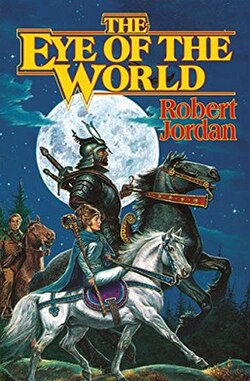
Speaking of the umpteenth Tolkien clone. . .After the first one or two novels in Jordan’s series, beginning with The Eye of the World (1990), these just got tedious. And they are long. And they are not very well written. And there is an entire shelf of the things. Sorry, fans. I didn’t like the Amazon streaming series, either. Call me a grinch, but it all seems like a tired Tolkien-esque rehash.
A Court of Thorns and Roses, Sarah Maas (1986)

The whole series goes by the title of the first, and there are four more. They are all known fondly by their many, many fans as ACOTAR. I nearly stopped at the first book, which was very “damsel in distress,” especially when the hot rescuer-hero kept throwing up red flags for abuse. At a friend’s nagging, I read the second, which I liked better. But after that. . .I don’t know. I didn’t believe in the characters’ bathrooms, or their sweaters (I do know how odd that sounds), and while hot sex with enormous buffed-up bats was kind of intriguing, I got worn out. But really–the hot bats were pretty ingenious. I myself am trying to write a novel where several of the hot guys are birds, and that presents some problems. I mean, bats are mammals, at least. And I did read all of the ACOTAR books. They were originally classified as YA, but because of their sexual content, they are more appropriately classified as New Adult. Maas more or less invented the new wildly popular hybrid genre called romantasy, and this series is the most famous romantasy series of all time. See my blog post on fae fiction.
Revelation Space, Alastair Reynolds (b. 1966)
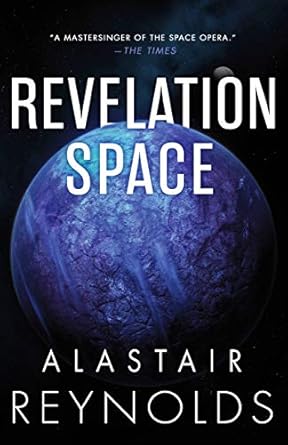
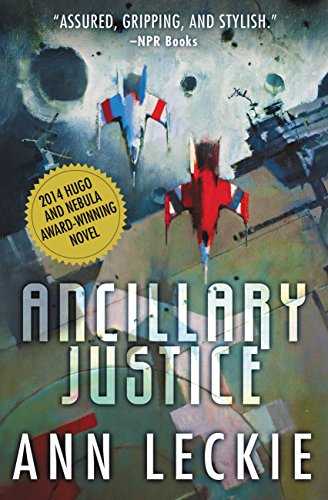
What do you do with a complete mismatch between you the reader and the book or series you’re trying to read? You can try to educate yourself better about that particular book/series. I have done this many times in my academic career. Shocking, I know, but I don’t like Dickens–yet I educated myself to appreciate Dickens. But yeah, I don’t think I’m up to hard SF, and so Reynolds’s very highly regarded series–and all of the many other hard SF very highly regarded novels he has written–leaves me cold. This is on me. We all have our blind spots, and here is one of mine. Apparently readers who really know about these things do love this SF tetralogy and other books by Reynolds, so don’t go by me. Also, I don’t really enjoy sentient ship stories–except Ann Leckie’s! And Wall-E. One of fiction’s true supervillains? Auto the Wall-E ship’s autopilot. If you are a Reynolds fan, you will be getting pretty exasperated with me right about now, so I will shut up.
The All-Souls Trilogy, Deborah Harkness (b. 1965)

I was kind of intrigued by the first one, A Discovery of Witches (2011), a historical fantasy/time travel novel, and I kind of liked the Netflix streaming series, although only because of Matthew Goode’s sexy vampire, not whoever played the main character. I liked the inventiveness about vampire culture in the trilogy (now gone on to a sixth book). I liked the exploration of Renaissance alchemy, especially since the author, a scholar working in the history of science, knows what she’s talking about. I was relieved that in the second novel the author didn’t go after some ridiculous conspiracy theory about Shakespeare while being perfectly fine about his shortcomings (he’s not a god, after all), I loved the fictionalization of the whole School of Night group, and I loved the appearance of Lady Mary Herbert, Countess of Pembroke (Sir Philip Sidney’s sister) as a character. But after the first one or two of these novels, the series began to sag, in my opinion, especially after a scene of magically conjured Fourth of July fireworks, which just seemed silly. I did learn a lot about the Yellow Fever epidemic of 1793 in Philadelphia. That was interesting. Other readers love these books and the romantasy elements in them, so if this is you, go for it.
Outlander, Diana Gabaldon (b. 1952)

These very popular historical fantasy/time travel novels are too soapy. Really. But some of it is fun. However, some of it is rapey. Don’t let me get on my high horse about it, because I confess it, I have kind of obsessively read all but the most recent one. Whew, there are nine, with apparently one more planned. I have also watched all but the latest iteration of the streaming series, also hugely popular. When I went as a tourist all over the Scottish Highlands, half the other tourists were there because they had read the books, seen the series, or both. Everyone has a guilty pleasure, and until recently, this was one of mine. I think I’ve burned out on it, though. It seems to have spawned an entire industry of historical bodice-ripping romance featuring lusty Highlanders. In kilts. Always kilts.
Series that are a hard NO for me
The Chronicles of Thomas Covenant,The Unbeliever, Stephen R. Donaldson (b. 1947)
I read Lord Foul’s Bane (1977), the first book of the first series, only because I had promised a friend I would. There are two trilogies and a tetralogy, but I didn’t make it past that first book. Some have labeled these books “high fantasy.” Technically, they are portal fantasy–at least the first book is–because during an auto accident, a mysterious slip between worlds catapults the main character from our own realistic setting into the fantasy realm. That was interesting, but the unapologetic misogyny extending to unapologetic rape made me ill. Don’t get me wrong. Rape is an actual occurrence, real people commit it and are victimized by it, and no author should shy away from writing about that or any other aspect of the world and human nature. (Some disagree with me there.) So how is Donaldson’s fiction any different from Gabaldon’s? It’s the attitude toward rape that repels me in Donaldson’s book. I will say that leprosy (Hansen’s Disease) as a metaphor for the main character’s problem is an intriguing device, but even that is pretty dated (and maybe insulting?), and I was just not going to continue this repellent series.
One Second After, William R. Forstchen (b. 1950)
See my review. I don’t like this man’s politics, and I blame that kind of politics for the terrible Constitutional and national crisis in the U.S. today. So no, not gonna go on with this series set after a nuclear incident wipes out the country. Attitudes like the ones espoused in this novel are already on their way to wiping out the country, no nukes needed. If the author’s politics don’t trouble you, or if you share them, you may like his novel and its siblings, but Alas, Babylon, by Pat Franks, while older, is a lot better and covers similar ground. As you see, I pull no punches in this blog.
Thanks to this talented artist for the royalty-free illustration at the top of this blog post: <a href=”http://Image by <a href=”https://pixabay.com/users/moshehar-7046690/?utm_source=link-attribution&utm_medium=referral&utm_campaign=image&utm_content=6871220″>Moshe Harosh</a> from <a href=”https://pixabay.com//?utm_source=link-attribution&utm_medium=referral&utm_campaign=image&utm_content=6871220″>Pixabay






 Fantastes
You must be logged in to post a comment.