The Hugo Awards–and the Usual Controversies

The Hugo Awards for 2025 are soon to be announced. Here is the list of finalists for best novel:

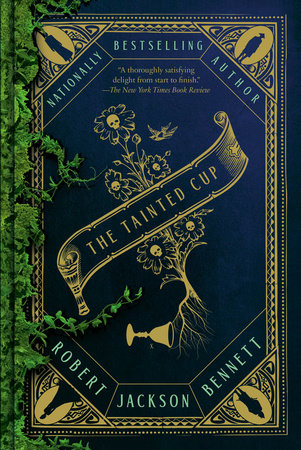
  • The Tainted Cup by Robert Jackson Bennett (Del Rey, Hodderscape UK)
  • The Ministry of Time by Kaliane Bradley (Avid Reader Press, Sceptre)
  • A Sorceress Comes to Call by T. Kingfisher (Tor)
  • Service Model by Adrian Tchaikovsky (Tordotcom)
  • Alien Clay by Adrian Tchaikovsky (Orbit US, Tor UK)
  • Someone You Can Build a Nest In by John Wiswell (DAW)

The winner will be announced on August 16, 2025 at Seattle WorldCon. That means you, Reader, have time for some catch-up reading if you haven’t gotten around to all these wonderful novels. I had a fairly easy job of it, since several of the novels on the Hugo list were also short-listed for the Nebula and Arthur C. Clarke awards, and I had already read them before the Hugo finalists were announced.

Disclaimer: I only review the novels. Yet so many wonderful reading experiences await in the other categories! Go to the Hugo Awards web site to find them all.

In the next several posts, I’ll review the short-listed Hugo Awards nominees for best novel.

As always, I need to mention the latest controversy roiling the Hugos. It seems one of these rears its ugly head every year or so. Last year’s controversy was about alleged censorship related to the WorldCon host for the 2024 awards, China. This year’s is about AI. How trendy. Several officials of WorldCon have resigned over the brouhaha. Briefly: In order to cut down on workload BUT ALSO to deal with possible sensitivity issues in the U.S., the WorldCon officials vetted their panel of judges using ChatGPG. Unfortunately, these AI tools are notoriously unreliable, and often seem to reflect possible prejudices. The use of the tool may have helped out with the workload, but how trustworthy was the resulting panel? The decision to use AI for this purpose was also hugely tone deaf, considering the widespread distrust and animus that the SF community feels toward such tools. Find an account of the controversy HERE.

AI in general, and especially for writers, is a magnet for controversy. The Hugos controversy, thankfully, didn’t involve any use of AI by writers, but it does (or did, until WorldCon took corrective action) impugn the integrity of the award, one of the longest-standing, most respected awards for speculative fiction. As a writer myself, I found this blog post–on the Hugo controversy specifically and the use of AI by writers generally–to be especially interesting. How far should the literary world and individual writers go in embracing these tools flooding into the creative process?

For myself, I don’t use it–I say. Then I think again. But I never use grammar checkers, because in my experience they are dead wrong too much of the time and give bad advice even when they are (sort of) right. Good grammar–good. Good grammar used slavishly–wooden writing. (You see those two sentence fragments I just used?) I do use spell checkers, although not all the time. When I do, I use them very judiciously. They too can provide misleading or just wrong advice. I’d rather risk the occasional typo, which comes to us all. And those are very, very basic uses of Al. Generative AI to write a novel? Horrible, horrible idea. Generative AI to plot a novel, organize time, create marketing copy, and so on? Iffy at best.

AND THEN I climb down off my high horse to realize I have sometimes used AI-generated illustrations for this very blog. I am resolving right now not to resort to that in the future. More problematic for me: As a starving artist, I can’t afford to hire a voice actor to narrate my novels. Do I use AI-generated voices, especially considering how many consumers of fiction get their jollies from audiobooks and not the kind you process with your eyeballs? I’m thinking about it. Am I wrong? Am I a hypocrite? The horror! The horror!

NEXT UP: Reviews of short-listed novels by Robert Jackson Bennet and Kalianne Bradley.

The Arthur C. Clarke Awards short list: Final words

The novels short-listed for this major speculative fiction award include:

  • Annie Bot, Sierra Greer WINNER, reviewed in this post
  • Private Rites, Julia Armfield
  • The Ministry of Time, Kaliane Bradley
  • Extremophile, Ian Green
  • Service Model, Adrian Tchaikovsky–reviewed in this post
  • Thirteen Ways to Kill Lulabelle Rock, Maud Woolf

In my last post, I reviewed the novels by by Green and Woolf. The first post in this series reviewed the novels by Armfield and Bradley.

Service Model, Adrian Tchaikovsky(2024, Tor)

Find out more HERE.

Pay no attention to the masterful, wizardly author behind the curtain. Charles the robot, aka Uncharles, is the star of this show. Here’s the story of total societal collapse told through the point of view of a robot completely hung up on procedure. Technically, you might call the point of view “close-in third person.” We don’t see straight through Charles’s eyes, but we do see all the novel’s events through his robot take on the world. It’s a tour-de-force.

In the opening scene, Charles, a valet robot, has just murdered his master. He has no idea that’s what he has done, just that after he has shaved his master with the usual straight razor, a mysterious red stain on his master’s clothing must be dealt with. You can think here of C-3PO or Murderbot, but really, Tchaikovsky’s portrayal–while every bit as sly and satirical–goes much deeper, into the ways robots operate and how they really might approach the end of humanity and the human-built world.

In his attempt to get his obvious if puzzling robot dysfunction addressed, Charles goes on a lengthy odyssey that takes him to all the important sites of human societal dysfunction: the clogged-up bureaucratic systems, the lust for power run amuck, the misappropriation of information technology, the misunderstanding of what robots are and what they are capable of accomplishing. It’s a kind of reverse Wizard of Oz. In this world of encroaching uncontrolled AI, the problems Charles encounters are also important issues for Tchaikovsky’s human readers.

Charles’s perspective and his trajectory change when he happens upon another seeming dysfunctional robot calling herself The Wonk. Together, the two first work together simply to survive, but then they begin working on the main problem, how to salvage society. They make the perfect team: Charles’s dogged procedural robot nature and The Wonk’s creative unpredictability. She must be a very dysfunctional robot, then, mustn’t she?

This book is incredibly fun to read, and underneath the fun lurks a sly message. It was short-listed not only for this year’s Arthur C. Clarke award, which it didn’t win, but also for the upcoming Hugos.

Annie Bot, Sierra Greer (2024, HarperCollins)

This year’s Arthur C. Clarke Award WINNER for best novel

Find out more HERE.

It’s easy to see why this novel won this year’s Arthur C. Clarke Award. It’s the very engaging first-person account of an AI girlfriend and her struggles with her controlling boyfriend/owner, so it checks a lot of SF boxes as well as a lot of relationship boxes. I don’t pretend to know how awards committees come up with their decisions. All I know about it I learned from Percival Everett’s Erasure. But I can see why this novel would be a popular choice.

I paired my review of this book with Tchaikovsky’s because, well, robots, right? There the comparison ends. Although. . . they are both books from the robot perspective. Greer’s novel goes whole hog; it is written in first person, so everything we see, we see through Annie Bot’s eyes. This also, I imagine, makes the book fun and accessible for readers who come to their task of fictional empathizing through this increasingly common technical writing device.

In a near future, this novel postulates that lonely men can buy themselves a robot companion for sex. That is not SF. It is absolutely believable, since personal robots are already on the market and sex robots are definitely a thing (Be warned before you click on that link to a site called The Guy Shack, if you don’t want your eyeballs or your internet history to reflect such a topic, and I hope my kids understand after I’m gone that I’m just a writer doing her research!). The science fiction part comes in when the main character of this novel, Annie Bot, a robot, begins to explore her own agency. Or is that SF? Here’s the intriguing premise behind the novel. Which of your friends’ girlfriends is actually human, and which might just be pretending? The Turing Test comes to mind. But Annie’s struggle also reflects real issues of abuse and control in intimate relationships. The writing sounds sort of robotic, but I guess that fits the character. It’s an engaging novel and a fast read.

AT THIS POINT in my series of reviews for short-listed novels, I usually pick my favorite. And I never try to second-guess the judges, because as I mentioned above in this post, I have no idea what drives them. It feels funny to do that now that a decision has been made, but I can tell you that FOR ME and me alone, there was no contest. My favorite of the novels in this list was Ian Green’s Extremophile. I found almost all the others to be interesting, worthwhile, and often entertaining novels, and I’m glad I read all of them.

NEXT: on to the short-listed novels for the 2025 Hugo Awards.

The Arthur C. Clarke Awards short list, continued

The novels short-listed for this major speculative fiction award include:

  • Annie Bot, Sierra Greer WINNER
  • Private Rites, Julia Armfield
  • The Ministry of Time, Kaliane Bradley
  • Extremophile, Ian Green–reviewed in this post
  • Service Model, Adrian Tchaikovsky
  • Thirteen Ways to Kill Lulabelle Rock, Maud Woolf–reviewed in this post

In my last post, I reviewed the novels by Armfield and Bradley. This post reviews the novels by Green and Woolf.

Extremophile, Ian Green (2024, Head of Zeus/Bloomsbury)

Find out more HERE. Get it HERE.

What an amazing novel. Disclaimer: I’m probably not the target audience for it–I had to look up stuff in order to read Extremophile, all the way from slang stuff like ACAB and “jilling” to science stuff like “clathrate gun.” If you know what either the slang stuff, the science stuff, or both mean without looking them up, get this book RIGHT NOW and read it. If you do have to look them up, get this book RIGHT NOW. . .etc. I started out thinking, well, if A Clockwork Orange and Snowcrash had had a baby. . . But that’s not it. That kind of pigeon-holing (talk about old slang) does this novel a huge disservice. In the end, I was thinking more about Orxy and Crake, but the book is an original.

Green has written an ingenious dystopian novel of bioterrorism, climate collapse, the punk scene of the future, and the destruction of civilization as we know it. In a London sometime after a 2038 worldwide mega-pandemic, the disaffected main character of the novel divides the world into Green, Blue, and Black. “The Greens want to save the world,” Charlie tells us, in a spectrum stretching from making your own toothpaste to the most violent acts of terrorism. The Blues don’t care about anything but profiting off the corpse of a dying world, and if that means killing or destroying or perversely toying with anyone or anything in their path, they do not flinch. The Blacks, though, have given up hope.

The three main characters are musicians with their own up-and-coming punk band, and the narrator, Charlie, is also a gifted bio-hacker much in demand for all sorts of shady projects. Charlie has a dangerous past–a mentor savagely killed by a mysterious chemical process that the novel gradually unfolds to us. Charlie’s world, inside and out, is broken, and we readers probably don’t like the chances that Charlie is going to come out of this plot intact.

Sound bleak? Not so fast. This novel is laugh-out-loud clever. In my last post, I mentioned “Chekhov’s gun,” and this novel plays in a really fun way with that concept from the title of the first chapter all the way through. It’s also an extremely violent novel, and sometimes pretty perverse, so be aware and warned if such topics put you off. The plot is a specimen of the thrill-ride heist/caper. What fascinates me about it is how much fun it is while being completely realistic about character–the way people really work inside. The supervillains have their dumb moments. So do the heroes. Charlie is a hugely engaging main character, and Parker and Zoot are admirable side-kicks. In the end, this novel is incredibly sweet-natured, with an endearing shout-out to Ursula LeGuin into the bargain. In a more cartoonish fantasy, the heroes ride to the rescue and sort everything neatly out. Instead, this novel shows us human beings with all their nuances and craziness. The world with all of its pigeons and methane bubbles and dying coral reefs. All the messiness. We are also treated to timeless words of wisdom such as: “switching lanes at the post office never got no motherfucker nothing.” So–all the messiness, plus a whole lot of fun.

The writing is superb. I always try to read a novel I’m reviewing before I read anyone else’s opinion. Then I might, especially if I don’t trust my own take on it. In the case of Extremophile, I spotted a couple of two-star reviews as I purchased the ebook. What were those readers thinking???? This novel did not win the 2025 Arthur C. Clarke Award. If I were handing out awards, I would absolutely give it one, and as many stars as they’d let me. Please do yourself a huge favor and read this book. (Unless you are prudish or squeamish. I suppose I need to say that.)

Thirteen Ways to Kill Lulabelle Rock, Maud Woolf (2024, Angry Robot)

Find it HERE.

In the near future, Lulabelle Rock is a B-list star with a sagging career. Cloning has given celebrities a handy way to extend their reach and public appeal. A star will clone herself, creating what are called Portraits, and send them out to perform any number of practical tasks, whether it be shopping, posing in designer clothes, attending splashy parties, whatever will save the star’s energy. But Lulabelle, under pressure to revive interest in her panned new film, decides her Portraits actually dilute her impact. She creates one last clone, the thirteenth, the novel’s main character. The assignment the real Lulabelle gives Portrait Thirteen: assassinate all the other fake Lulabelles.

Woolf’s novel is a stylish high-concept romp during which Number Thirteen encounters twelve different possible versions of herself. Portrait Thirteen, only minutes out of the cloning vat when we first meet her, gradually comes to understand herself. The novel drives to its inevitable end. What happens when the assassin–born for that task and that task only–turns sour on the assignment? What if she makes friends with some of the other Lulabelles? Which ones fight back, which ones succumb meekly to their fate, and which ones actually welcome it? What happens to the last Portrait Lulabelle–the lucky/unlucky thirteenth–once the other fakes have been destroyed? Most of all, how does our narrator Lulabelle, a fake herself, tell the fakery in the world–especially this world, a whole city designed for fakery–from the real? How does anyone?

The novel is entertaining. I enjoyed it. It is cartoonish, sure, but that’s what it sets out to be. I found it a bit predictable, although the various encounters with possible selves, the sleight-of-hand involving who is a good guy and who isn’t, and a twisty ending guarantee an interesting and fast-paced read.

NEXT UP: reviews of Service Model, by Adrian Tchaikovsky, and the Arthur C. Clarke prizewinning novel, Annie Bot, by Sierra Greer.