The Arthur C. Clarke Awards short list, continued

The novels short-listed for this major speculative fiction award include:

  • Annie Bot, Sierra Greer WINNER
  • Private Rites, Julia Armfield
  • The Ministry of Time, Kaliane Bradley
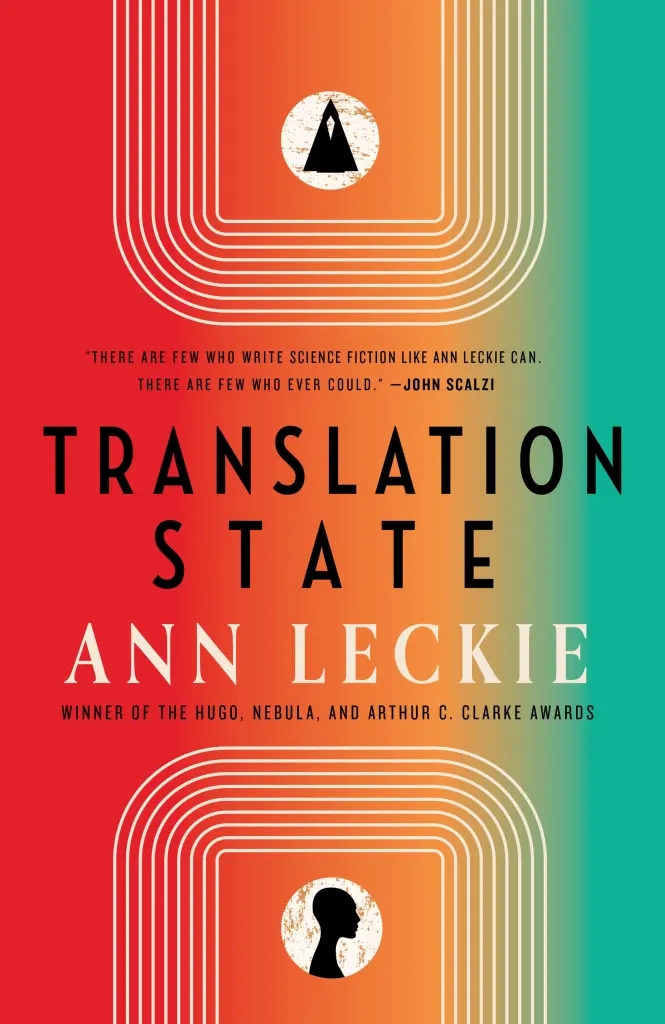
  • Extremophile, Ian Green–reviewed in this post
  • Service Model, Adrian Tchaikovsky
  • Thirteen Ways to Kill Lulabelle Rock, Maud Woolf–reviewed in this post

In my last post, I reviewed the novels by Armfield and Bradley. This post reviews the novels by Green and Woolf.

Extremophile, Ian Green (2024, Head of Zeus/Bloomsbury)

Find out more HERE. Get it HERE.

What an amazing novel. Disclaimer: I’m probably not the target audience for it–I had to look up stuff in order to read Extremophile, all the way from slang stuff like ACAB and “jilling” to science stuff like “clathrate gun.” If you know what either the slang stuff, the science stuff, or both mean without looking them up, get this book RIGHT NOW and read it. If you do have to look them up, get this book RIGHT NOW. . .etc. I started out thinking, well, if A Clockwork Orange and Snowcrash had had a baby. . . But that’s not it. That kind of pigeon-holing (talk about old slang) does this novel a huge disservice. In the end, I was thinking more about Orxy and Crake, but the book is an original.

Green has written an ingenious dystopian novel of bioterrorism, climate collapse, the punk scene of the future, and the destruction of civilization as we know it. In a London sometime after a 2038 worldwide mega-pandemic, the disaffected main character of the novel divides the world into Green, Blue, and Black. “The Greens want to save the world,” Charlie tells us, in a spectrum stretching from making your own toothpaste to the most violent acts of terrorism. The Blues don’t care about anything but profiting off the corpse of a dying world, and if that means killing or destroying or perversely toying with anyone or anything in their path, they do not flinch. The Blacks, though, have given up hope.

The three main characters are musicians with their own up-and-coming punk band, and the narrator, Charlie, is also a gifted bio-hacker much in demand for all sorts of shady projects. Charlie has a dangerous past–a mentor savagely killed by a mysterious chemical process that the novel gradually unfolds to us. Charlie’s world, inside and out, is broken, and we readers probably don’t like the chances that Charlie is going to come out of this plot intact.

Sound bleak? Not so fast. This novel is laugh-out-loud clever. In my last post, I mentioned “Chekhov’s gun,” and this novel plays in a really fun way with that concept from the title of the first chapter all the way through. It’s also an extremely violent novel, and sometimes pretty perverse, so be aware and warned if such topics put you off. The plot is a specimen of the thrill-ride heist/caper. What fascinates me about it is how much fun it is while being completely realistic about character–the way people really work inside. The supervillains have their dumb moments. So do the heroes. Charlie is a hugely engaging main character, and Parker and Zoot are admirable side-kicks. In the end, this novel is incredibly sweet-natured, with an endearing shout-out to Ursula LeGuin into the bargain. In a more cartoonish fantasy, the heroes ride to the rescue and sort everything neatly out. Instead, this novel shows us human beings with all their nuances and craziness. The world with all of its pigeons and methane bubbles and dying coral reefs. All the messiness. We are also treated to timeless words of wisdom such as: “switching lanes at the post office never got no motherfucker nothing.” So–all the messiness, plus a whole lot of fun.

The writing is superb. I always try to read a novel I’m reviewing before I read anyone else’s opinion. Then I might, especially if I don’t trust my own take on it. In the case of Extremophile, I spotted a couple of two-star reviews as I purchased the ebook. What were those readers thinking???? This novel did not win the 2025 Arthur C. Clarke Award. If I were handing out awards, I would absolutely give it one, and as many stars as they’d let me. Please do yourself a huge favor and read this book. (Unless you are prudish or squeamish. I suppose I need to say that.)

Thirteen Ways to Kill Lulabelle Rock, Maud Woolf (2024, Angry Robot)

Find it HERE.

In the near future, Lulabelle Rock is a B-list star with a sagging career. Cloning has given celebrities a handy way to extend their reach and public appeal. A star will clone herself, creating what are called Portraits, and send them out to perform any number of practical tasks, whether it be shopping, posing in designer clothes, attending splashy parties, whatever will save the star’s energy. But Lulabelle, under pressure to revive interest in her panned new film, decides her Portraits actually dilute her impact. She creates one last clone, the thirteenth, the novel’s main character. The assignment the real Lulabelle gives Portrait Thirteen: assassinate all the other fake Lulabelles.

Woolf’s novel is a stylish high-concept romp during which Number Thirteen encounters twelve different possible versions of herself. Portrait Thirteen, only minutes out of the cloning vat when we first meet her, gradually comes to understand herself. The novel drives to its inevitable end. What happens when the assassin–born for that task and that task only–turns sour on the assignment? What if she makes friends with some of the other Lulabelles? Which ones fight back, which ones succumb meekly to their fate, and which ones actually welcome it? What happens to the last Portrait Lulabelle–the lucky/unlucky thirteenth–once the other fakes have been destroyed? Most of all, how does our narrator Lulabelle, a fake herself, tell the fakery in the world–especially this world, a whole city designed for fakery–from the real? How does anyone?

The novel is entertaining. I enjoyed it. It is cartoonish, sure, but that’s what it sets out to be. I found it a bit predictable, although the various encounters with possible selves, the sleight-of-hand involving who is a good guy and who isn’t, and a twisty ending guarantee an interesting and fast-paced read.

NEXT UP: reviews of Service Model, by Adrian Tchaikovsky, and the Arthur C. Clarke prizewinning novel, Annie Bot, by Sierra Greer.

The Arthur C. Clarke Awards: Belated Post

And don’t I feel silly! I know I said I’d turn to the Hugo Awards short-listed novels next. Meanwhile–how, I’m not sure–I completely misunderstood the Clarke Awards timeline. The decision has already been made and the winner is:


Annie Bot, Sierra Greer (Borough)


Find it HERE.

The other novels on the short list include:

  • Private Rites, Julia Armfield
  • The Ministry of Time, Kaliane Bradley
  • Extremophile, Ian Green
  • Service Model, Adrian Tchaikovsky
  • Thirteen Ways to Kill Lulabelle Rock, Maud Woolf

As with all of these short-listed novels, I plan to post capsule reviews. Unlike the Nebula Award, Hugo Award, and other short lists, I’m writing these reviews after the judges have made their choice, so my posts won’t have as much of a horse-race vibe to them! All that drama about which book will be chosen–gone. But these awards lists are fantastic ways to explore some of the best recent speculative fiction, so I’ll just post my reviews and proceed as usual–and postpone the reviews of the Hugo short list.

Luckily, I had already started reading the novels on the Clarke list, so here are my first two reviews, of Private Rites, by Julia Armfield, and The Ministry of Time, by Kaliane Bradley.

Private Rites, Julia Armfield, 2024 (Macmillan/Flatiron)

Find it HERE.

Except for two aspects, this is simply a realistic novel about three squabbling sisters. They quarrel for several hundred pages, their disagreements made even worse by the terrible weather, and then they stop. However, the setting is in near-future London, where climate change has put the city mostly underwater, so the incessant rain isn’t simply a depressing backdrop to the depressing account of the sisters’ difficulties. Instead, I suppose the sisters’ difficulties and the rain become an intertwined emblem of the terrible times that have come upon the world.

There’s another aspect to the novel, too. The opening is extremely disturbing and gory, making me wonder if I were about to embark on a horror novel. Then that opening gets seemingly dropped. Now, we all know about Chekhov’s gun, don’t we? The great playwright Anton Chekhov famously said that if he puts a gun in the first act of his play, he’d better have that gun go off by the third act. So I waited patiently (and then, sorry, impatiently) through hundreds of pages of sniping and fussing and rain for the payoff promised by the gory opening. In retrospect, I can see that the seeds of the developing plot are there. But they are so muted that nothing much actually happens for a long, long time–or so it seemed to me as a reader. There’s not much rising tension, just the low-level grinding tension we may all feel when we are trapped with family members or other close acquaintances with whom we are having a long-standing, toxic set of disagreements and misunderstandings. I did admire the realistic characterizations of the sisters.

I’m thinking maybe it would have been good if at least one of the three siblings captured our sympathy, but I do appreciate how skillfully they were drawn–and I’m not a reader who has to identify with or even like any or all of the characters in a novel. Every book doesn’t have to have sympathetic characters. Some books don’t need them or would be ruined if they had them. A book like this, with a message like this, frequently does have at least one character who works as an explaining presence, though, and all of these characters seem equally, evenly confused and deluded. The message about climate change is of course sorely needed, and yes, I’m sure it will be as depressing as it seems in this novel. When the novel’s payoff finally comes, though, it is kind of too little too late for me as a reader, and–maybe I’m dense–but how and why the novel’s final events happen is as murky as the dystopian weather.

The Ministry of Time, Kaliane Bradley 2025 (Simon & Shuster)

Find it HERE.

I had read Bradley’s novel at the beginning of the year, but its details had faded a bit in my memory, so I recently re-read it–not just because of this list, either. The novel is on a number of lists recommending great recent speculative fiction. It is an immensely entertaining and skillful novel, and I enjoyed it just as much the second time as I did the first. It’s a time-travel novel drawing partly on a real incident, the fate of the English ships Erebus and Terror when the 1845 Franklin expedition to the high Arctic is lost with no survivors. But only one of the time travelers comes from that past event; others come from other pasts. The seaman from the Franklin expedition disaster is the most important but also a woman from the plague-ridden 16th century, another whose husband was guillotined in the French Revolution, several war-scarred combatants from different eras, and more. There’s even a really fun, really subtle cameo almost-appearance by the World War I poet Wilfred Owen. These voyagers from other times disconcertingly pop through a time portal into a near-future London. The novel’s main character, part of a secret government team helping the disoriented time-travelers assimilate into the present, begins to question herself and her employers as the details of the project grow ever more sinister.

Bradley’s plot and narration are intricate, the characters are fascinating, and the slow burn of evolving love is compelling. Underneath it all lurks a dangerous plot to use the unmoored, traumatized time-travelers in a scheme the main character only thinks she understands. Suspense mounts: will she puzzle out what is really going on underneath all the gaslighting, will she be able to avert the looming terrible damage to people she has come to admire and even love, and will she be able to do it all in time? We readers hurtle through a dizzy and skillfully managed amalgam of thriller plot, love story, search for identity, lost history, and threat of disastrous future. The twisty plot–unlike some–really earns its stripes.

I hate feeling manipulated by a plot with unexpected zigs and zags. Not here. Bradley gives us just enough breadcrumbs to begin figuring out, with the main character, the chilling direction of the novel’s events. The main character stands in for us, the readers, as the plot’s trap snaps shut. If that were not the case, I wouldn’t have enjoyed re-reading the novel. A twisty ending that springs itself on the reader with cheap tricks will not reward re-reading. This novel works as much because of the characters and the hows and whys of the plot as for the way the plot ends.

I have been thinking of this novel as a serious contender for prizes like the Arthur C. Clarke Award. It didn’t win this one, but it would have been a worthy choice. And it is also on the Hugo Awards short list!

Next up: Extremophile, by Ian Green, and Thirteen Ways to Kill Lulabelle Rock, by Maud Woolf.

It’s A Midsummer Night’s Eve: Fairy Abduction, Anyone?

I write this blog post on the evening of June 24th, which is the traditional date of midsummer celebrations all across Europe, even if it’s not the date of the actual summer solstice (and misleading as well, since that moment marks the beginning of summer in the Northern hemisphere, not the middle of it). In many countries, June 24th is St. John’s Day, commemorating John the Baptist. Midsummer Night’s Eve, I suppose, was actually last night, the evening before St. John’s Day. In some countries, the day of celebration is June 25th.

A quick personal reflection: this time last year I had just returned from a month-long sojourn in Porto, Portugal. If only I had stayed another month! Porto has one of the most colorful St. John’s Day celebrations, featuring the sniffing of leeks (???), the eating of sardines (well, sure, it’s Porto, isn’t it?), and the whacking of strangers with toy hammers (???????).

With that out of the way: in my own perverse celebration of Midsummer, on to three pretty recent novels of fairy abduction. They are: A Court of Thorns and Roses, by Sarah Maas (2015), Spinning Silver, by Naomi Novik (2018), and The Cruel Prince, by Holly Black (2018). All three might be thought of as YA, but I question that categorization. A Court of Thorns and Roses started out being thrust into the YA box, but then–especially because of the graphic sexual content–it was re-classified NA (New Adult), and by now it is in a category all its own, the hugely successful engendering of a new fantasy/romance hybrid, romantasy. Spinning Silver has a very adult feel about it–not in the sexual way but in the deftly mature way the novel handles themes, characters, intricate plotting, and above all, excellent writing. I suppose The Cruel Prince really is YA. More about that to come.

A Court of Thorns and Roses, Sarah Maas (2015)

Find it HERE.

What can I say about this novel that hasn’t already been said? I did try. See my review for last year’s midsummer fairy reads HERE. This novel and its sequels spawned an entire hybrid and hugely popular genre, romantasy, so much so that it actually goes by its widely-recognized initials, ACOTAR. The sex is hot. The fairies in all their shapes and iterations are hot. The main character starts out very much an abducted damsel in distress, but in later books, she grows a spine. So if you read Book One and are put off, just go on to read Book Two. Then if you really love it, keep reading. There are a bunch of them. I have to give the novel and its siblings a lot of credit for creating an intriguing and intricately described fairyland with elaborate customs, politics, and (did I mention this?) hot sex. I got sick of it/didn’t believe in it after a while, with its bathrooms apparently by Kohler, but okay, I kept reading. This book, along with all the many books it has influenced, is a true publishing force. With many another fan, you may want to cry out to the various incredibly buff fairies of ACOTAR, Steal me next! Steal me! Steal me!

Spinning Silver, Naomi Novik (2018)

Find it HERE.

I really admire this novel. It’s one of those books based on a fairy tale, but that’s misleading. Yes, it is based on the Rumpelstiltskin folk tale collected by the Brothers Grimm, but it is also a fascinating historical novel with fantasy elements. And in addition: fairy abduction. I won’t review this one at length because I already have, in my series of blog posts on novels that are fairytale retellings. See my review HERE. It’s a wonderful book. The main character is a spunky young woman, but I really don’t associate the novel with the all too frequent trivialities of YA. (You can see I have some prejudices about YA. You may not share them! I probably have them because I’m old and grouchy.) The fairies are as morally ambiguous as they always are. Delightful read.

The Cruel Prince, Holly Black (2018)

Find it HERE.

This brings me to The Cruel Prince, a novel I hadn’t read until now. I probably put off reading it because it is, indeed, YA (and its title is a little clunky). But I enjoyed this novel immensely, even though I’m not exactly the audience for it. I say that, and then I reflect that many, many readers of YA are adults. This is a good one, folks! Black’s novel is unlike Spinning Silver and ACOTAR in one important respect. Those two novels are what’s known as “second world fantasy” or “high fantasy.” This simply means that such stories are set from the get-go in a world far, far away from ours. Although–now that I think about it–novels of fairy abduction like those might actually transition from a “second world” (the fantasy world of the novel) into a “third world,” the parallel universe of fairyland, sometimes separated by a physical border, other times by some type of mystical transition from one realm to the other.

The Cruel Prince is different. This novel is portal fantasy, “low fantasy,” where the action begins in our own world and then transports the characters to a different realm (think Harry Potter). The fairy world of The Cruel Prince seems to exist side-by-side with the real world, too, again like Harry Potter. The characters can come and go. The fairy foster-father of the main character intrudes on her childhood world to murder her human parents and abduct her and her two sisters to his estate in fairyland. He is one of the fairy gentry there. Not a spoiler–this happens in one of the first scenes of the book. Such a gory beginning and such an exotic location as fairyland don’t prevent the main character from nipping across to the real world for a visit to Target. She reads as a real teen-aged girl. A teen-aged girl living a very strange life.

I know I keep mentioning Harry Potter, but this novel is actually nothing like Harry Potter, believe me. Black’s novel is full of court intrigue of the most delicious, well-plotted kind. It has a whiff of dark academia fantasy as the main character attends a sort of high school for fairy combat and lore, and more than a hint of horror. Think about that beginning. The foster father is a type of fairy known as a “red cap,” extremely violent and dangerous, known for dipping his cap in the blood of his victims. There’s the usual torn-between-two-lovers YA trope, handled here very subtly. And there’s the push-pull between the main character’s humanity and the fairy culture she aspires to blend into–especially poignant since the fairies, famously, are so amoral and dangerous that everything in the reader may scream “get out!” Besides, after reading Mirrlees (see my earlier post), I was especially intrigued that Black includes the dangers of eating fairy fruit as a hideous reference to the worst kind of drug addiction. I was also intrigued by the main character’s protective measures of Mithridatism. (Hint: you have to read to the last stanza to find out.)

Best of all, this is a first book in a series WITHOUT A CLIFF-HANGER ENDING!!!!! If you have followed my blog, you know how much I hate these. It’s the one thing (well, okay, also bad writing) that makes me refuse to go on with a series. Black is considerate of her readers. Sure, it’s clear there’s more story to come. But she doesn’t just chop us off at the knees. I plan to read on. This book was lots of fun, and Black is a very good, very satisfying writer.

WHAT NOW? Now I will move on to my reviews of the novels short-listed for the Hugo Award 2025.