In a previous post, I gave pocket reviews of four novels short-listed for the 2024 Hugo Award for best novel. Earlier, I had posted more extensive reviews. That’s because those four novels had already been short-listed for the 2024 Nebula, Locus, and Arthur C. Clarke awards, and two of them had won awards from those organizations. This year’s Hugo Awards committee selected two more novels to short-list:
The Adventures of Amina al-Sirafi by Shannon Chakraborty (Harper Voyager, Harper Voyager UK)
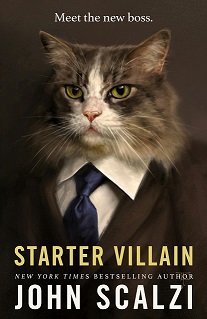
Starter Villain by John Scalzi (Tor, Tor UK)
Here are my reviews for both:
The Adventures of Amina al-Sirafi by Shannon Chakraborty (Harper Voyager, Harper Voyager UK)
This novel is a fine swashbuckling pirate adventure full of magical creatures, good humor, and a colorful main character who describes herself as “a criminal, a sinner, a foul-mouthed middle-aged woman with a bad knee.” Sent on a dangerous quest by a rich and powerful noblewoman, the pirate Amina al-Sirafi reunites with her treacherous demon husband and sails the seas like Sinbad. I loved the background of this novel, set in the Horn of Africa, the Indian Ocean, and other similar places, with its polyglot cast of characters. I love the idea of a novel that blithely sails past ageism, ableism, northern European fantasy tropes, and stodgy gender norms to pilot its own rolicking path. I’m really no judge, but the authentic feel of the Islamic culture lends depth and sincerity to the tale. I liked this novel as well as the first volume of the author’s popular Daevabad Trilogy–maybe better–and a lot better than the other two volumes in that trilogy.
I could easily see this book winning the Hugo Award for best novel of 2024. Do I think it is better than one of the other short-listed novels, Vajra Chandrasekera’s The Saint of Bright Doors, which won the Nebula for best novel and the Locus for best novel by a first-time author? I don’t. However, to say that is to compare apples to oranges. The Saint of Bright Doors is a serious book about deep problems of urbanization, government malfeasance, corrupt politics, cults of personality run amuck, and the like, while The Adventures of Amina al-Sirafi is a delightful romp through a Sinbad the Sailor world. I’m not saying Chakraborty’s book is a lightweight–not at all. But I’m thinking awards committees frequently tilt toward the book that possesses the gravitas. Whatever. I loved The Adventures of Amina al-Sirafi. What a book! What a read!
Another delightful read! This one reminds me quite a bit of Matt Dinniman’s indie-published LitRPG novel Dungeon Crawler Carl in its use of cat characters who upstage all the humans. The voice is really fun–a down and out man tells his own story. He has inherited his mysterious uncle’s business. Turns out the uncle was a super-villain, so the main character, who has never had a violent moment in his day, must exhibit the necessary chops. Lucky for him, the cats are in his corner. I enjoyed every page of this novel. In fact, I laughed out loud through most of it. It did seem a bit rushed at the end, though–as if, having created this marvelous set-up, the author couldn’t quite figure out how it should all go down. I thought about that. Then I put my no-doubt brilliant critical insight aside. Who cares about that when you’re having so much fun?
That wraps up all my reviews for the Hugo short-listed novels. Now it’s only a matter of waiting for the judges’ decision, which should come down any time now. In the meantime, if you haven’t read all of these books, get going! They are all great, and some of them are great fun.
What better time to read this kind of book than on Midsummer Eve? The summer solstice has anciently and always been associated with the fair folk, the day the fairies all come out to play. This year–TODAY!– the magical day falls on June 19th. Tomorrow, June 20th, summer officially begins with the summer solstice.
Q&A:
Who are the fae? Isn’t “fae” just a fancy way to say “fairy”?
Fae does not necessarily mean fairy, not if you’re thinking of cute winged Tinkerbell creatures. The fae go by many names worldwide: the sidhe, the seelie, the fair folk, the sprites. In a book of mine, I’m using the Celtic name aos si. These magical beings inhabit the world alongside us ordinary folk but stay mostly hidden from us. They wield a powerful magic. They may have long pointy ears. They may be winged. They’re not necessarily good–some may be outright evil, outright scary. Novels about them form their own subgenre in fantasy, what I’m calling fae fantasy, but more and more, they feature largely in a newly-named hybrid genre, romantasy.
What is fae fiction?
Fiction that is set in the world of the fae, but not necessarily. A novel may have major fae characters, but these could be depicted as strangers or visitors to the world of the novel. An urban fantasy novel, for example, may feature a fae main character, but the setting is our own world.
What about Lord of the Rings? Huh? HUH? What about Legolas, and. . .
Well, okay, but Lord of the Rings is more what I’d consider “fantasy of the kinds.” Yes, there are fae. But there are also hobbits, orcs, wizards, whatever, and a big part of the fascination of this type of novel is seeing how all the kinds interact and cooperate with or oppose each other. Regretfully, I’m eliminating Lord of the Rings from this post. Convince me I’m wrong! (Not even touching all those other books Tolkien wrote. . .)
What is romantasy?
“Romantasy” is a recently-invented term to describe a combination of the fantasy genre and the romance genre, with favorite tropes from each (“the Chosen One saving the world” plus “enemies to lovers,” as an example). Often, this type of book features the fae, and often, this type of book is pretty steamy. Sometimes very steamy, all the way up to erotica.
In honor of the season, here are five novels of the fae to get you started.
Sarah Maas, A Court of Thorns and Roses (2015, Bloomsbury)
I could have picked just about any novel in this series by Sarah Maas, the current doyenne of fae romantasy, but if you haven’t read any of her books yet, start with this one (she has written other books in other subgenres: urban fantasy, epic fantasy). I actually didn’t like this book much when I first read it. It was too much “damsel in distress” for me. A friend urged me to continue at least to the second book of the series. I did that, and found I liked it a lot better than the first. I ended by reading the entire series. I liked the novels. I didn’t just love them. There were strange things about them that yanked me out of the fae world. For example: the fae have cozy sweaters they could have gotten at the Gap. They have nice bathrooms that gleam with fixtures seemingly by Kohler. But these books are emphatically not urban fantasy, and there’s no hint of an explanation why such world-elements are sitting around cheek-by-jowl with enormous sexy bat creatures, swordplay, poor beautiful human girls in rags who venture bravely from their hovels to cross walls into dangerous fae magical lands, and so on and so forth. On the up side, the novels have great sex scenes (graphic ones, so be warned if you don’t like that), even as each novel in the series gets more improbable and angsty than the last. These books are enormously popular.
A NOTE: In spite of the steamy sex, the novels in this series are listed by booksellers as YA, which in these times has caused a certain amount of controversy. At least here in the U.S., school librarians have taken them–or been forced to take them–off their shelves. Have these censorious folk met any actual 21st century teenagers? those willing to be honest with the adults in their lives about what they know and how they act on what they know? Just asking. Maybe these adults think they can put the genie back into the bottle, but hellooooo???? That genie has been out since we all lived in caves.
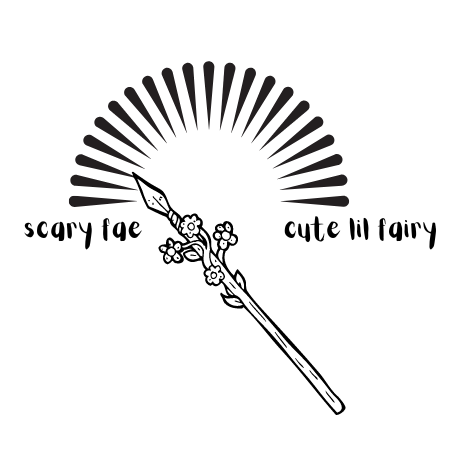
On my scientifically developed fairyometer, I’d place these fae books by Sarah Maas HERE:
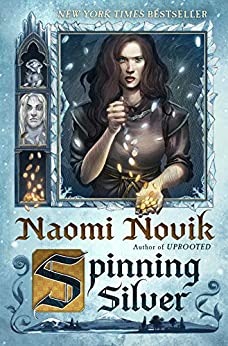
This compelling book is part historical fiction, part fae fantasy, part fairytale retelling. In this novel inspired by the Rumpelstiltskin fairy tale and eastern European and Russian folk tales, as well as by real events and cultural forces in those parts of the world, the Staryk is the name the author gives the fae, and the trope of the human girl forced into proximity with these scary otherworldly creatures is the main focus. But the book is more complex than that, and beautifully written. See my review of it during Fairytale Fiction Week 2022. Excluding the classics at the end, this novel is my favorite of all the ones I’m reviewing in this post.
Consulting the fairyometer about Spinning Silver. . . .
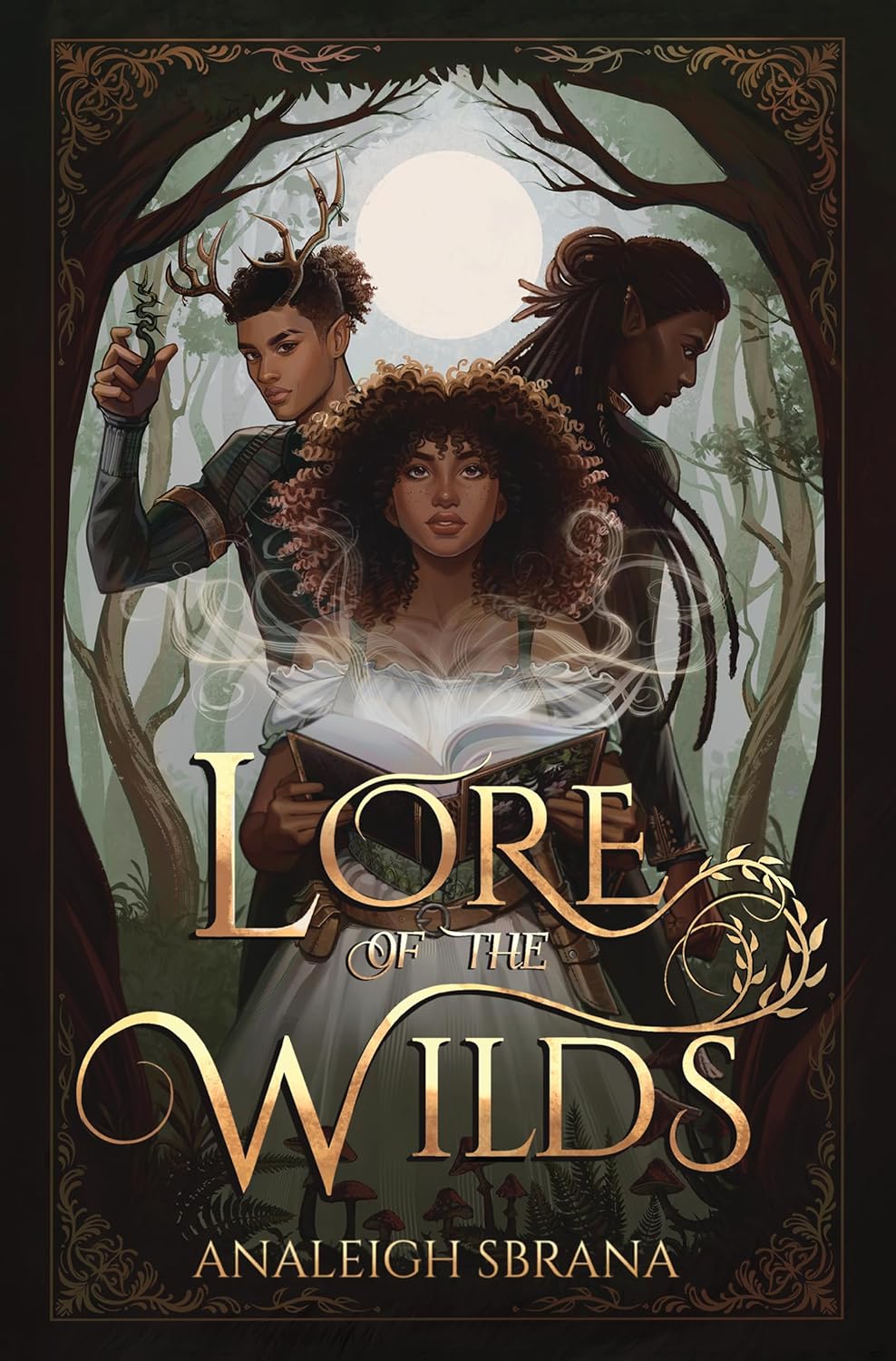
Analeigh Sbrana, Lore of the Wilds (2024, Harper Voyager)
A YA Afro-centric romantasy, casting aside the stereotype of the Eurocentric medievalistic fantasy setting. The magic system and the world-building are well-done. The novel uses the typical YA romance trope of a young woman torn between two hot young men–in this iteration of the trope, brave human woman venturing into the territory of scary but buff fae men–plus a nice male best friend. There are hints of steamy sex. Unfortunately, it crosses a line into my personal hard NO: it has a big, bad cliffhanger ending. A little cliffhanger? Okay. . . I mean, it’s part of a series. But a cliff with a drop-off this steep? As a reader, I feel snookered. I bought a novel; turns out I only received half a novel. I can only think other readers must love this stuff, because it seems like a big publishing trend. If hard cliffhanger endings don’t bother you, you might like this novel. I won’t go on with the series.
Another example of fae fiction that is not only non-Eurocentric, it’s non-heteronormative. It also straddles the line between epic fantasy and romantasy. It’s a good, exciting read about a brutal war pitting elves against fae, so it doesn’t serve up the usual humans vs. fae trope that rules the subgenre. There’s a lot to like here: sisterhood, friendship, power, loyalty, a main character anything but a damsel in distress, love, hate, magical creatures, magical battle methods. It’s the first book in a series, but instead of a cliffhanger ending, it wraps up nicely, and then there’s an epilogue with a bridge to the next book. In this reader’s opinion, that’s a good strategy for the first book in a series.
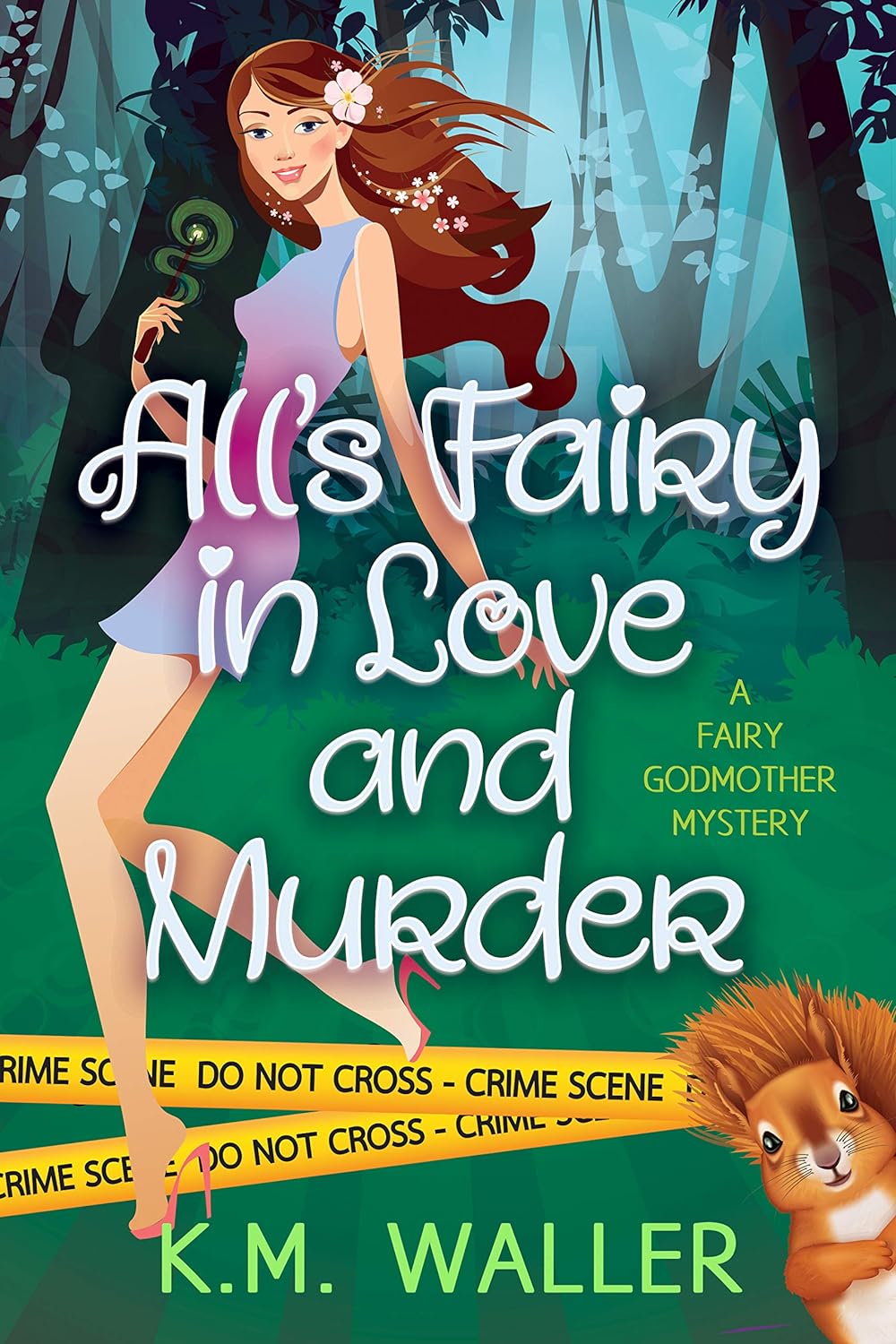
K. M. Waller, All’s Fairy in Love and Murder (2019, self-published)
As you move through this post, you may be wondering, WHERE ARE THE CUTE FAIRIES? WHERE ARE THE FUN FAIRIES? Right here! Waller’s cozy fairy mystery is a lot of fun. The main character is a fairy princess who aspires to be a fairy godmother. She gets an assignment to solve a mystery for a human. A grouchy human with a first-responder background and responsibility for a cute niece (many romance tropes there). Shenanigans and warm cozy animal vibes ensue. I love reading a good indie author, too, especially one who has produced a well-edited book (especially since I’m an indie author myself).
The fairyometer says:
SERMONETTE DU JOUR, so feel free to skip it: Well-edited books are hard to come by. I just read one of the Shardlake mystery novels so shockingly, poorly edited (published by a major imprint, too) that I wanted to throw it across the room. Luckily, since it resided on my iPad, I resisted the impulse. As a former editor, I know editing mistakes happen. It’s not IF. . .it’s WHEN. I may have made some in this very post (*shudders a little*). But when a major publisher does this, I have to wonder how fast the book was rushed into print, and why so little oversight. To be fair, I THINK (although I do not know) that this particular book was published before everything went to e-books, and I THINK this book may have been digitized without much oversight. Still shameful, but more understandable.
And for the literary-minded, three towering fae classics
(probably more in other cultures but alas, I only read English):
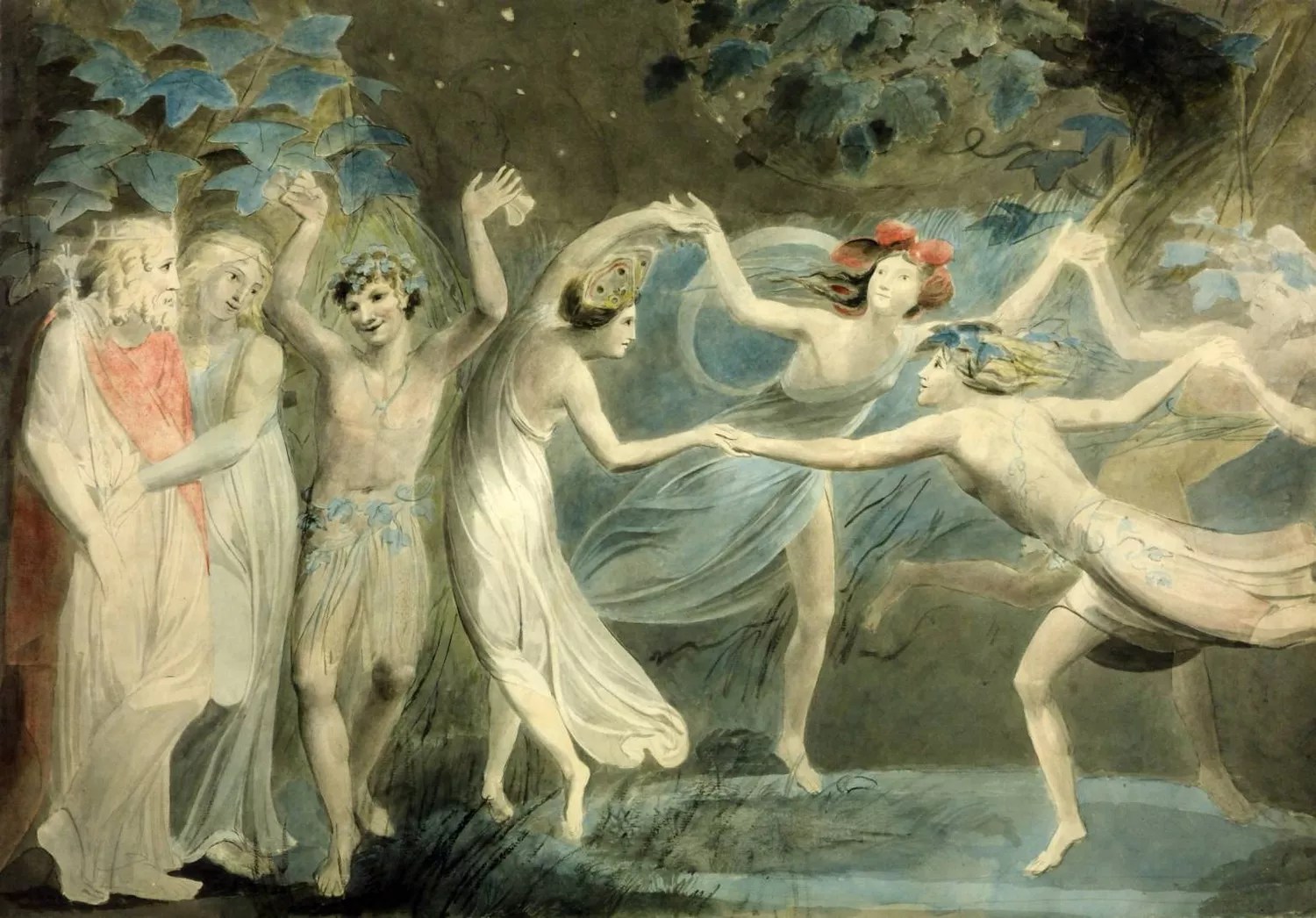
William Shakespeare, A Midsummer Night’s Dream
Source: William Blake, Oberon, Tate Britain, Wikmedia Commons, in the public domain.
Well. . .some of the fairies are cute. Peaseblossom. Mustardseed. But Titania and Oberon? definitely scary fae. “Ill-met by moonlight, fair Titania.” Brrrrr. I think the actors who play them should have big, sharp, maybe steel-tipped teeth.
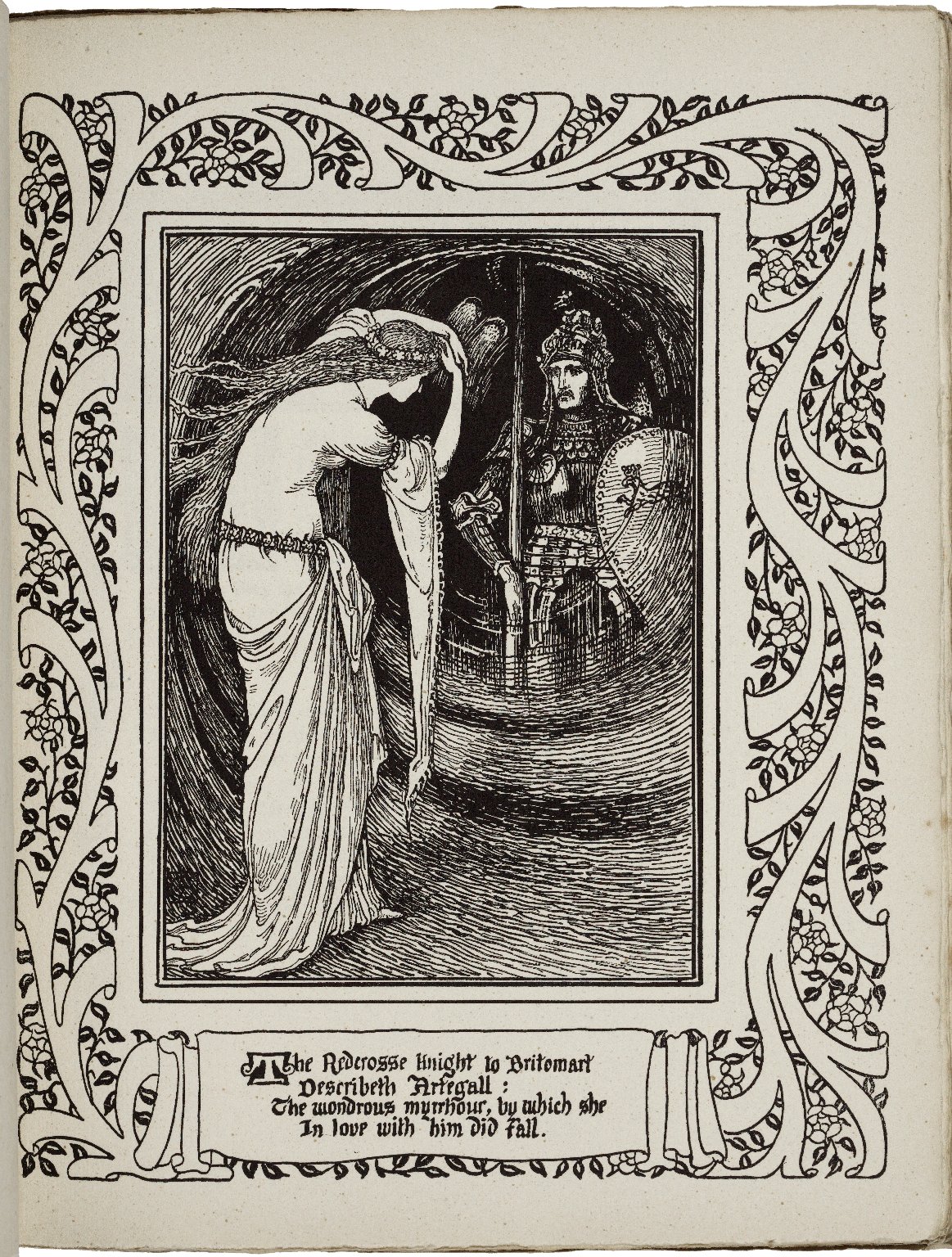
Edmund Spenser, The Faerie Queene
Walter Crane, Britomart viewing Artegal, illustration in an 1895–1897 edition.
Warning to would-be readers: don’t try this at home. Get a little help with it, all’s I’m saying, or you may flounder. In this magnificent Renaissance epic, the human and the fae are so entwined you often can’t tell the difference-“Arthur before he is king” is definitely human, the Faerie Queene is fae. . .or Queen Elizabeth, or the personification of England itself, or. . . But, on balance, I’d call this one for. . .
Sir Orfeo, by . . .nobody really knows
If you don’t read Middle English, Tolkien’s translation is nice. It appears to be hard to find right now. Amazon lists an expensive hardback and claims the paperback is no longer available, but you should be able to find it used. Tolkien published it with two other translations, of the Middle English poems Sir Gawain and the Green Knight and Pearl. In this medieval version of the Greek Orpheus and Eurydice myth, the fae in this amazing poetic narrative are absolutely
Disclaimer: Those fairy pix at the top of this post are AI generated. I can admit it. I WOULD say don’t be fooled, look at the fingers!!!! But who knows how many fingers the fae actually have? The fairyometer, though–all mine. Uh. . .with a little help (ok, a lot of help) from Canva.
LOOKING BACK AT THIS POST, I’d say the consensus in fae lit is “scary fae”–at least in books meant for adult/young adult readers. Happy Midsummer Eve!
In my quest to read all six of the novels short-listed for the 2024 Nebula Awards, I’ve made two posts so far about four of the novels. This post rounds out the six. When I began this series of posts, I have to say I scoffed. The Nebula Award winners will be unveiled on June 8th, and I only decided I’d do this thing a bit past mid-May. Was I crazy???? And now that I’ve actually done it (except for one–full disclosure, I read it earlier this year), have I ever read such an impressive collection of novels? If I have, I’ve never blitzed through them this fast. But they were so absorbing it was hard to stop. Okay, I’m a fast reader. But I’m not a fast reader of boring stuff. So there’s that.
I read these novels in no particular order, by the way–just grabbed one and dug in. It also didn’t hurt–in fact helped a lot–that I’m on a month’s DYI writing retreat in Portugal, where I am perched five stories above the beautiful Largo de São Domingos in Porto. Wafting through the windows along the balmy breezes are fantastic performances by the street musicians in the square below, especially the music of the superb soprano jazz saxophonist who bills himself as Andre Luis. Was there ever a more perfect writing/reading environment? I’ll go home to the U.S. soon and find out who won the Nebula this year for best novel, but I’ll leave a big part of my heart here in Porto.
Here are my final two reviews: The Terraformers, by Annalee Newitz, and The Water Bandits, by S. L. Huang.
How do I even begin? And what is this novel, anyway? Is it green lit/eco lit? Yes. Is it something called “noblebright“? Yes. Not dystopian. Not utopian, either. Is it structurally set up to fail as a novel? In my opinion, yes. Does it fail? No, no, a thousand times no. It is superb. Please read this book.
The novel covers a thousand years–enough, according to the author, to encompass a full terraforming cycle of the potentially Earth-like exoplanet Sask-E. That means, however, that you don’t get to follow one protagonist, or even several co-protagonists, over the course of the novel. So what happens when you switch main characters like this? In some cases, your novel functions like a series of novellas bound together into a single book. In some cases, you end up with a mess. Some writers succeed at doing this. In the SF realm, I’m thinking of Walter Miller’s A Canticle for Leibowitz, or Isaac Asimov’s The Gods Themselves (which I found very unsatisfying–others obviously disagree). Another example might be David Mitchell’s Cloud Atlas, which I found very annoying, especially because I think he’s a great writer (again, many, many others disagree). Against all odds–or anyway, against my own reading history and prejudices, Newitz’s novel brilliantly succeeds, perhaps because one of the main “characters” is Sask-E itself, or–maybe the whole Sask-E terraforming enterprise, based on the philosophy of a society of rangers whose job it is to protect the planet. The author’s interview for The Stranger explains their thinking.
The rangers’ communitarian and ecological principles run up against stiff opposition by commercial enterprises with a much different vision of Sask-E’s future. These interests have the financial and political clout to prevail. If I were to tell you my favorite kind of novel is one with a strong message overwhelming the characters, I’d be lying. I find that kind of novel trying. I’m thinking of the (very much lauded) novel The Tortilla Curtain, by T. C. Boyle (1996). At the end, I felt the characters were cardboard cutouts standing in for ideas, and I also felt resentful that I hadn’t spent the time instead reading a good nonfiction book about the problems of immigrants. A few chapters into Newitz’s book, I wondered if I were in for another experience like that. I wasn’t. This novel is thrilling–as a novel of ideas, but a real novel, not just a long, disguised essay.
The first chapter or two almost made me think we were about to embark on a fun adventure story, maybe of the cowboys-in-space variety, the good-guy farmers vs. the evil ranchers. After all, the novel begins with a ranger named Destry, riding their faithful moose Whistle. But pretty soon the reader is in the deep weeds of how a fair regulatory climate and carefully-maintained ecological balance are essential to justice and a decent life. If this description makes the novel seem drab, don’t be fooled. It’s anything but.
Far into the novel, I had to laugh at the minor character Cimell, a failed game designer who is very earnest but whose games are essentially unplayable. Cimell tries to explain to the main characters in this part of the book (a smart, savvy cat–is there any other kind?–and a sentient train) (Yes, train. A train is one of the main characters. A gamer-train.):
Maybe. . .battles are more exciting. They make for better superhero stories. . .But the revolution is actually happening in the boring details, like how you manage housing and water, or who is allowed to speak.
Please tell me the author hasn’t stuck Cimell into the novel to speak wryly for theirself. This novel is anything but boring. This game–this novel–is anything but unplayable. (Because what is a novel, anyway, but an elaborate game played with words?)
The Terraformers is an extremely important novel, and I am so glad it’s a Nebula finalist. The more of us who know about this book, the better. The more of us who read this book, the better. The planet needs us to. In addition, it’s a great reading experience. Did I mention sentient worms? And the much-maligned naked mole-rats finally get their due.
What a fun, exciting novel this one is! I enjoyed it immensely. It’s a re-imagining of Ming-dynasty writer Shi Nai’an’s Water Margin, considered one of China’s “Four Great Classical Novels” and a precursor to later wuxia fiction: stories (movies, games, etc.) heavily involved with martial arts, magic, and underdog characters fighting for justice. This re-imagining is set in the Song dynasty (960-1279 CE), although it doesn’t adhere slavishly to historical facts. Huang’s acknowledgments page at the end of the novel gives a good overview of what parts are historical and what parts are made up.
I don’t know enough about wuxia, just that one of my favorite movies ever is Crouching Tiger, Hidden Dragon (2000, directed by Ang Lee). For the hard-core wuxia fan, I’m sure Huang’s novel presents even more delights than it does for me. Even so, I found it thrilling. It’s a tale of women who are thrust to the margins of society. These outcasts band together in a sisterhood considered a pack of bandits by the authorities but freedom-fighters by themselves and the villagers they protect. A fascinating subplot concerns a woman forced to participate in a sort of proto-Manhattan Project to create a weapon of mass destruction–some of it based on wuxia tropes about magic and the magical arts, but a lot of it on actual Chinese experimentation with gunpowder. This part of the plot reminds me somewhat of Joe Abercrombie’s The Blade Itself. The characters are compelling, and the moral dilemmas they face give them depth.
A serious message about the nature of justice and the dangers of messing with dark destructive forces undergirds this exciting tale. I had a blast ending my Nebula Finalists reading binge with this one.









 Fantastes
You must be logged in to post a comment.