It’s A Midsummer Night’s Eve: Fairy Abduction, Anyone?

I write this blog post on the evening of June 24th, which is the traditional date of midsummer celebrations all across Europe, even if it’s not the date of the actual summer solstice (and misleading as well, since that moment marks the beginning of summer in the Northern hemisphere, not the middle of it). In many countries, June 24th is St. John’s Day, commemorating John the Baptist. Midsummer Night’s Eve, I suppose, was actually last night, the evening before St. John’s Day. In some countries, the day of celebration is June 25th.

A quick personal reflection: this time last year I had just returned from a month-long sojourn in Porto, Portugal. If only I had stayed another month! Porto has one of the most colorful St. John’s Day celebrations, featuring the sniffing of leeks (???), the eating of sardines (well, sure, it’s Porto, isn’t it?), and the whacking of strangers with toy hammers (???????).

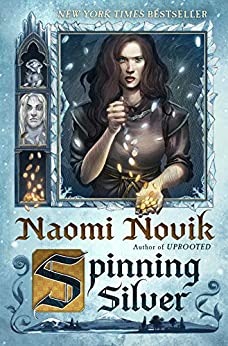
With that out of the way: in my own perverse celebration of Midsummer, on to three pretty recent novels of fairy abduction. They are: A Court of Thorns and Roses, by Sarah Maas (2015), Spinning Silver, by Naomi Novik (2018), and The Cruel Prince, by Holly Black (2018). All three might be thought of as YA, but I question that categorization. A Court of Thorns and Roses started out being thrust into the YA box, but then–especially because of the graphic sexual content–it was re-classified NA (New Adult), and by now it is in a category all its own, the hugely successful engendering of a new fantasy/romance hybrid, romantasy. Spinning Silver has a very adult feel about it–not in the sexual way but in the deftly mature way the novel handles themes, characters, intricate plotting, and above all, excellent writing. I suppose The Cruel Prince really is YA. More about that to come.

A Court of Thorns and Roses, Sarah Maas (2015)

Find it HERE.

What can I say about this novel that hasn’t already been said? I did try. See my review for last year’s midsummer fairy reads HERE. This novel and its sequels spawned an entire hybrid and hugely popular genre, romantasy, so much so that it actually goes by its widely-recognized initials, ACOTAR. The sex is hot. The fairies in all their shapes and iterations are hot. The main character starts out very much an abducted damsel in distress, but in later books, she grows a spine. So if you read Book One and are put off, just go on to read Book Two. Then if you really love it, keep reading. There are a bunch of them. I have to give the novel and its siblings a lot of credit for creating an intriguing and intricately described fairyland with elaborate customs, politics, and (did I mention this?) hot sex. I got sick of it/didn’t believe in it after a while, with its bathrooms apparently by Kohler, but okay, I kept reading. This book, along with all the many books it has influenced, is a true publishing force. With many another fan, you may want to cry out to the various incredibly buff fairies of ACOTAR, Steal me next! Steal me! Steal me!

Spinning Silver, Naomi Novik (2018)

Find it HERE.

I really admire this novel. It’s one of those books based on a fairy tale, but that’s misleading. Yes, it is based on the Rumpelstiltskin folk tale collected by the Brothers Grimm, but it is also a fascinating historical novel with fantasy elements. And in addition: fairy abduction. I won’t review this one at length because I already have, in my series of blog posts on novels that are fairytale retellings. See my review HERE. It’s a wonderful book. The main character is a spunky young woman, but I really don’t associate the novel with the all too frequent trivialities of YA. (You can see I have some prejudices about YA. You may not share them! I probably have them because I’m old and grouchy.) The fairies are as morally ambiguous as they always are. Delightful read.

The Cruel Prince, Holly Black (2018)

Find it HERE.

This brings me to The Cruel Prince, a novel I hadn’t read until now. I probably put off reading it because it is, indeed, YA (and its title is a little clunky). But I enjoyed this novel immensely, even though I’m not exactly the audience for it. I say that, and then I reflect that many, many readers of YA are adults. This is a good one, folks! Black’s novel is unlike Spinning Silver and ACOTAR in one important respect. Those two novels are what’s known as “second world fantasy” or “high fantasy.” This simply means that such stories are set from the get-go in a world far, far away from ours. Although–now that I think about it–novels of fairy abduction like those might actually transition from a “second world” (the fantasy world of the novel) into a “third world,” the parallel universe of fairyland, sometimes separated by a physical border, other times by some type of mystical transition from one realm to the other.

The Cruel Prince is different. This novel is portal fantasy, “low fantasy,” where the action begins in our own world and then transports the characters to a different realm (think Harry Potter). The fairy world of The Cruel Prince seems to exist side-by-side with the real world, too, again like Harry Potter. The characters can come and go. The fairy foster-father of the main character intrudes on her childhood world to murder her human parents and abduct her and her two sisters to his estate in fairyland. He is one of the fairy gentry there. Not a spoiler–this happens in one of the first scenes of the book. Such a gory beginning and such an exotic location as fairyland don’t prevent the main character from nipping across to the real world for a visit to Target. She reads as a real teen-aged girl. A teen-aged girl living a very strange life.

I know I keep mentioning Harry Potter, but this novel is actually nothing like Harry Potter, believe me. Black’s novel is full of court intrigue of the most delicious, well-plotted kind. It has a whiff of dark academia fantasy as the main character attends a sort of high school for fairy combat and lore, and more than a hint of horror. Think about that beginning. The foster father is a type of fairy known as a “red cap,” extremely violent and dangerous, known for dipping his cap in the blood of his victims. There’s the usual torn-between-two-lovers YA trope, handled here very subtly. And there’s the push-pull between the main character’s humanity and the fairy culture she aspires to blend into–especially poignant since the fairies, famously, are so amoral and dangerous that everything in the reader may scream “get out!” Besides, after reading Mirrlees (see my earlier post), I was especially intrigued that Black includes the dangers of eating fairy fruit as a hideous reference to the worst kind of drug addiction. I was also intrigued by the main character’s protective measures of Mithridatism. (Hint: you have to read to the last stanza to find out.)

Best of all, this is a first book in a series WITHOUT A CLIFF-HANGER ENDING!!!!! If you have followed my blog, you know how much I hate these. It’s the one thing (well, okay, also bad writing) that makes me refuse to go on with a series. Black is considerate of her readers. Sure, it’s clear there’s more story to come. But she doesn’t just chop us off at the knees. I plan to read on. This book was lots of fun, and Black is a very good, very satisfying writer.

WHAT NOW? Now I will move on to my reviews of the novels short-listed for the Hugo Award 2025.

Nebula Awards Coming Up Soon

The Nebula Awards are soon to be announced, but you have a little over a month to do some reading if you still want to make up your mind before the results are in. The Science Fiction and Fantasy Writers Association will announce the winners on June 7, 2025, at the SFWA’s 60th Annual Awards Conference in Kansas City, Missouri (June 5-8 2025). You can actually attend if you want to–in person or online.

The SFWA gives awards to different types of speculative fiction in various categories–novels, short fiction, novellas, and so on, with the awards going to the best of the best published in 2024, as judged by their membership. I set myself the task of reading all the novels short-listed for this year’s awards. Then I reviewed them all in this series of posts. Now that I’ve read them all and thought about them all, which novel would I choose if I were choosing the winner? Full disclosure: I’m not! But if I were?

Here are the short-listed books nominated for best novel:

For various reasons (see my reviews here), I would not choose Barsukov’s or Chandrasekera’s novels, and that’s in spite of my enthusiastic review last year for Chandraskera’s The Saint of Bright Doors, which went on to win–deservedly–both a Nebula and a Locus award.

The other four novels are all wonderful books. Do read them! (Well–read Chandrasekera’s if you have a lot of patience and/or a lot of political/cultural knowledge of Sri Lanka. It’s certainly the most serious book on the list.) Asunder has an amazing system of magic, amazing world-building, and a really interesting relationship between the two main characters. A Sorceress Comes to Call is incredibly good fun, and if you are a Bridgerton or Jane Austen fan, and if you love English country house murder mysteries, you will probably love this book. See my reviews here.

The two I love most, though, are Kelly Link’s The Book of Love and John Wiswell’s Someone You Can Build a Nest In. Both are very ingenious. Both are heart-warming but not in a sappy way. I think the writing and character motivations of Link’s novel are maybe slightly better, so I guess I’d go for that one. But Wiswell’s is just great, too. See my reviews here.

A reminder: ALL of these novels have their ardent fans, or they wouldn’t be on the short list. You may love even the ones I don’t love, or don’t love as much as the one I chose. You may love them–or not love them–for reasons I don’t share. And that’s just fine. De gustibus non est disputandem. Or as my old mother would put it, “Everyone to her own taste, said the old woman who kissed the cow.”

Two more novels short-listed for the Nebula

The Nebula Awards, sponsored by the Science Fiction and Fantasy Writers Association, have announced their short-list of nominated speculative fiction published in 2024. The short-listed books nominated for best novel are:

REVIEWED IN MY LAST POST:

REVIEWS STILL TO COME:

I’m reading the short-listed books in alphabetical order by author, which means I’m coming at them at random. The two books I’m reviewing in this post, Asunder, by Kerstin Hall, and A Sorceress Comes to Call, by T. Kingfisher, certainly do make an interesting pair. Both involve intricate systems of magic, and both involve the matter of possession–one person taking over another’s body. There the resemblance ends.

Asunder, Kerstin Hall (Tordotcom)

Find out more HERE.

This is a sometimes-thrilling, pretty consistently absorbing novel with a magic system so complex I never did completely figure out what it was all about. It’s a magic that punches you in the face starting on page one, a magic that must be unraveled as disaster looms. Meanwhile the main characters struggle with a state of possession that reads like the forced-proximity romance trope on steroids. Sometimes Hall’s novel goes off the rails. There’s a long sagging middle. Occasionally it veers into the bizarre, and not in a good way. Example: a method of mass transit that involves boarding a giant spider through its gullet and settling down to enjoy the view while the spider ambles off to the next town. Very few writers can engage in a China Miéville-level of weirdness without sounding outright silly. But just as I was starting to get bored and annoyed, Asunder brought off a stunning mid-plot surprise . Not a cheap thrills surprise, either. Not a surprise engineered by the need for a swerve in the plot–although the plot does swerve! Not the other kind of surprise just arbitrarily stuck in there because the author doesn’t know what else to do. No–this surprise rises organically from plot and character and genuinely changes the way we see both. I loved it. Throughout, big set-pieces stud the novel, gore- and horror-filled fights to the death with god-like creatures. At the end, I wasn’t really sure what had happened or exactly why. It seemed for a while that we were about to go veering off into romantasy, but Hall does not allow that. In spite of a kind of low-level confusion, I really enjoyed reading this novel.

A Sorceress Comes to Call, T. Kingfisher (Tor; Titan UK)

Find out more HERE.

Let’s say a Grimms’ fairytale and a Regency romance had a baby, and that baby was a real little horror. That would be this book. It was a delight to read. In a plot riffing off the Goose-Girl fairytale, T. Kingfisher (pen name for the author Ursula Vernon) spins the tale of a sorceress and her hapless daughter who set out to insinuate themselves into an upper-crust household. The sorceress hopes to ensnare the squire of the household into marriage, mostly in order to gain enough worldly advantages for her daughter Cordelia so that Cordelia can make a brilliant match with the squire’s filthy-rich bachelor neighbor. It is a truth universally to be acknowledged etc. etc. If the mother–a horror-infused Mrs. Bennet–succeeds, mother and daughter will live in comfort for the rest of their lives. The squire and his sister won’t fare so well. In fact, they could well end up murdered. People who turn out to inconvenience the sorceress often meet that fate. And then there’s the nightmare horse who is the sorceress’s familiar, trampling anyone who gets in his mistress’s way. As mousy Cordelia finds an affection she has never known among the squire’s household and the guests at his house party, she needs to rise to the occasion, grow a spine, and defeat her murderous mother. As with Asunder, horror, magic, and magical possession drive the plot. But what a difference in tone and outcome and just about everything else. A Sorceress Comes to Call was fun from page one all the way through. I loved reading it.