Another short-listed novel for the World Fantasy Awards [Corrected post]

The 2025 World Fantasy Awards will be announced at the World Fantasy Convention, held this year in Brighton UK on Oct. 30-Nov. 2, 2025. Here I am, deep in my quest to read and review all the novels short-listed for the award.

The list and my next review–and. . an editing mistake corrected:

The Bright Sword, Lev Grossman (Viking; Del Rey UK)–combined Monty Pythonesque and Malory Morte-D’Arthur-esque massive novel about the Arthurian world in decline.

The Wings Upon Her Back, Samantha Mills (Tachyon)–What if profound disillusionment causes you to lose your wings? What would you do to get them back?

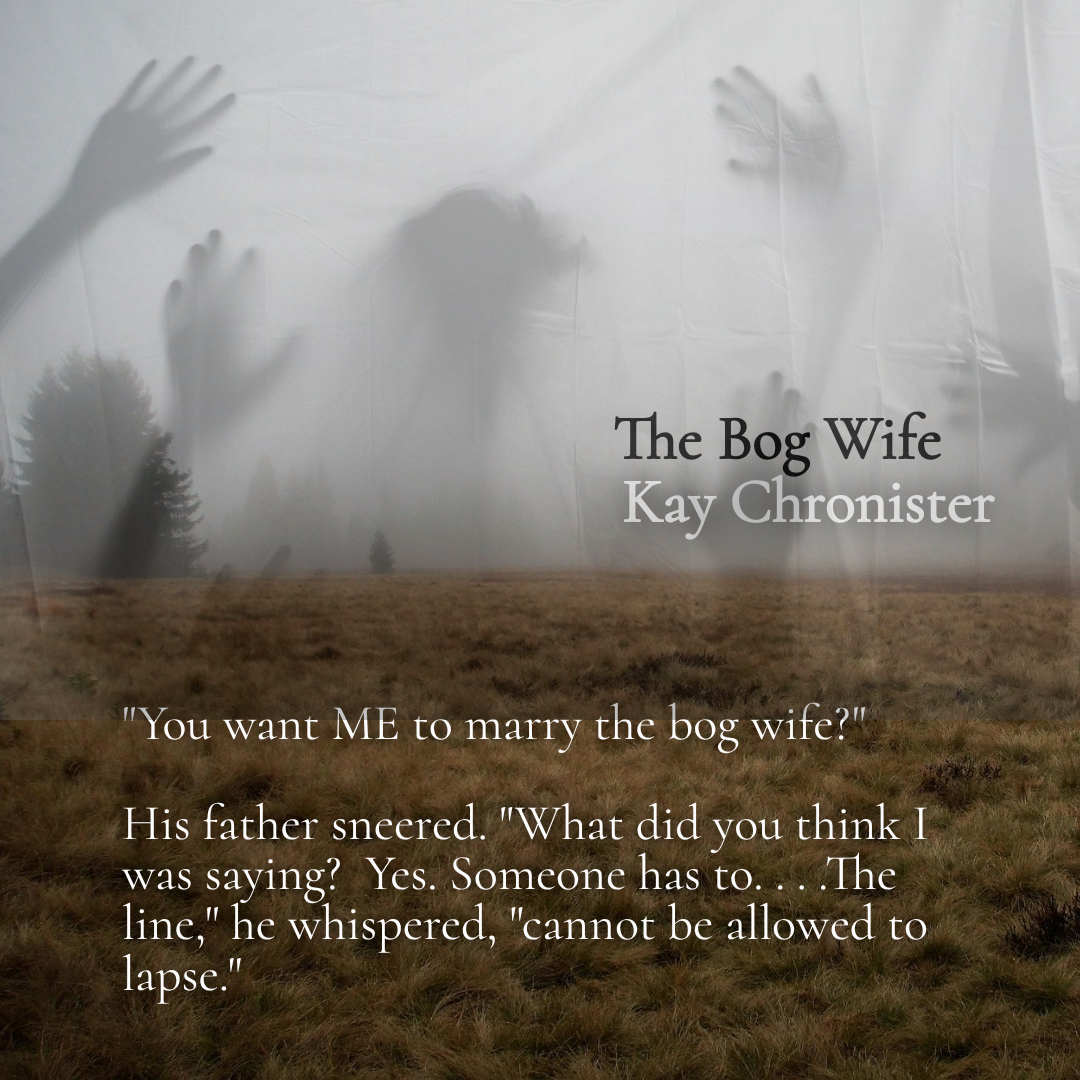
The Bog Wife, Kay Chronister

Find out more HERE.

Chronister’s novel starts out like a bad M. Night Shyamalan movie but then moves into realism. Here’s a family dominated by its crazed patriarch and cut off from regular civilization–a scenario that could and has happened in real life. Yet from the beginning, a sense of foreboding lets you know a sociological explanation for this family’s woes is not going to give you the whole story. Various family members take turns telling you the story, and each one has a different take on the events as they unfold.

As I read on, I wondered–will the plot amount to smoke and mirrors like those Shyamalan movies or filmed stories with more atmosphere than sense, like The Witch or the HBO series Carnivale? Thankfully no. By the end, though, Chronister’s novel does take a definite and defining lurch into fantasy and magic. Coming so late in the book as it does, I’m amazed that this strange turn actually works. But it does. It so does. As I finished it, I was reminded of books like Sarah Perry’s The Essex Serpent. I really admired Chronister’s novel. (And in spite of the similar title–and some folkloric elements of its own–it’s nothing at all like The Fox Wife!)

What is “Magical Realism”? A type of fiction that’s not fantasy but can maybe be called “fantasy-adjacent.” Usually, magical realism is characteristic of novels that we might call “literary.” Then again, the distinction between “literary” and “genre” fiction is often arbitrary and unhelpful. HERE is a good quick introduction to magical realism. The features I especially connected to Chronister’s novels are:

  • a realistic story infused with events that don’t seem logical. The predicament of the family in The Bog Wife certainly meets this criterion.
  • a mixture of straightforward storytelling with elements from folklore or legend. In The Bog Wife, this aspect of magical realism unfolds before our eyes, as the story develops.
  • a tone that makes the whole thing seem perfectly ordinary–when it isn’t. In Chronister’s novel, some family members take a more matter-of-fact approach to events than others, leaving the reader to decide which perspectives are more credible.

If this makes the novel seem stranger and more experimental than your usual read, don’t be put off. It is enthralling.

NEXT UP: Lev Grossman’s The Bright Sword.

World Fantasy Awards Coming Soon!

As promised, I have read all the novels short-listed for the 2025 World Fantasy Awards. The awards will be announced at the World Fantasy Convention, held this year in Brighton UK on Oct. 30-Nov. 2, 2025. If I only had the time, I’d read all the other nominated works, but I don’t. So I’ll do what I love most, read novels and talk about them.

Here are the short-listed novels, and my first two reviews:

The Bog Wife, Kay Chronister (Counterpoint; Titan UK)–what IS this thing? Southern/Appalachian Gothic? Magical Realism? Fascinating read.

The Bright Sword, Lev Grossman (Viking; Del Rey UK)–combined Monty Pythonesque and Malory Morte-D’Arthur-esque massive novel about the Arthurian world in decline.

The Wings Upon Her Back, Samantha Mills (Tachyon)–What if profound disillusionment causes you to lose your wings? What would you do to get them back?

I’ll review one novel per post as we all anticipate the judges’ decision, but in THIS POST ONLY, I’m mentioning two. That’s because I’ve already reviewed The Tainted Cup recently, so I’ll just give a shout-out to the novel here and point you to the review.

The Tainted Cup

Find it HERE.

Robert Jackson Bennett’s The Tainted Cup has already won one major speculative fiction award and has been nominated for another. See my review HERE.

The Fox Wife

Find it HERE.

Yangsze Choo’ s The Fox Wife delightfully combines Chinese folklore about the supernatural nature of foxes with the early 20th century historical conflict between China and Japan. The main character Snow (Ah San), a woman who is actually a shape-shifting fox, has a wry take on the world of humans that instantly charms and engages the reader. When she states, “The first rule about foxes is that you don’t talk about foxes,” she grabs me with this slyly repurposed Fight Club meme and doesn’t let go. Then, as the novel combines the magic of fantasy with the separate magic of historical fiction, I really am a goner. There’s a mystery here, a love story, the broken heart of a grief-stricken mother, and revenge, sweet revenge. Snow the Fox Wife is a marvelous storyteller into the bargain. It’s a wonderful novel. I savored every word.

COMING UP NEXT: my review of Kay Chronister’s The Bog Wife.

Interested in the Kobo Spooky Sale?

A few thoughts on the run-up to Halloween.

Find the Kobo sale HERE–many, many spooky ebooks for Spooky Season, all at a discount. (Full Disclosure: one of mine, too. I don’t allow ads on this site, so from time to time, I do post a promo of my own.)

If you’d like to order my own book, Cold Tales for a Long Cold Night, take a look at the Kobo site and enter my name or title into the search bar. Or order it directly from my online store. If you’d like more information about it, read on.

BUT FIRST. . .

Why read spooky books? Here are some thoughts about Halloween, its origins, and. . .

Why does Halloween scare us and delight us, both/and?

A blog posted on the U.S. Library of Congress web site points out that Halloween originated as the Celtic harvest festival Samhain. Samhain did have its spooky side–during the season of Samhain, spirits supposedly walked the earth. When Northern Europe was Christianized, the festival morphed into something pretty strange.

In the Christian calendar, Nov. 1 is All Saints Day, aka All Hallows Day, the day when many Christian churches remember and celebrate the lives of all the saints (‘hallow”=”holy.”) 

But the night before All Saints Day has traditionally been considered the time the evil ones show up–the night we know as All Hallows Eve. No, really. Halloween combines the word “Hallow” with “e’en,” a contraction for “evening.” Hallow E’en. Hallow-eve.

All manner of practices grew up to chase away the devil and any creepy ghosts, ghouls, and undead that happen to accompany him. Later, when people no longer took these superstitions so seriously, the practices turned into fun: carving pumpkins, dressing up in scary costumes, shaking the neighbors down for candy.

Depending on where you live, your Trick or Treat tradition may vary, Do you live in one of those benign and fun places where, as a thank-you for the candy, the trick-or-treater owes the candy giver a  “trick” like telling a joke or doing a silly dance? Or do you live in an edgier place where the tradition emphasizes the OR part of the trick or treat encounter? If you don’t give me candy, I’ll play a mean trick on you–egg your car, TP your house. It’s trick–mean trick–OR treat–gimme candy. Your choice, neighbor. Watch out, though. Santa is just around the corner and you may go on the Naughty List if your trick is too over-the-top.

But why do we keep these traditions up? Everyone loves a good scare, as long as no one gets hurt. Am I right? People differ in their tolerance for what constitutes “a good scare.” I’m not a roller-coaster person. I can admit it. And when I watch horror movies, my daughter has to be right beside me to hold my hand. But there’s something comforting, even fun, about being scared out of our wits and living to tell the tale.

Happy Halloween!

And thanks to Bany at Pixabay for this royalty-free pumpkin pic.

So why is Cold Tales for a Long Cold Night in the Kobo sale?

The title tips you off, right? These are dark, dark stories–some darker than others, some edgier than others, some YA and some. . . NOT. Be warned.

In the book, you’ll find twelve short stories about an assortment of creepy types–vampires, shape-shifters, witches, critters, you name it, plus a novella, Witch Moon. 12 + 1=13. . .you do the math.

Here’s a quick run-down:

  • The Arbor–what’s going on in there???
  • The Obligations of the King–heavy is the head that wears the crown
  • Hatch–they’re hatching out. . .and they are hungry
  • Gilles Whispers My Name–one of the most prolific serial killers who ever lived
  • Plump, Full of Juices–the Blood Countess time-travels to our world from medieval Hungary
  • Myrddin Wyllt–Merlin the Magician as you’ve never seen him
  • Deeper–the Blood Countess strikes again
  • Rat Rhymer–everyone knows a bard is a dangerous thing
  • Closet Mirror–don’t look too close–you might recognize someone
  • Every Witch Way But Loose–wherever you go, there you are
  • Roadside Attractions–did they drive off and leave her?
  • Girl Meets Swan–and it does not go well
  • AND THE NOVELLA Witchmoon (also published as a stand-alone volume)

A personal story, because why does a writer write anything?

I wrote “The Arbor,” the first story in this collection, shortly after I walked several blocks down the street from my townhouse to my son’s house. He and his whole neighborhood were having a picnic in a lovely little pocket park on the corner of his block. As I ate my brat, I noticed all the kids in the neighborhood were darting in and out of a fun little leafy arbor in the garden.

Directly across the street is a church that owns some land connected to the park. It’s lovely. (Big disclaimer: I’m sure it’s a great place with great people, and I didn’t write about THAT CHURCH. . .)

As I say, I was munching out at the picnic. But I, with my warped imagination, found my thinking had gone into overdrive. Suppose the arbor is not so lovely? Suppose sinister things happen there?

So I wrote this story.

Fast-forward to last week. I decided to buy a house right around the corner from my son’s. I closed on the house. I’m in chaos right now as I move all my stuff in there. One of the great features of this house is that it abuts. . .

that pocket park. . .

I guess it never occurred to me UNTIL RIGHT NOW that I had JUST written a horror story about this very park, which I am staring at out my window THIS VERY MOMENT.

What DOES live in that arbor?????.

Thanks to Betidraws for this royalty-free ghost from Pixabay.