Fairytale Fantasy post #4

Tomorrow is St. Valentine’s Day, all in the morrow betime, and I a maid at your window, to be your valentine!

W.S.

Here’s the fourth in my FAIRYTALE FANTASY posts!

TO REPEAT from fairytale fantasy post #1: the term “fairy tale” is misleading. What we typically call “fairy tales” are more accurately described as “folk tales,” or “traditional tales,” especially one coming from the oral tradition. I’m also not necessarily posting about the fae, although one of the books does have a strong fae presence. “Fairy”—“Fae”—They are synonyms (of a sort), and tales of the fae are an important fantasy subgenre, but again, I’m not using “fairy” necessarily in that sense. AND I’m not dealing with anything Disney (although I guess I kind of lied about that in post #3).

THE FAIRYTALE FANTASY NOVELS

My two top picks:

Spinning Silver, by Naomi Novik. Based on the Grimms’ fairytale Rumpelstiltskin. Reviewed in post #1.

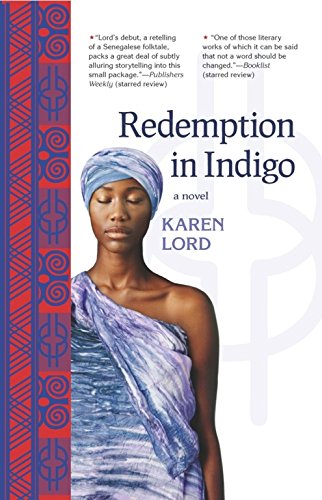
Redemption in Indigo, by Karen Lord. Based on the Senegalese folktale Ansige the Glutton. Reviewed in post #2.

Other fairytale/folktale fantasy:

She Who Became the Sun, by Shelley Parker-Chan. Incorporates Chinese ghost lore. Reviewed in post #3.

Alice, by Christina Henry. Horror-fantasy based on Alice in Wonderland. Reviewed in this post.

Gregory Maguire, Confessions of an Ugly Stepsister. Based on the French fairy tale Cinderella.

Shadow of the Fox, by Julie Kagawa. Based on Japanese myth and folklore.

For the Wolf, by Hannah Whitten. Based on Little Red Riding Hood? For sure on Beauty and the Beast.

Black Sun, by Rebecca Roanhorse. Influenced by the folklore and mythology of Mesoamerica.

Today’s fairytale fantasy review:

Alice, by Christina Henry

Find it at amazon.com.

Christina Henry’s horror-fantasy novel was published by Ace Books in 2015. “Christina Henry” is the pen name of an author who has written several fantasy reimaginings of popular older fantasy, including several Alice books. Featuring Henry’s book in this blog series is kind of a stretch, because Alice in Wonderland is not a classic fairy tale and doesn’t come from folkloric origins. The beloved children’s book, which was titled Alice’s Adventures Underground, or Alice’s Adventures in Wonderland, was written in 1865 by Charles Dodgson, a Victorian-era English mathematician. Dodgson used a pen name himself: Lewis Carroll. Alice has entered popular culture, though. Even people who have never read it are likely to know the story. It has become a kind of latter-day fairytale.

Admittedly there’s no fairytale or folkloric basis for this book. But there is a fascinating backstory. Dodgson was a shy bachelor whose family friends had a young daughter, Alice Pleasance Liddell. Dodgson and a friend rowed Alice and her two sisters up a river, and during this excursion, Dodgson made up a fanciful story for the girls. Alice wanted a copy, so Dodgson wrote it down for her. Eventually, Dodgson published it as a children’s book, with famous illustrations by John Tenniel.

The 1898 edition of Alice in Wonderland, with John Tenniel’s illustrations.

Fleets of literary critics have worked overtime to analyze this seemingly simple but actually very complex tale. Some have considered the characters to be fantasy versions of Dodgson and people he knew; others write about the puns and wordplay, and especially the mathematical puzzles and concepts that Dodgson inserted into the story. Still others have explored the Freudian aspects of the story. Most acknowledge that Alice changed children’s literature, taking it away from preachy tomes and into the realm of nonsense and fun. This article gives a good quick introduction to the whole Matter of Alice.

Henry’s novel

Henry’s version of Alice begins with blood and screaming. You know instantly that you’re in the world of horror, but probably not yet that you’re in the world of Alice in Wonderland. Let me backtrack. Yes, you do, because the cover tells you that. But the first chapter places you in a horrifying Victorian madhouse, where Alice is mistreated by the attendants. Aside from them, her only human contact is a fellow patient, Hatcher, an axe-murderer. She has communicated with him for years through a hole between their locked rooms–essentially cells. She soothes him through his most deranged episodes, and he gives her companionship. It’s soon clear that Alice has been locked up as “insane” because of behavior unbecoming a properly brought up young Victorian woman. Things heat up (literally) when the asylum catches fire and Hatcher helps Alice escape into the “Old City.” At that point, the reader realizes that while the setting seems Victorian, the novel takes place in some alt-Victorian dystopia.

Unfortunately, after that promising and intriguing start, the novel goes downhill into a series of mechanically-plotted adventures that slavishly adhere to horror versions of Alice in Wonderland characters and situations. Some of it really has to stretch to fit the Alice tropes. Meanwhile, I was getting annoyed, because I wanted more about Alice the character and her relationship with Hatcher. Oh, well.

Many readers love these books, so don’t take my word for it that this one is somewhat of a disappointment. Here’s a glowing review. And here’s another one. But some think the characterization is thin, the magic not very convincing, and the writing not very developed. Here is one of those. I’m afraid I’m in their camp.

Other readers have reservations about these books for a different reason. Several reviewers think Alice is too full of violence against women. Here’s one of those reviews. I would not put Henry’s novel in this category, myself. Although I never approve of gratuitous violence against women (or anyone), this kind of violence does happen in actual life, and fiction–unless it’s completely sanitized–does deal with the hard parts of life. And should. So if it’s well-written and it honestly confronts the situation it depicts, I don’t care what the content is, or how tough. In addition, part of the horror genre involves body-horror of all types. You may not enjoy horror. I’m not the biggest fan. But well-done horror is its own delight.

Digression: As I say, I don’t mind violence in fantasy IF it is well-done and necessary to story and characterization. That’s a big IF, though. I know one fantasy novel highly regarded by a lot of fantasy readers (Lord Foul’s Bane, if you’re interested) that I just can’t admire–and won’t finish the series. I’m amazed I finished the novel. Even though the novel has some interesting features, the rape in that book is gratuitous, the protagonist unrepentant or not very, and the reader apparently intended to shrug the whole disgusting episode off. Not cool in my book. (Its purple prose also annoys me.) On the other hand, Cormac McCarthy’s Blood Meridian, while one of the most unpleasant novels I’ve ever read (and studded with some pretty purple prose), is also one of the most brilliant. So there you go. That’s what you need to know about me the reader.

Related works and fantasy-related fictions:

Henry’s Alice is the first book of a series, so there’s more Alice material if you end up liking the novel. I’m not continuing it. Henry has also taken on other well-known children’s classics, such as Peter Pan. Re-imagining literary classics is a whole subgenre, and not just in fantasy. Underneath the fantasy tent, though, many successful novels have taken on similar material. I’m thinking especially of Gregory Maguire’s Wicked, a re-imagining of The Wizard of Oz‘s Wicked Witch of the West–probably because my next post is about another novel of his.

Alice in Wonderland, as I’ve mentioned, has left its origins to spread out into numerous genres and forms. It has inspired a ballet, a stage play, toys and games and products of all types, and a number of movies (including several. . .shhhh. . . Disney versions, one of them the iconic animated version of 1951–probably the version from which most Americans get their visual impressions of the characters, not the famous Tenniel illustrations).

Alice has been issued as a children’s book with illustrations by many different artists, in many different styles. I find these pretty intriguing. Here are a few:

a Salvatore Dali version!

Yayoi Kusama’s pop art version

Fairytale Fantasy post #3

Almost Valentine’s Day!

Here’s the third in my FAIRYTALE FANTASY reviews!

TO REPEAT from fairytale fantasy post #1: the term “fairy tale” is misleading. What we typically call “fairy tales” are more accurately described as “folk tales,” or “traditional tales,” especially one coming from the oral tradition. I’m also not necessarily posting about the fae, although one of the books does have a strong fae presence. “Fairy”—“Fae”—They are synonyms (of a sort), and tales of the fae are an important fantasy subgenre, but again, I’m not using “fairy” necessarily in that sense.

AND I’m not dealing with anything Disney.

THE FAIRYTALE FANTASY NOVELS:

Spinning Silver, by Naomi Novik. Based on the Grimms’ fairy tale Rumpelstiltskin. Reviewed HERE in Fairytale Fantasy post #1. One of my two top picks.

Redemption in Indigo, by Karen Lord. Based on the Senegalese folk tale Ansige the Glutton. Reviewed HERE in Fairytale Fantasy post #2. One of my two top picks.

Other fairytale fantasy novels:

She Who Became the Sun, by Shelley Parker-Chan. Incorporates ghost lore from China. Reviewed in this post.

Confessions of an Ugly Stepsister, by Gregory Maguire. Based on the French fairy tale Cinderella.

Black Sun, by Rebecca Roanhorse. Uses folk motifs from Mesoamerica.

Shadow of the Fox, by Julie Kagawa. Based on folklore of Japan.

Alice, by Christina Henry. Horror-fantasy based on Alice in Wonderland.

For the Wolf, Hannah Whitten. Based on Little Red Riding Hood and even more closely, Beauty and the Beast.

Today’s fairytale fantasy review:

SHE WHO BECAME THE SUN, by Shelley Parker-Chan

Buy this book on Amazon.com.

Shelley Parker-Chan’s She Who Became the Sun, published by Tor in 2021, has gotten a lot of buzz, a lot of it well-deserved. It could easily be described as an historical novel about the first Ming emperor of China, but with fantasy elements. In fact, I think I would have liked it better if the writer had thought of it that way, and included the ghosts as entities the characters believe in, but not necessarily the reader. There’s a really fine line here, and I wish the author had had more faith in her 14th century Chinese characters’ perceptions of reality rather than packaging them for us as fantasy. I kept wondering whether fantasy was the author’s intention, or just the way the book was marketed. Reading interviews with Parker-Chan, who is Australian-Asian, an outspoken advocate for LGBTQ+ rights, and a big fan of Asian fantasy, I’ve decided no, she did want those fantasy elements. And anyway, the ghost lore really is fascinating, whichever way you want to read the novel.

The folklore basis of the novel:

The fantasy elements in this novel are pretty thin, but ghosts play a prominent role. A second fantasy element presents the idea that a “mandate of Heaven,” manifested in bursts of mystical light, guides the main character, Zhu Chongba in her destined path to becoming Zhu Yuanzhang, the Hongwu Emperor of China. I don’t know about the mystical light, but Parker-Chan’s ghosts derive from a main feature of 14th century Chinese culture. Reading Parker-Chan’s novel led me to find out more about the ghost lore. Here are a few accessible sources: University of Chicago professors Judith Zeitlin and Patrick Crowley discuss the topic HERE. Zeitlin comments that ghosts in this era were generally supposed to have returned from the dead to right some wrong or solve some problem, and that’s certainly the role they play in Parker-Chan’s novel.

My investigation also turned up two important Ming Dynasty literary works that provide a lot of source material for Chinese ghost lore. Xu Zhonglin’s Fengshen Yanyi (also known as Fengshen Bang), which can be translated “The Investiture of the Gods” or “The Creation of the Gods,” is part of a flourishing “gods and demons” genre of fiction from 16th century China. Another 16th century Chinese novel,Wu Chen’gen’s Journey to the West, considered one of the “Four Great Classical Novels” of Chinese literature, is also full of Chinese ghost-lore and other folkloric tales and elements. Here are two accessible versions for Western readers: Katherine Liang Chew’s Tales of the Teahouse Retold: Investiture of the Gods, published by iUniverse in 2002, and Julia Lovell’s 2021 Penguin Classics translation of Journey to the West.

Both of these classics of Chinese literature have hugely influenced Chinese popular culture, including numerous later works of fiction, stage plays, movies, comics, and video games. Parker-Chan herself has said in interviews that she first envisioned her novel as a Chinese television show and a “melodrama.” Thanks to Parker-Chan’s novel, the allure of this lore has captured Western readers who might not have been familiar with much of it before.

Parker-Chan’s novel

The most stunning aspect of this novel is how it re-imagines the gender roles of the main figures in a tumultuous period of Chinese history. During this period, the Mongol grip on China was weakening, and a young monk from a poor background saw his opportunity. Through skillful political maneuvering and battle tactics, he attained the emperorship of China. Parker-Chan’s premise—that this young man was not a man at all but a woman in disguise—works brilliantly, and the author didn’t need fantasy to convince me to willingly suspend my disbelief. Zhu Chongba, the monk, meets her match in Ouyang, a court eunuch. Both are smart, both are driven, and both are reaching for their destiny. The strategizing and power politics, including the gender politics, are nothing short of thrilling. The characters, Zhu and Ouyang for sure but a number of others, are beautifully developed, and Parker-Chan pulls no punches and does not sentimentalize. This is the part of the novel I loved.

In the end, though, in spite of my admiration and all of the many laudatory reviews I read, the novel didn’t become an instant favorite. A long tedious part in the middle of the novel nearly lost me. The beginning of the novel was so intriguing, though, and the end of it was so absorbing, that I stuck with it.

Reading a novel, especially a long novel, is so dependent on personal and outside factors that I have to wonder how I would have reacted if I had read Parker-Chan’s book under other circumstances. I had just finished Cecelia Holland’s brilliant historical novel, Until the Sun Falls, about exactly those Mongol overlords that Zhu defeats, and I’m wondering if I might have been hungry for more pure historical fiction on the subject. Also, I had fairly recently finished Nicola Griffith’s Hild, another brilliant historical novel re-imagining the complex politics surrounding a powerful young gender-ambiguous protagonist. I’m wondering if my experience reading those two novels (with their stunningly beautiful prose) might not have made me impatient with Parker-Chan’s fantasy elements. I might have been thinking, Let’s get to the good stuff! (I know that sounds strange in a fantasy blog!) But Parker-Chan ultimately comes through with the good stuff, leaving me a very satisfied reader.

Here are some informative reviews of Parker-Chan’s novel: Greer Macallister’s Chicago Review of Books review; a Locus Magazine review; and this very astute review by Lee Mandelo for Tor, the publisher.

Related works and fantasy-related fictions:

For more about the historical elements: I’ve already mentioned Cecelia Holland’s brilliant novel, Until the Sun Falls. Her novel is about the heirs of Genghis Khan and their near-invasion of Europe. The invasion ended when dynastic squabbles sent the Mongol warriors back home to China, where Genghis Khan’s heirs, most notably his grandson Kublai Khan, had established the Yuan dynasty. This is the dynasty that Zhu Yuanzhang (Zhu Chongba), Parker-Chan’s protagonist, defeats to become emperor. Holland’s genius is in making us feel that we are there with the people she writes about. From the reader’s perspective, these aren’t historical figures but living, breathing people whom we come to know and understand.

For more about the fantasy elements: I’d be remiss if I didn’t mention the Chinese folk-heroine Hua Mulan, known through many sources beginning in 6th century China, and—like Parker-Chan’s Zhu—a woman who disguised herself as a man to achieve power. The studio-that-shall-not-be-named (Disney) has made both an animated and a live-action movie about her, and she has become hugely popular to Western audiences.

Nevertheless, many Westerners might be completely unaware of the flourishing Chinese pop culture that Parker-Chan drew upon when she wrote her novel. I just dipped my big toe into it, and I was amazed at the variety and vigor. Take a look at this list of the greatest Chinese television dramas of all time. Among the offerings: shows based on Investiture of the Gods and Journey to the West! And here’s a word every Western reader/viewer should know (and many younger readers/viewers already do): wuxia. These are stories of martial arts, heroic deeds, and fantasy. The amazing movie Crouching Tiger, Hidden Dragon (2000), directed by Ang Lee, brought this type of fantasy to the attention of Western fantasy consumers. It’s a favorite of mine! Now that I’m thinking about it, I want to watch it again, right now. . .

And finally! Have a kid in your life who might want to know more about Chinese folklore? These middle-grade books by Grace Lin are just wonderful: Where the Mountain Meets the Moon (a Newbery Honor winner), Starry River of the Sky, and When the Sea Turned to Silver, the most recent and a finalist for the National Book Award. My grandson loves that one. I give it The William G-K Seal of Approval.

Fairytale Fantasy post #2

Getting close to Valentine’s Day!

Here’s the second in my series of Fairytale Fantasy reviews!

TO REPEAT from fairytale fantasy post #1: the term “fairy tale” is misleading. What we typically call “fairy tales” are more accurately described as “folk tales,” or “traditional tales,” especially one coming from the oral tradition. I’m also not necessarily posting about the fae, although one of the books does have a strong fae presence. “Fairy”—“Fae”—They are synonyms (of a sort), and tales of the fae are an important fantasy subgenre, but again, I’m not using “fairy” necessarily in that sense.

AND: I’m not dealing with anything Disney.

The novels:

Spinning Silver, by Naomi Novik—one of my two favorites. See the review here.

Redemption in Indigo, by Karen Lord—one of my other two favorites, REVIEWED IN THIS POST!

Other interesting fairytale fantasy novels, to be reviewed in my next six posts:

Confessions of an Ugly Stepsister—based on the French fairy tale Cinderella.

Black Sun, by Rebecca Roanhorse—fantasy drawing on the folklore of Mesoamerica.

She Who Became the Sun, by Shelley Parker-Chan—fantasy using the ghost lore of China.

Shadow of the Fox, by Julie Kagawa—fantasy drawing on the folklore of Japan.

Alice, by Christina Henry—fantasy-horror retelling of Alice in Wonderland.

For the Wolf, by Hannah Whitten—fantasy based on Little Red Riding Hood (and Beauty and the Beast?).

In this series of posts, I will 1. discuss the fairy tale or folklore on which the novel is based; 2. review the novel; and 3. discuss other fantasy fiction related to the same fairy tale or folklore.

Here’s today’s post, reviewing one of my other top picks:

Redemption in Indigo, by Karen Lord

To buy this book on Amazon.com, go HERE.

Karen Lord’s Redemption in Indigo, published in 2010 by Small Beer Press, is a marvelous novel with a unique feel. It is based on a Senegalese folktale, Ansige the Glutton, which came to the Americas by way of Barbados. The novel won a number of prestigious prizes: the Frank Collymore Literary Endowment Award in the author’s native Barbados, as well as the Mythopoeic Fantasy Award, the Carl Brandon Parallax Award, and the IAFA William L. Crawford Fantasy Award.

The folklore basis of the novel:

Ansige the Glutton is a folk tale well-known in West Africa. In the tale, Ansige Karamba, a notorious glutton, is married to Paama, a great cook. You’d think a match-up like this would result in the ideal marriage. Instead, Ansige drives Paama away with his demands and his ridiculous behavior. That wonderful resource, the TV Tropes web site, has a great discussion of the tale and its implications. Find it HERE.

In addition, Lord’s novel is chock-full of other wonderful West African folkloric elements, especially the djombe (god-like beings similar to ones found in West African and Afro-Caribbean spiritual beliefs) and especially the trickster spider Anansi. Like the Ansige the Glutton folktale, the stories of Anansi found their way to the Caribbean and the U.S. through West African slave culture.

Lord’s novel

If you’re the type of fantasy reader who demands a trope-y, fast-paced read, maybe look elsewhere. But if you love connecting with a unique voice, here’s your novel. It has a distinct literary flavor; it’s not cookie-cutter genre fiction. The writing is superb.

The story of wise, put-upon Paama, who first has to get rid of her annoying husband Ansige and then has to outwit a wily and determined assortment of gods intent on getting her to do their bidding, is fascinating in itself. But the voice! The narrator of this novel approaches the tale with a storyteller’s aplomb. We readers are always right at the storyteller-narrator’s elbow as she guides us through Paama’s journey, physical and spiritual.

The only disappointment in the novel is the ending. I wondered if I were too unsubtle a reader to “get it.” Paama’s story just ends. We’re told some things that result from her ordeal, but not shown them in that amazing storyteller’s way that has enchanted us through the body of the novel. The twist at the end is pretty enigmatic. I do see what happened, but I’d like to know more about how and why and what the consequences were. It’s a real tribute to this novel that in spite of my let-down and confusion at the end, I did love this book.

For the most part, readers seem to agree that Lord’s novel is a latter-day classic. Here‘s what The Washington Post had to say when the book became a finalist for the World Fantasy Best Novel Award. Here’s another review I found helpful.

Related works and fantasy-related fictions:

Let’s say you want MORE about Ansige the Glutton and Paama, his clever wife. The only place it’s easily available in English, as far as I know, is Harold Courlander’s children’s anthology, The Cow-Tail Switch: And Other West African Stories, which was named a Newbery Honor Book in 1948 but has been republished in 2008 in a lovely new edition through Square Fish, an imprint of Macmillan.

Buy it HERE for your favorite kid—or for yourself!

Another Harold Courlander book, A Treasury of Afro-American Folklore, might be a good place to explore these tales further, especially the tales about Anansi, the trickster spider—although actually, that much-maligned source, Wikipedia, offers a rich compendium of Anansi tales and is an excellent starting point if you want more Anansi—more! more! While Ansige the Glutton may not be very well-known in Western culture, the Anansi stories are, in many variations. The Brer Rabbit stories, for instance, are more or less the Anansi stories repackaged. Forget Joel Chandler Harris and The Song of the South. See Emily Marshall’s American Trickster: Trauma, Tradition and Brer Rabbit, especially chapter two, “Anansi and Brer Rabbit.”

Probably the most famous recent use of the Anansi myth in popular culture is the character of Mr. Nancy in Neil Gaimon’s very popular American Gods. It’s a novel! It’s a graphic novel! It’s a Starz series! It’s an entire industry all to itself, and Mr. Nancy is only one part of the whole sprawling thing. The sequel, Anansi Boys, continues the Mr. Nancy saga.