Fairytale Fantasy Post #7

Valentine’s Day Going. . . Going. . .

Here’s the 7th in my series of fairytale fantasy posts!

TO REPEAT from fairytale fantasy post #1: the term “fairy tale” is misleading. What we typically call “fairy tales” are more accurately described as “folk tales,” or “traditional tales,” especially those originating in the oral tradition. I’m also not necessarily posting about the fae, although one of the books in this series of posts does have a strong fae presence. “Fairy”—“Fae”—They are synonyms (of a sort), and tales of the fae are an important fantasy subgenre, but again, I’m not using “fairy” necessarily in that sense. AND I’m not dealing with anything Disney (although I guess I kind of lied about that, because a few of the posts do mention Disney, including this one).

The fairytale fantasy novels

My top picks:

Spinning Silver, by Naomi Novik. Based on the Brothers Grimm fairy tale Rumpelstiltskin. Reviewed in the first post of this series.

Redemption in Indigo, by Karen Lord. Based on the Senegalese folk tale Ansige the Glutton. Reviewed in the second post of this series.

Other fairytale fantasy novels:

She Who Became the Sun, by Shelley Parker-Chan. Influenced by Chinese ghost lore. Reviewed in the third post of this series.

Alice, by Christina Henry. Horror-fantasy based on Alice in Wonderland. Reviewed in the fourth post of this series.

Confessions of an Ugly Stepsister, by Gregory Maguire. Based on the French fairy tale Cinderella. Reviewed in the fifth post of this series.

Black Sun, by Rebecca Roanhorse. Influenced by Mesoamerican mythology and folklore. Reviewed in the sixth post of this series.

Shadow of the Fox, by Julie Kagawa. Influenced by Japanese folklore. REVIEWED IN THIS POST.

For the Wolf, by Hannah Whitten. Supposedly based on Little Red Riding Hood, but it seems to be based on Beauty and the Beast.

Today’s fairytale fantasy review:

Shadow of the Fox, by Julie Kagawa

Buy it on amazon.com. Click HERE.

Shadow of the Fox, the first book in a YA fantasy series by Julie Kagawa, was published in 2018 by Harlequin Teen. It’s a briskly-told tale that draws on Japanese folklore–another novel in the trend away from the usual European-based fantasy fare of magic swords, knights, and castles. But wait! There IS a magic sword in this one, just not the kind you may be expecting. Not anything wielded by a watery tart in a pond! (I just finished re-watching Monty Python and the Holy Grail, if you can tell. . .)

Folkloric basis of the novel:

This novel draws on all manner of fascinating Japanese folklore. The main character, sixteen-year-old Yumeko, is half-kitsune. Yumeko’s co-protagonist Tatsumi, the mysterious young man who joins her in her quest, is a shinobi, a shadow-ninja. The villains are an assortment of Japanese-inspired demons and ghosts and monsters, oh my! Not to mention a terrible blood-witch. Such a rich stew of yokai folklore! (yokai=mysterious denizens of the spirit world). For centuries these fantasy creatures have been a staple of Noh, kabuki, and bunraku drama, but they have entered the contemporary imagination with their thrill undiminished. By now, manga, anime, video games, and other Japanese conveyances for fantasy have become very popular in the West, too, so Kagawa’s fantasy population is not as obscure to her English-language readership as it once would have been. I’ll mention just the most prominent of Kagawa’s magical beings, the kitsune, a magical shape-shifting fox-creature. Here’s a handy list of kitsune-themed anime. And read all about kitsune on the invaluable TV Tropes website.

Kagawa’s novel

Shadow of the Fox is the engaging YA story of Yumeko, a young half-kitsune girl brought up in a temple by monks. The monks forbid her from practicing her magic, because if she does, she’ll become more and more enticed over to her fox-side, risking the danger of leaving her human side behind. But kitsune are trickster spirits, and Yumeko can’t resist playing magical pranks on the staid but well-meaning monks. Suddenly the pranks and fun are over. The monks’ temple is attacked by a powerful oni, a demon who–at the bidding of the novel’s main villain, the evil blood-witch Lady Satomi–wants to seize the temple’s fragment of an ancient and powerful scroll on behalf of her diabolical master, conspiring to seize control of the realm. Trying to get at the scroll fragment, the oni murders the entire temple-full of monks. At the last minute, the head monk entrusts the scroll-fragment to Yumeko, who escapes with it.

The rest of the book recounts her quest to get the scroll fragment to another temple, whereabouts unknown, in order for the monks there to protect it. Meanwhile, the shinobi Tatsumi, a shadow-ninja whose mission is to wield a demon-slaying sword with its own demon embedded in it (demons, demons, demons!), wants the scroll, too. He’s a member of the Shadow Clan, known for its underhanded ways, and he’s its sworn demon-slayer, trained by birth in magical powers and especially to show no emotion. In the service of the clan, he commits even the most violent acts. Thinking Yumeko can lead him to the scroll (and not realizing she actually has it concealed in her clothing), he agrees to help her find the unknown temple, and he convinces his superiors to go along with his agreement rather than simply killing her. During their journey together, Yumeko and Tatsumi start to bond, and they also pick up more and more companions and helpers–a nobleman who wants to duel Tatsumi to the death as a matter of honor, a wise-ass ronin, a shrine priestess with a magic dog, and a vengeful young ghost. This is a very exciting story with great world-building.

So. . .why isn’t it one of my favorites? Two things. First, there are three separate point-of-view characters, and it takes a while to sort them out. Two of them, Yumeko and Tatsumi, tell their sides of the story in first person, and sometimes, the shift from one to the other isn’t as clear as it might be. But a third character, Suki, whose point of view is communicated in third person, muddies things a bit. This character is the first one we encounter as we begin the novel, and then she utterly disappears, leaving me at least scratching my head. She reappears later, so then I start to get the picture: the entire quest-story is framed by her narrative. By the end of the novel, I had all the narrative voices figured it out. This confusion wasn’t a deal-breaker; it was me the reader needing to pay attention.

Okay, but the second problem. . . I hate to even bring this up, because in my last post I probably ranted about it to the point of tedium. Shadow of the Fox just stops, leaving its major plot developments totally undeveloped. That’s right: the dreaded cliffhanger. So, like the last book I reviewed, the implied contract with the reader goes something like this: You bought my book, but I’m not going to tell the story. I’m going to tell part of the story, and if you don’t buy the next installment, you won’t know how it ends. In the case of this novel, not until you buy the next two installments. Now, a story that bills itself up-front as a “to be continued” serial would be okay. I’d know that going in, and there are such books–on Kindle Vella, on Wattpad and Radish, and similar platforms. But the first book of a series? No. In my opinion, the best serials wrap up each book with at least a preliminary ending. Some kind of ending. They don’t just stop.

As I said in the last post, not every fantasy reader may feel, as I do, that this plays a dirty trick on the reader. I’ve done some soul-searching about this. When I watch an absorbing streaming series–Breaking Bad, for example–I’m on fire for the new season to begin so I can pick up where I left off. It may be that some writers and some publishers think they’re delivering the same kind of experience, so what’s the problem? I think the streaming series seasons have trained me the watcher to expect that I’ll be watching a serial. But publishers of fantasy series have not trained me to expect the same. For me, I suppose, hating cliffhanger endings in fantasy novels is a case of thwarted expectations.

We can probably all think of famous fantasy series that just stop. That’s not the same. That, to me, is a different problem. I’m thinking of George R. R. Martin, whose frustrated fans are still waiting for him to finish A Song of Ice and Fire. (Although the showrunners of the HBO series based on it just went ahead and made up their own ending–ironically, to the satisfaction of almost no one, especially all those mothers who named their little girl babies Daenerys.) Other examples: Patrick Rothfuss’s Kingkiller Chronicles and Scott Lynch’s Gentlemen Bastards. To the outraged howls of their many, many fans, these series have stalled out, and a lot of people think none of them will ever be finished. But take a look at Book I of Rothfuss’s series (please! If you haven’t, please read it!), The Name of the Wind. Sure, we’re only on Day One of the main character Kvothe’s three-day narration of the terrible events of his life and how they brought him to a near-suicidal moment. But the novel itself ends beautifully, poignantly. So does Book Two, The Wise Man’s Fear. It’s not as successful a novel, but it still ends in a very good place. I, like all of Rothfuss’s other fans, want that Book Three. But if all I get is the first two, I will still have read two amazing fantasy novels, each one with a beginning, middle, AND END of its own. The same goes for the Scott Lynch novels, which I love just as much and have much the same feelings about.

Okay, enough of that. Shadow of the Fox has a great beginning, especially after you get the idea of the third point of view character, and it has a really great, really exciting middle. It has no end. It sort of maybe has a stab at one, but the main plot is left unresolved. Be warned. (Or, if you’re the other kind of reader, I suppose, go ahead and buy the next two volumes. I won’t do that, because I feel myself disrespected as a reader. But hey, that’s just me.)

I’ve already mentioned manga and anime. I should also mention the astounding Studio Ghibli animated films. They are among the best. Spirited Away (2001), Princess Mononoke (1997), and many others abound in folkloric creatures similar to the ones in Kagawa’s novel. These films have a huge worldwide following and in the English-speaking world as well, thanks to versions dubbed by A-list English-language actors (all right, all right, I’ll mention it. . .in partnership with Disney).

And then. . .the creature features! Godzilla, Mothra, Rodan–these are all characters known to lovers of Japanese cinema as kaiju, strange gigantic beasts. They’re a subgenre all their own, with their own associated tropes and folkloric connections.

If you’re a film-lover, you’ll also be aware of the many serious Japanese movies with themes involving the spirit world. Akira Kurosawa’s Ran (1985), Throne of Blood (1957), and other widely celebrated films had an outsized influence on Hollywood. The lesser-known (in the West, anyway!)  Kenji Mizoguchi made the wonderful fantasy ghost story Ugetsu in 1953. These are just the ones I’ve watched. I’m sure there are other directors and other films with these characteristics.

I need to mention another series of fantasy novels inspired by the Japanese feudal period: Lian Hearn’s superb Tales of the Otori series, beginning with Across the Nightingale Floor (2003). Those books, too, have their shadow-ninjas. Unlike Kagawa, Hearn (the pen name for the English writer Gillian Rubinstein, writing and publishing in Australia) is not of Japanese heritage, but she received a grant from Australia’s Asialink Foundation to study and do research in Japan. The result was this amazing series of novels. See this interview with her. Hearn’s books are some of the best fantasy I’ve ever read.

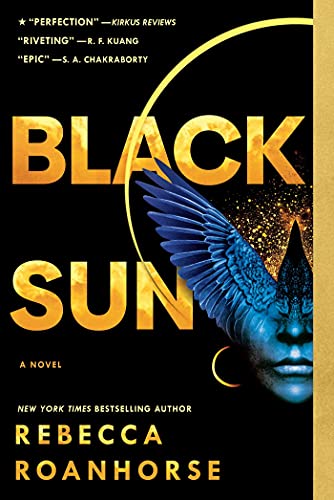
Find it at Amazon.com.

Fairytale Fantasy Post #6

Valentine’s Day + 1

Here’s the 6th in my series of fairytale fantasy posts!

TO REPEAT from fairytale fantasy post #1: the term “fairy tale” is misleading. What we typically call “fairy tales” are more accurately described as “folk tales,” or “traditional tales,” especially one coming from the oral tradition. I’m also not necessarily posting about the fae, although one of the books in this series of posts does have a strong fae presence. “Fairy”—“Fae”—They are synonyms (of a sort), and tales of the fae are an important fantasy subgenre, but again, I’m not using “fairy” necessarily in that sense. AND I’m not dealing with anything Disney (although I guess I kind of lied about that in the last few posts).

The fairytale fantasy novels

My top picks:

Spinning Silver, by Naomi Novik. Based on the Grimms’ Brothers fairy tale Rumpelstiltskin. Reviewed in post one of this series.

Redemption in Indigo, by Karen Lord. Based on the Senegalese folk tale Ansige the Glutton. Reviewed in post two of this series.

More fairytale fantasy:

She Who Became the Sun, by Shelley Parker-Chan. Influenced by Chinese ghost lore. Reviewed in post three of this series.

Alice, by Christina Henry. Horror-fantasy re-imagining of Alice in Wonderland. Reviewed in post four of this series.

Confessions of an Ugly Stepsister, by Gregory Maguire. Re-imagining of the French fairy tale Cinderella. Reviewed in post five of this series.

Black Sun, by Rebecca Roanhorse. Influenced by the mythology and folklore of Mesoamerica. REVIEWED IN THIS POST.

Shadow of the Fox, by Julie Kagawa. Influenced by the folklore of Japan.

For the Wolf, by Hannah Whitten. Based on Little Red Riding Hood? More on Beauty and the Beast.

Today’s fairytale fantasy review:

Black Sun, by Rebecca Roanhorse

Find it on amazon.com HERE.

Rebecca Roanhorse’s 2020 novel, Black Sun, published by Gallery/Saga Press, is the ingenious and often riveting epic tale of three people caught up in a rebellion against the established order in a society inspired by the civilizations of the Pre-Columbian Americas.

The folkloric basis of the novel:

In an interview with NPR’s Petra Mayer, Roanhorse explained that in spite of her love for the usual kinds of epic fantasy, she wanted to set a fantasy novel in a world inspired by Pre-Columbian civilizations. She explained that these civilizations have fascinated her all her life. “For this book I really dug into everything from Polynesian sailing methods to what we know of the Maritime Maya to the habits of corvids,” she told Mayer. In an interview with Arly Sorg for Clarkesworld Magazine, Roanhorse explained that while she took liberties with the details of the magic and religious beliefs of the people in the Black Sun world, she mingled them with the cultures of the historical era. I’d say a woman with a B.A. in religious studies from Yale and an M.A. in Theology from Union Theological Seminary possesses more than the necessary chops to bring this off.

As a woman of color and Native heritage, she deplores the double standard she has experienced. “I wanted to celebrate the various cultures of the Indigenous Americas by embracing their architecture, science, diversity of cultures and worldview, and then going fantastical with it. I dislike how marginalized authors are so rarely allowed to be fantastical, to have limitless imaginations and to break boundaries,” she told Sorg. “I recently saw a review complaining that Black Sun did not meet the reader’s understanding of one of the historical cultures it draws from, and I wanted to shake that reviewer and point to the giant corvids and mermaids in the story and ask if they failed to notice the book was fantasy. I don’t think white writers have to deal with that expectation.”

One of the issues here, it seems to me, is summed up in the #ownvoices movement. Here’s a great discussion of the matter, with all of the attendant angst. Bottom line, Roanhorse has the background and therefore the standing to write Mesoamerican, Pre-Columbian fantasy, and I was thrilled to read a novel not only about that part of the world and that era of history but from that informed perspective.

A personal note: I’ll tell you why this aspect of Black Sun especially resonates with me. I write historical fantasy myself. My own background is white cisgender American with ancestry in the British Isles. Most of my interconnected Stormclouds/Harbingers series of novels is set in a fantasy British Isles/Western/Northern Europe, like a lot of fantasy. Like Roanhorse, I felt that wasn’t enough. After all, I’m an American, not a European. BUT (I’m sure you see the problem!) I’m from ancestors who came to colonize, not the ones who were already here. In my novel Ghost Bird, my characters sail from an alt-Viking Age environment in an alt-Northern Europe to the alt-Americas, where they of course encounter the indigenous peoples of those lands. Ghost Bird imagines a fantasy-Cahokia and a fantasy-Chichen Itza, among other cultures. I tried: 1. to stay in the perspective of my characters, who encountered native peoples and environments as essentially intruders in a land not their own, and 2. to be respectful of the Native American/First Nations peoples and environments I drew upon for my fantasy “America.” It was a real balancing act. Did I succeed? I hope so. I certainly tried. But I do believe very strongly that in these times, that balance must be one of a writer’s most important goals. A writer, especially of fiction, has to be able to imagine herself into circumstances alien to her own experience and background. The process of imagining comes with the territory. Otherwise, maybe stick to memoir. But the fiction-writer’s imagining must be conducted with all possible respect and sensitivity.

Roanhorse’s novel

The three main characters of this novel fascinated me from the beginning, and so did the treacherous fantasy world they inhabit. For the most part, I found the story absorbing, the characters well-done, and the writing fine.

In the middle of the novel, I did find myself losing interest in Zataya, the girl who has struggled out of the slums and into the highest reaches of the Tovan priesthood. I kept wanting to go back to my two favorite characters, the swashbuckling sea-captain Xiala and her intriguing passenger, the blind crow-man Serapio. By the end of the novel, though, I was invested in Zataya’s fate as well. At first she just seemed like a victim, much too naive, and that struck me as a bit unrealistic. In order to rise in her world, she had to have needed a sense of self-preservation and a keen nose for hypocrisy and back-stabbing, and she seemed to lack that necessary trait. Toward the end of the novel, though, she rallied and found her spine.

I found the world-building and the plot very absorbing and fast-paced. I did have a little trouble with the time-stamps on each chapter. At first they didn’t make much sense to me. As the novel progressed, though, I began to understand what was happening when, and why, so that problem went away by the end of the book, too.

With all of its positives, and such an exciting read, this novel would have become one of my favorite fantasy novels in recent memory. Except for one thing.

I’m actually very interested in how other readers react to this one thing. It’s this: the novel ends on a stark cliffhanger. I find that a deal-breaker–as in, I won’t go on with a series when I feel the author has snookered me into caring and then pulled the rug out from under me at the end. I write series, too, and I try always to get to some kind of major closure at the end, even if there are loose plot threads. But not just. . .stop. Aargh.

Now–I’m thinking other readers may not agree with me on this. I actually tried to find out. I belong (belonged, I should say) to a big Facebook group of fantasy readers, so I tried posting the question to that group: do you or do you not like cliffhangers? For whatever reason (I phrased it respectfully, I mentioned I was interested as a blogger and writer but I didn’t “self-promote” by mentioning the name of this blog or the titles of my books, and I’ve seen the same question raised by other posters in the group), my post was disallowed, so I can’t give you any good sense of this matter as I’d hoped I’d be able to. I can only say how I personally feel.

As an aside, in belonging to that group, I did feel I learned a lot about what other fantasy readers do and don’t like in a fantasy read–so I really recommend joining one. You’ll get some great recommendations for books you may have missed. There are several groups like this, and I’m not going to trash my former group by mentioning its name. Just be careful when/if you post, because there seems to be a double-standard involving who can say what in the group–at least the one I belonged to.

I’d really like your comments on this cliffhanger matter, if you have an opinion, and I will publish the comments. And now that I’m thinking about it, I’ll also post guidelines for making these comments, so if I DON’T publish your comment, you’ll know why. Very briefly they are: I won’t publish comments not on the topic of this blog, I won’t publish comments that are disrespectful in language or tone, and I won’t publish comments that self-promote or try to sell anything.

Hoo-boy. This review is getting too much about me and not enough about the book. So here are my final thoughts: It’s a wonderful book. Read it if you don’t mind cliffhangers. If you do, beware. Just saying.

Oh–P.S. Then I’ll shut up. In that same fantasy readers’ group, I discovered that a lot of people buy a fantasy book IF and ONLY IF the cover intrigues them. I’m not one of those people, but wow, Roanhorse’s book has one of the greatest fantasy covers I’ve ever seen.

Fairytale Fantasy post #5

HAPPY VALENTINE’S DAY!

Here’s the fifth in my FAIRYTALE FANTASY posts!

TO REPEAT from fairytale fantasy post #1: the term “fairy tale” is misleading. What we typically call “fairy tales” are more accurately described as “folk tales,” or “traditional tales,” especially one coming from the oral tradition. I’m also not necessarily posting about the fae, although one of the books in this series of posts does have a strong fae presence. “Fairy”—“Fae”—They are synonyms (of a sort), and tales of the fae are an important fantasy subgenre, but again, I’m not using “fairy” necessarily in that sense. AND I’m not dealing with anything Disney (although I guess I kind of lied about that in the last few posts).

The fairytale fantasy novels

My top picks:

Spinning Silver, by Naomi Novik. Based on the Grimms’ Brothers fairy tale Rumpelstiltskin. Discussed in my fairytale fantasy post #1.

Redemption in Indigo, by Karen Lord. Based on the Senegalese folk tale Ansige the Glutton. Discussed in my fairytale fantasy post #2.

Other fairytale fantasy novels:

She Who Became the Sun, by Shelley Parker-Chan. Influenced by Chinese ghost lore. Discussed in my fairytale fantasy post #3.

Alice, by Christina Henry. Based on Alice in Wonderland. Discussed in my fairytale fantasy post #4.

Confessions of an Ugly Stepsister, by Gregory Maguire. Based on the French fairy tale Cinderella. DISCUSSED IN THIS POST.

Black Sun, by Rebecca Roanhorse. Influenced by Mesoamerican folklore and myth.

Shadow of the Fox, by Julie Kagawa. Influenced by Japanese folklore.

For the Wolf, by Hannah Whitten. Maybe influenced by Little Red Riding Hood, but more closely based on Beauty and the Beast.

Today’s fairytale fantasy review:

Confessions of an Ugly Stepsister, by Gregory Maguire

Find it at Amazon.com. Click HERE.

Gregory Maguire’s 1999 reimagining of the Cinderella story, published by Regan Books (now reissued by William Morrow), is the second novel in which he used that technique. The first, Wicked, a reimagining of the Wicked Witch of the West character in The Wizard of Oz, is probably his best-known of these novels.

I figure a Cinderella-based novel is the best choice for Valentine’s Day! What’s a more iconic fairy tale, at least for Americans, than that, and it is the classic tale of a certain type of “happily ever after” love.

The fairy tale basis of the novel

Cinderella, as most American readers know it, has filtered through to them through (shhh. . . Walt Disney’s animated movie version from 1950) a number of English language versions. The real ancestor of the English-speaking world’s Cinderella, though, is Charles Perrault’s French version of the story from 1697, Cendrillon ou la petite pantoufle de verre (Cinderella, or The Little Glass Slipper). Through the Perrault version, the story acquired the pumpkin coach, the fairy godmother, and especially that glass slipper. (Why doesn’t the glass slipper break and cut Cinderella’s foot? It’s magic! It’s fiction! Don’t ask!) You can read a translation of the Perrault version HERE.

But the story is truly ancient. Scholars have traced it back to ancient Greece and the tale of Rhodopis (“Rosy-cheeks”). Think only scholars know that one? Nope. It makes an appearance in the MMORPG Everquest II as one of the sillier quests in the Rise of Kunark expansion pack. Among others, there’s an Italian version, a German version (the Brothers Grimm collected that one, Aschenputtel), and a number of Asian versions. A lot of versions, a lot of variations on the story and its details. Folklorists classify it as Aarne–Thompson–Uther type 510A, ” The Persecuted Heroine.”

Whatever its true origins, the tale really resonates for generations of young women, especially those who long to become a “Disney princess.” The implications of this longing were explored most famously by the feminist theorist Colette Dowling, in The Cinderella Complex: Women’s Hidden Fear of Independence (Summit Books, 1981). The book discusses the Cinderella fairy tale as the template for contemporary women’s longing to be swept off their feet by some powerful male and taken care of.

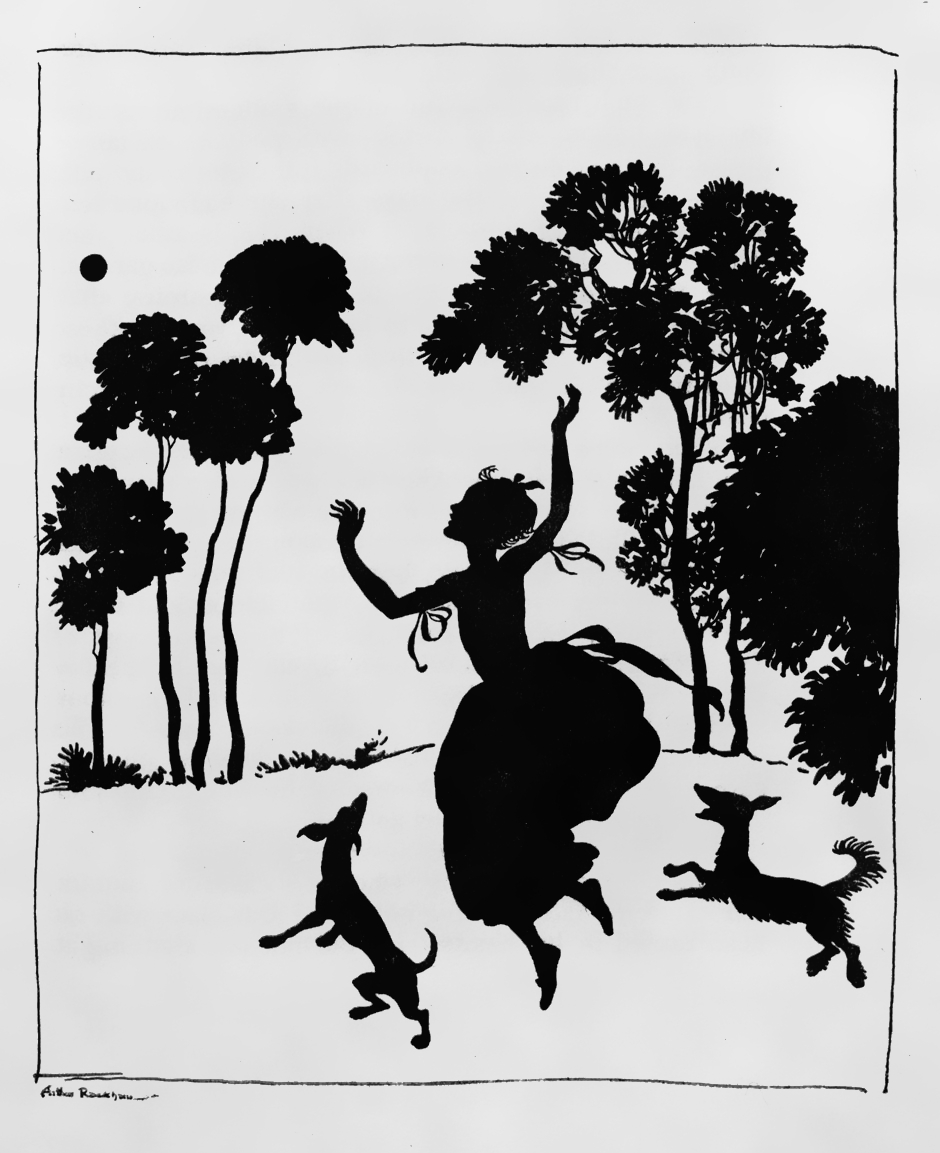
The famed fantasy illustrator Arthur Rackham’s illustration for a 1919 version of Cinderella (in the public domain).

Maguire’s novel

One of the reasons I really like Gregory Maguire’s take on the Cinderella story in Confessions of an Ugly Stepsister is how he stands that “Cinderella complex” material on its head. As the title signals, Maguire’s novel isn’t from Cinderella’s point of view and doesn’t cast her as the protagonist. Rather, he focuses his novel on an ordinarily despised character, one of the “ugly stepsisters” who torment the beautiful and virtuous Cinderella in most versions of the fairy tale. This is Maguire’s signature schtick, so maybe that accounts for some of the features I don’t admire so much, as well.

For maybe half of Maguire’s book, we’re reading an historical novel about the 17th Century Netherlands in the grip of its famous Tulip Bubble. In the 1600s, the mania for tulips was so extreme that tulip bulbs were selling at crazy-high prices. Then, as with all such economic bubbles, there came a tulip bust, and all the tulip speculators who had made tidy fortunes were reduced to poverty practically overnight. This strange incident out of history has achieved iconic status among economists. Maguire’s novel and its characters are very skillfully drawn, and he depicts their world with equal power. The experiences of English immigrants to Holland during this period, the tulip speculators, and especially the artists of the 17th century Dutch city of Haarlem are brought to fascinating life. Maguire depicts the lives of the women of that time with special sensitivity and power. As second-class citizens, they must be careful of their reputations and their economic status. Marry for love? Pffft. That’s a course that will lead a young woman to disaster.

BUT. (I suppose if you’ve been reading this blog, you may suspect where I’m going with this. . . ) But Maguire abandons this well-written and absorbing historical novel around midway through to layer the Cinderella story in there with a heavy hand. What a disappointment, especially since I think he could have easily alluded to the Cinderella story and its themes without going for some literal-minded recreation of the fairy tale. His writing is so good that I know he could have brought it off. And there’s an especially egregious and improbable twist at the end, too. So I have very mixed feelings about this novel.

Cinderella is such an iconic fairy tale that many people have taken a crack at it, including many revisionist cracks like this one, and in many different forms. I don’t have room to list them all. For starters, think of opera. Both Rossini (1817) and Massenet (1899) composed Cinderella staples of the opera repertoire, and they’re not the only composers to take on the tale. Prokofiev composed the music for a Cinderella ballet (1940-44), and he’s not the only composer or choreographer to use ballet to explore Cinderella‘s power. Rodgers and Hammerstein produced a musical theater version on Broadway (1957), and since then, the musical has been revived in three other later versions based on their original. The pandemic willing, Andrew Lloyd Webber will bring his own Cinderella musical to Broadway in 2022. (cough) Disney (cough) is not the only filmmaker to bring Cinderella to the big screen (in animation and live action); there have been many others. In fact, a certain type of romance is frequently referred to as a “Cinderella story”–rags to riches in a particularly female form, the riches being acquired by proxy through some prince of a fellow. The movie Pretty Woman (1990), starring Julia Roberts and Richard Gere, is a prime example.