
Here’s my second post in a series reviewing the 2026 Nebula Awards short-listed works in the Best Novel category. (To see the complete list, go HERE.) I’m on a mission to read and review all seven of these novels before the Science Fiction And Fantasy Writers Association (SFWA) announces the winner at the Nebula awards ceremony on June 6, 2026. It will take place at the SFWA 61st annual conference, held this year in Chicago. I’m reading the novels alphabetically by author. If I have time, I’ll read a few others nominated in other categories.
After the Nebula-nominated novels, I’ll go on to the Hugo Awards nominees (to be announced soon), and then the nominees for the World Fantasy Awards.
The short-listed novels for the 2026 Nebula Awards:
When We Were Real, by Daryl Gregory (Saga)–see my review HERE
The Buffalo Hunter Hunter, by Stephen Graham Jones (Saga; Titan UK)—-reviewed in this post
Katabasis, by R.F. Kuang (Harper Voyager US; Harper Voyager UK)
Death of the Author, by Nnedi Okorafor (Morrow; Gollancz)
The Incandescent, by Emily Tesh (Tor; Orbit UK)
Sour Cherry, by Natalia Theodoridou (Tin House; Wildfire)
Wearing the Lion, by John Wiswell (DAW; Arcadia)
The Buffalo Hunter Hunter, by Stephen Graham Jones (Saga; Titan UK)
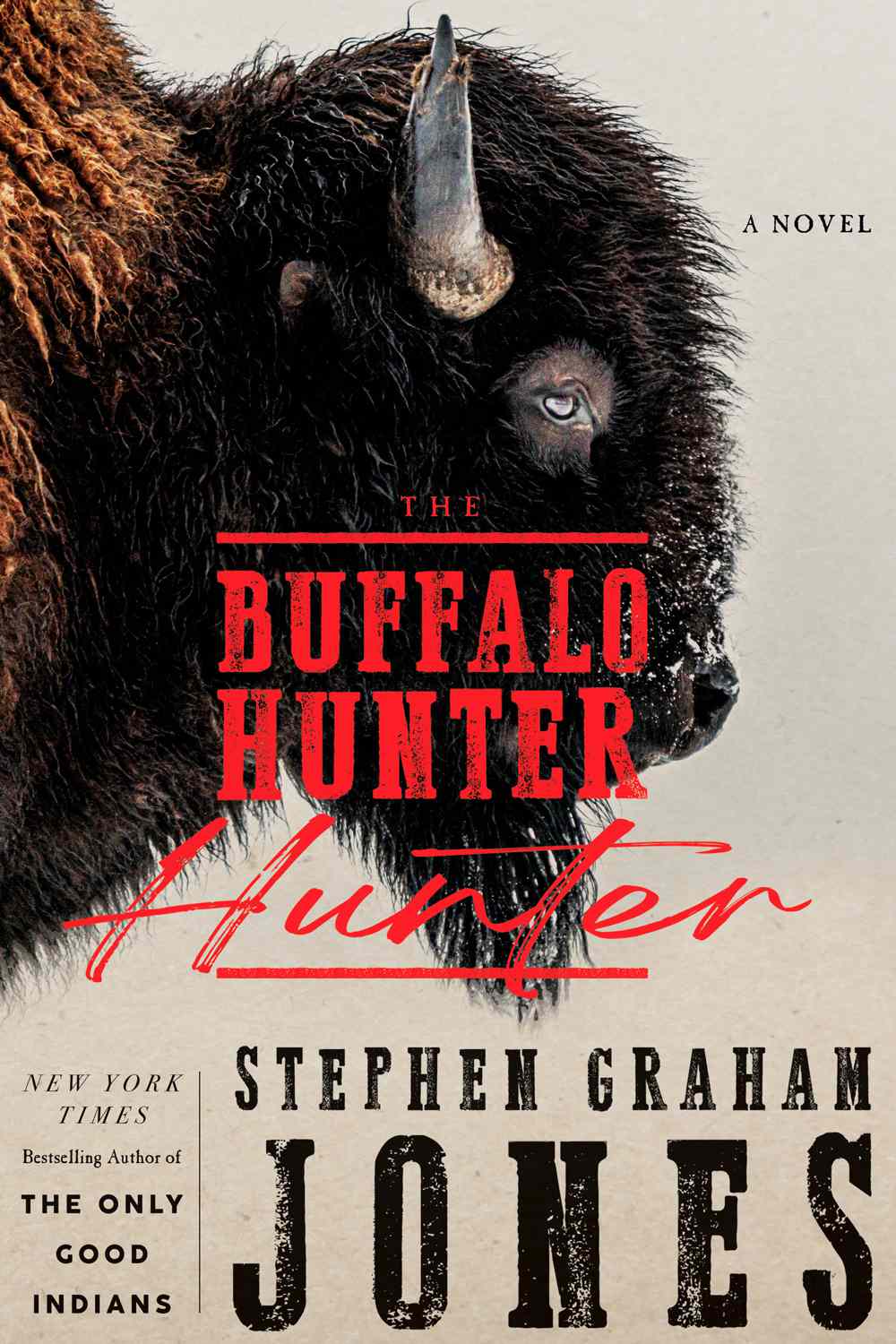
This novel has more nested narratives than Wuthering Heights. Actually, now that I think about it, Dracula (one of the models Jones mentions in his afterword) is constructed of a lot of different letters and journal entries and so on. So is The Woman In White. I suppose this story construction is a staple of late 19th century-early 20th century Gothic fiction, which perfectly fits the period atmosphere Jones establishes in his novel. See this incisive review, too.
The Buffalo Hunter Hunter is a combination historical novel/horror novel. It is much lauded by critics, and it already has a cult following–witness stuff like the Etsy shop that sells Weasel Plume Protective Society teeshirts. I know I keep saying I don’t read horror–and I don’t, usually–but this year, because horror novels are on some of these lists I’m reading through, I’m doing it. So take my review with that grain of salt, readers. Horror is not my thing.
I can tell you this novel is fascinating. One of the reasons it appeals to me so much is that one of its two main genre identifications is with the historical novel. I love historical novels, and even though I don’t review many in this blog, I consider them just as much speculative fiction as SF.
On the other hand, this is an historical novel of the American West. The Western is its own genre. Jones mentions pulp Westerns, which I’ve really never read, as a big influence, and you can see that very directly in the novel’s ending. But three novelists I do love are writers of historical fiction about the American West: Paulette Jiles and Charles Portis for sure, and I enjoy Larry McMurtry too. I can’t say I LOVE Cormac MacCarthy, because I hate purple prose and he must be the master of Faux Faulkner. But I do appreciate some of the things he has written. I appreciate Blood Meridian‘s savage critique of Manifest Destiny, starring the sadistic atrocities of the historical Glanton Gang–plenty of horror there.
This is all to say I feel at a disadvantage reviewing The Buffalo Hunter Hunter. It is one powerful book, though. Along with plenty of gore, the book strikes at the heart of an American genocidal period (the beginnings of an ongoing genocide?), a period a lot of people would like to hush up, or avoid thinking about. Its revenge plot turns on a horrific event in the history of the American West, the Marias Massacre of 1870 in Montana Territory. In other words, especially if you are a U.S. reader, you might wish you could turn away from this book, but if you’re a reader like me, you’ll find you can’t. Especially, in the present moment, you can’t turn away, because the Marias Massacre and too many others like it could be considered the seeds of our current situation, forced at last to face our tragedy as a nation.
The relationship between the two main characters of the novel is riveting. First, Good Stab, a member of a Blackfeet band who shows up mysteriously in the back pew of a small-town Lutheran church in 1912 Montana. Second, Arthur Beaucarne, the old and burned-out pastor of that church. I say the reader can’t turn away. These two characters can’t turn away, not from what they did, and not from what they are. Their meeting is a reckoning with origins and consequences echoing backward and forward in history. The envelope story–the narrative which encloses these two men’s narratives–features an academic struggling with a recalcitrant tenure committee at a university. THAT part I can certainly relate to in the most personal way, although my own six-year stint teaching in two university departments of communication was more or less a fluke. (Hi, students, I loved you all!)
The characters are great–amazing, vivid main characters, but the secondary characters (including the animal characters!) are also vivid and fascinating. The setting is great. The punch in the guts this novel gives you is great. I got tired of the endless gore, but if you are a horror fan, you won’t. I got a little tired of the pastor’s belabored antique writing style, but the operational term here is “belabored.” This is a man who will do anything to avoid facing up to what he did, and the twisting, avoidant style of his journal reflects it. Good Stab’s straightforward language is the perfect foil. In terms of character, though, Good Stab is the shining gem and Beaucarne the foil that sets it off.
This is a vampire novel, with all the tropes, presented in really interesting ways. But it is so much more. I think I’m not alone in saying it: this is an important book. It is also hugely entertaining.
Quick side note: I really appreciated the author’s afterword, which gave me a lot of helpful information, and you might also check out this Substack. I also found this blog post informative and helpful in clearing up a minor confusion of mine.

Leave a Reply