
. . . and that’s why everyone loves Robin Hood. What is a rogue, exactly? The American Heritage Dictionary of the English Language gives this as its first definition: “An unprincipled, deceitful, and unreliable person; a scoundrel or rascal.” But it gives THIS as its second definition: “One who is playfully mischievous; a scamp.” There’s a fine line, admittedly, between “scoundrel” and “scamp,” but we all know it when we see it.
Robin Hood flouts the law. But he flouts the law with flair. And, according to those theorists of the “social bandit,” he does it because the law is wrong and unfairly administered. Robin the rogue is a hero. So folk heroes like Robin take on a life of their own, appearing over and over again in popular culture–ballads, told tales, books, later on movies, wherever an audience wants the thrill of seeing someone give the finger to overbearing authority and (this is the important takeaway) get away with it. Think Subway Sandwich Man. Standing up for the little guy, speaking truth to power with only a hoagy for weapon. We love that man, and so did the jury.
Who are some other famous rogues we love to love? And do they all have to wear hoods? No, they do not all have to wear hoods. Here are a few from folklore and fiction and history and maybe-history: Billy the Kid, Zorro, Anne Bonny, Ned Kelly, Che Guevara, Anansi the spider trickster, Loki, Jack Mary Ann, Pancho Villa, Ma Barker, Cartman, Reynard the Fox, Bonnie and Clyde, Sly Peter, the Joker, Till Eulenspiegel, Bugs Bunny, The Lone Ranger (no, really–“Who was that masked man?” Look up his origin story), Bart Simpson, Tom Sawyer, Coyote, William Wallace, Wat Tyler, Emiliano Zapata. Some of them are outlaws with a lovable or admirable or at least fascinating side. Some are vigilantes for justice. Some are transgressive figures so charming or funny we have to love them in spite of themselves, especially those who make the comfortable uncomfortable. Well. . .and then. . .some of us hate some of them.
Do you love fantasy? Do you love rogues? If you haven’t discovered it already, you will want to read this wonderful book full of great short fiction:
Rogues, ed. George R. R. Martin and Gardner Dozois (2014)
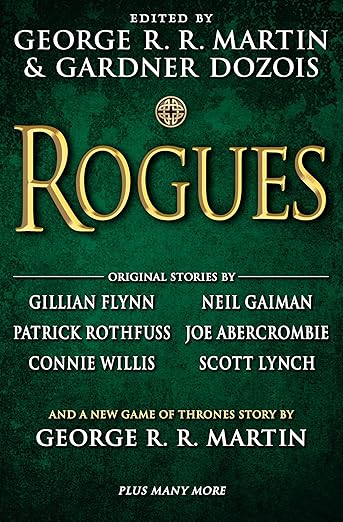
What a great collection. Some of my favorites from this volume:
- George R. R. Martin’s introduction, which explores the concept of the rogue and especially the rogue in fantasy literature. Not all of the stories in the collection are fantasy, but a lot are, and most of them, fantasy or not, are just great. The last story in the collection is also by Martin, although it seems more an explanatory backstory for his A Song of Ice and Fire fantasy series than a true piece of short fiction. Fans of that hugely popular book series and the streaming Game of Thrones series that resulted from it will enjoy this part of the book.
- “Tough Times All Over,” by Joe Abercrombie–clever tale set in the fascinating world of Abercrombie’s grimdark First Law series. The story is as tricky and slippery as the main character.
- “Bent Twig,” by Joe R. Lansdale–very, very funny, and very, very violent. Crime, not fantasy.
- “Roaring Twenties,” by Carrie Vaughan–a story masquerading as a tale of werewolves and witches when actually it’s about a very important historical event.
- “A Year and a Day in Old Theradane,” by Scott Lynch–fascinating roguery by the author of the great Gentlemen Bastards series, enlivened by Lynch’s wonderful penchant for describing strange and marvelous drinks. Has there ever been a better rogue than Lynch’s Locke Lamora? Locke isn’t in this story, but it is a very satisfying read featuring a whole gang of rogues.
- “Bad Brass,” by Bradley Denton–What a story! Not fantasy either, but. . . it’s the music, not the instrument.
- “The Meaning of Love,” by Daniel Abraham. A lovely, wistful story with a great rogue as the main character. This story led me to read Abraham’s matchless Long Price Quartet series.
- “Ill Seen in Tyre,” by Steven Saylor is a fun tribute to Fritz Leiber’s Fafhrd and the Gray Mouser. If you are nostalgic for old-style fantasy, you’ll love this one.
- “A Cargo of Ivories,” by Garth Nix–ingeniously funny and strange.
- “The Lightning Tree,” by Patrick Rothfuss–great story about Bast, one of the most lovable rogues of all time, from The Name of the Wind and The Wise Man’s Fear. This is the reason I bought this book in the first place–to hear more about Bast. Now you can buy this story in a slightly enhanced form as a stand-alone.
- Other stories by Neil Gaimon, Connie Willis, and more.
 Fantastes