
The 2025 World Fantasy Awards will be announced at the World Fantasy Convention, held this year in Brighton UK on Oct. 30-Nov. 2, 2025. I’m heading toward the end of my quest to read and review all the novels short-listed for the award. The decision of the judges is coming up soon!
The list and my next review:
The Tainted Cup, Robert Jackson Bennett (Del Rey; Hodderscape)–This novel won the 2025 Hugo Award and was short-listed for the Locus Award. Mentioned in a previous post, reviewed in my posts about the 2025 Hugo nominees.
The Fox Wife, Yangsze Choo (Holt; Quercus UK)–a wonderful overlay of Chinese folklore on the early 20th century historical conflict between China and Japan. Reviewed in a previous post.
The Bog Wife, Kay Chronister (Counterpoint; Titan UK)–what IS this thing? Southern/Appalachian Gothic? Magical Realism? Fascinating read. Reviewed in my preceding post.
The Bright Sword, Lev Grossman (Viking; Del Rey UK)–combined Monty Pythonesque and Malory Morte-D’Arthur-esque massive novel about the Arthurian world in decline.–reviewed in this post.
The Wings Upon Her Back, Samantha Mills (Tachyon)–What if profound disillusionment causes you to lose your wings? What would you do to get them back?
The Bright Sword, Lev Grossman
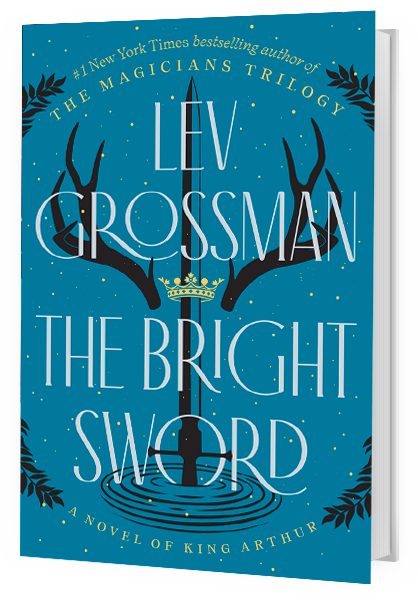
Grossman’s novel is huge, a real door-stopper in the grand fantasy tradition. The subtitle tells us it’s “A Novel of King Arthur,” but I wouldn’t call him a major character. And that’s fine. In a way, Arthur is everywhere in this novel, the controlling force beyond it all. That’s the classic Arthurian shtick, after all.
Grossman’s book explores the haunting premise, “What if you’re a bold young man looking to make your bones as a hero at Camelot, but when you get there, the show’s already over?” The young and impoverished wanna-be hero setting out to prove himself is the stuff of countless folk tales and chivalric romances, both in the Arthurian tradition and out of it. The Hero’s Journey in the flesh. But then–noooo!–the worst nightmares of your knightly FOMO are realized.
A book like this should be catnip for a reader the likes of me. I pondered why that didn’t turn out to be the case. It may be because the tone is uneven. That could work. It really could–but it somehow didn’t for me. The problem (if it is one–and it may not be for you, at all) shows up right away. The epigraph that begins part one is from Monty Python and the Holy Grail. Fun! I love Monty Python! I love that movie! I can quote you verbatim from that movie! And then the chapter divisions are extremely reminiscent of Thomas Malory’s Le Morte D’Arthur, the 15th century text that governs how just about everyone in the English-speaking world sees the Arthurian legend. The Matter of Britain itself. I like the quick and useful summary about that in Wikipedia, by the way–take it further if you’re interested.
You don’t have to have actually read Malory. Almost every depiction of King Arthur and his court since Malory, including Monty Python, is indebted to that take on the Arthurian, especially ones that include Lancelot (an import from the French romances), even those that deliberately set out to counter Malory’s version.
The epigraph at the very beginning of Grossman’s novel comes from a much earlier hint about the Arthur story from The Black Book of Carmarthen. This is a mid-13th century Welsh compilation of manuscripts drawn from even earlier material, including some of the earliest accounts of Myrddin (Merlin) especially dear to my own heart, since I have written about that version of Merlin in my own fiction and also used the “Pa gur” verses as an inspiration. One part of The Black Book of Carmarthen can be translated as “The Verses of the Graves,” poetry describing the resting places of legendary great heroes, one of them being one of the earliest mentions of King Arthur we know of. But the structure of Grossman’s novel is all Malory.
That said, however. . .you should understand this is just my own take on the novel. Grossman himself appended a really interesting historical note at the end, some of it congruent with my thinking, some of it different, and he’s the author, after all.
For me, though, Grossman’s novel lives in the gap between the Pythonesque and the Malorian, and then also mixes in very contemporary concerns and insights. His version of the tale gives us completely matter-of-fact realistic characters inhabiting the iconic Arthurian fantasy landscape, with humor thrown in. The way the tale unfolds is particularly indebted to Malory. As in Malory (and other Arthurian material before him), a frame story encloses episodic tales of the various knights of Camelot and their adventures. The frame story for Grossman’s novel is the story of the main character, young bumbling Collum from the provinces, heading for Camelot and hoped-for glory. He finds more than he bargains for, including the mystery of his own identity.
His tale is continually interrupted by tales of the other Camelot knights–“The Tale of Sir Bedivere,” “The Tale of Sir Palomides,” etc. If you’re a Monty Python fan, you might recognize these mock-heroic titles of episodes from there, but they hark back to Malory (“The Noble Tale of Syr Launcelot du Lake,” “The Fyrste Boke of Syr Trystram de Lyones,” and so on.) Grossman’s versions of these knights’ tales are interesting in themselves, not least because he puts a very contemporary spin on the identities of some of the knights. I liked them, and I liked the over-arching tale of Collum’s coming of age. I loved the poignant ending. But somehow, at least for me, the parts were more interesting than the whole.
And the whole is long. Long and rambling. The characters keep thinking profound thoughts seemingly drawing the narrative to a close, but nope–there’s more. And more. And more.
This may be exactly what you need, so don’t go by me.
Full disclosure: My doctoral dissertation was on Edmund Spenser’s Faerie Queene, ANOTHER endlessly long tome (blessedly cut short by the death of the poet, and I’m glad that’s not the case here) supposedly about King Arthur but in which Arthur himself makes only a few appearances–Arthur before he is king, in Spenser’s case, not after. So maybe that is skewing my response to this book. Poor authors can never predict what crazy readers they may end up with. They just send their books out into the world and wave bye-bye.
As a side-note: my ten-year-old grandson ADORES Grossman’s middle-grade fantasy novels. So maybe go by Will the huge Grossman fan-boy instead of me.


Next up, last but not least, because I’m just doing these reviews alphabetically, my review of The Wings Upon Her Back, by Samantha Mills.
 Fantastes
Pingback: Nearly Upon Us: World Fantasy Awards – Fantastes