Continuing my previous post on the short-listed novels for the 2024 Nebula award, here are two more reviews of the finalists, Ann Leckie’s Translation State and Vajra Chandrasekera’s The Saint of Bright Doors:
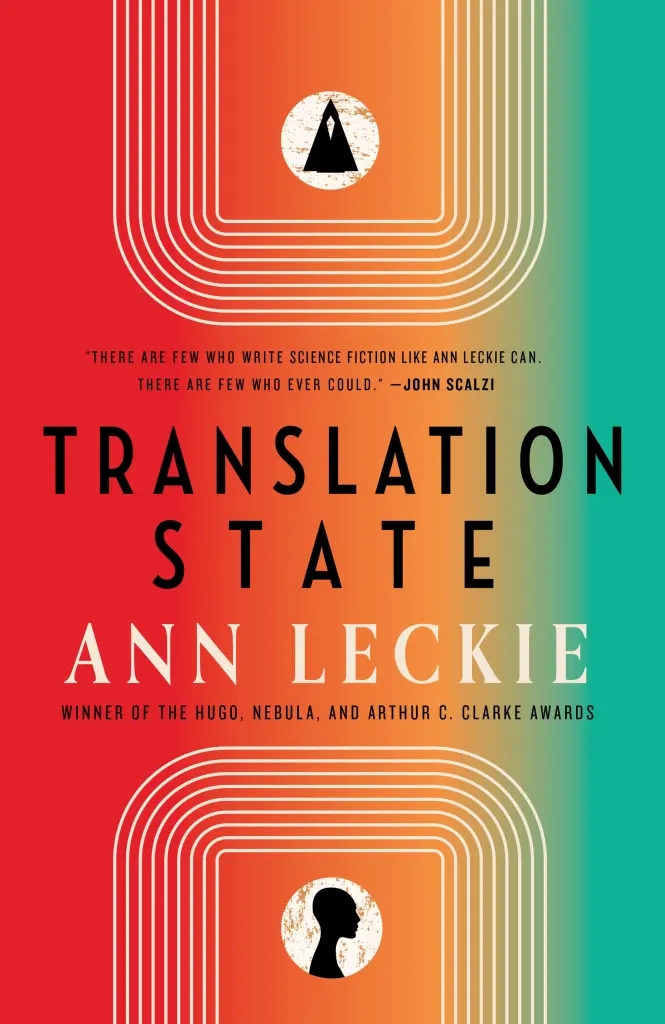
Ann Leckie, Translation State (Orbit, 2023)
A compelling read from Leckie, who returns to a familiar setting, the interstellar empire of the Radch. Some time ago, I read the first of her Imperial Radch trilogy, Ancillary Justice, and reviewed it for this blog. At the time, I found the book hard to penetrate, but by the end of the novel, pretty fascinating. I was unsure whether I’d continue the series, and in fact didn’t. Now, with Translation State, I’ve returned to Leckie’s complex world of intrigue and danger and exotic species. The characters, the plot, the ingenious, very organic and natural-seeming use of pronouns to delineate a gender-fluid universe of peoples and cultures, are all outstanding. This novel is billed as a stand-alone novel in the Radch universe, but I agree with many reviewers who point out that the more a reader knows about that universe, the better the reading experience with this most recent novel.
Throughout Translation State, I was in awe of Leckie’s world-building. The Radch are not the main focus of this book, although their influence pervades the complicated politics that drive the plot. This novel focuses on the mysterious Presger and the intermediate forms some of them take to bridge from their alien consciousness to the humans with whom they exist in an uneasy alliance. A too-fragile treaty may be the only barrier standing between humanity and annihilation, so the stakes are high. I was reminded of Iain Banks’s great Culture novels.
To inhabit the mind of a species this removed from the human is quite a feat, and Leckie pulls it off. I’m thinking of other novels that accomplish something similar, such as William Golding’s The Inheritors, or Isaac Asimov’s The Gods Themselves (which itself won the Nebula in 1972). I guess I could mention China Miéville’s great Embassytown, too, but that novel is in a class by itself.
Is it mean-spirited of me to say that in the end, I was a bit let down by Leckie’s tale of found family? On the other hand, while it may be fascinating to imagine the politics and treaties that stitch the universe together, in the end, at least for the novel (for readers? for human beings?), it all comes down to the personal. Only connect. Translation State is actually a very sweet-natured novel, and I enjoyed it immensely. And I think now I’ll return to the Ancillary books and start reading them in order.
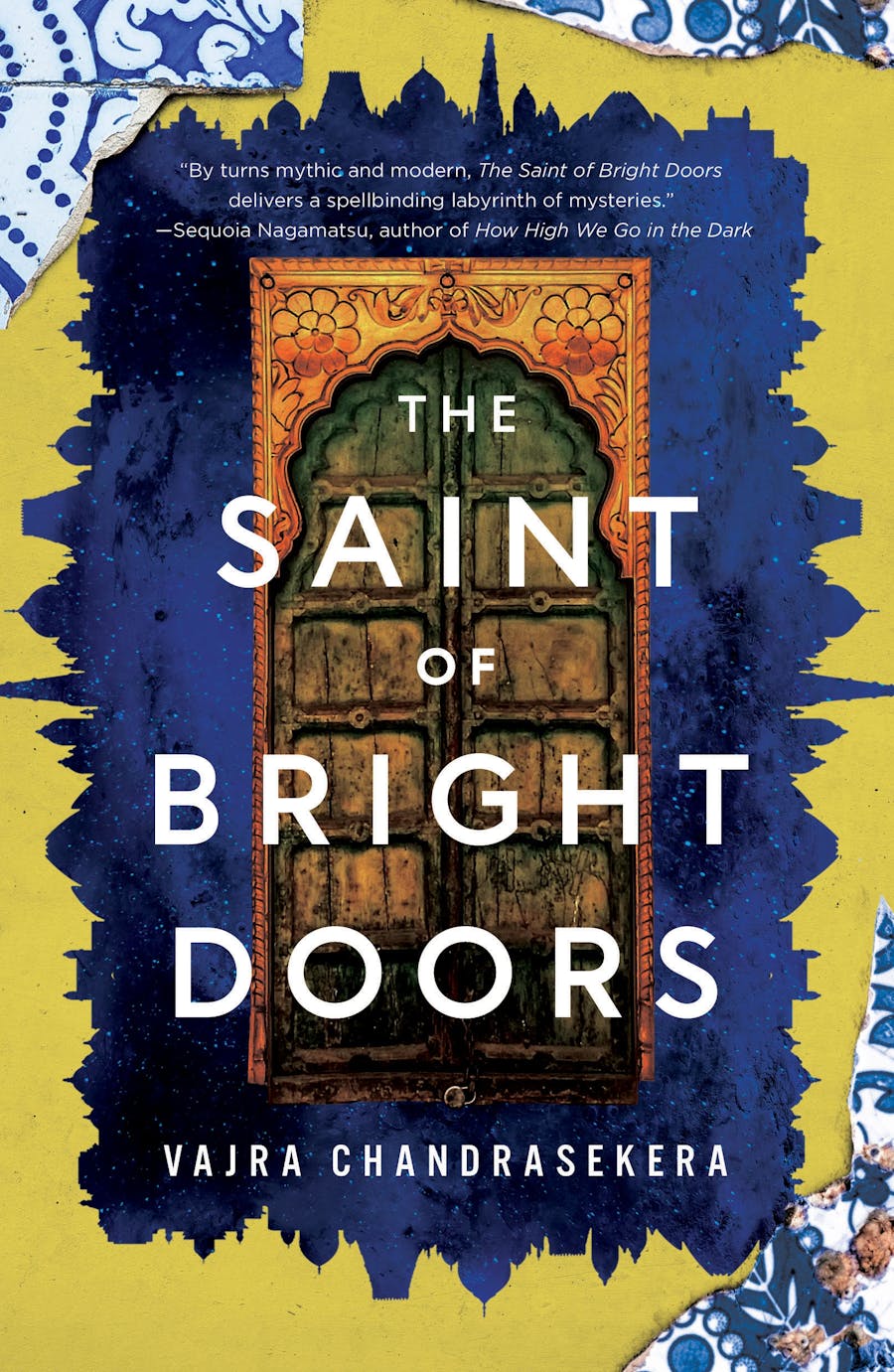
Vajra Chandrasekera, The Saint of Bright Doors (Tordotcom, 2023)
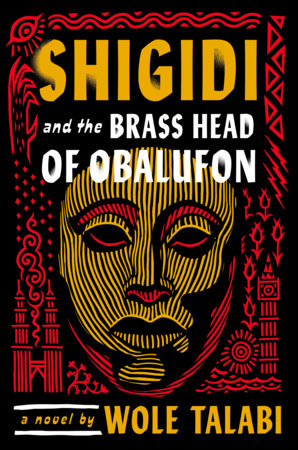
This novel, by Sri Lankan writer Chandrasekera, is simply astounding, a sweeping tale of power and the structures that drive power, loosely based on a legend about Siddhartha. The novel has received wide acclaim, nominated for the Locus award and short-listed for the Lambda award, among other accolades. Chandrasekera imagines a hybrid world of the fantastic (gods and anti-gods and spirits and demons and messiahs abound, as well as the mysterious “bright doors” of the title) and the realistic–shoddy apartment blocks in a steamy South Asian city, civil unrest, unfathomable and obscure caste distinctions, corrupt politics, and more–a heady mix. This is a characteristic Chandrasekera’s novel shares, at least a bit, with his fellow nominee Talabi’s Shigidi and the Brass Head of Obalufon (reviewed in my preceding post), except that in Talabi’s novel, the spirit world and the regular world, while they may intersect, are clearly separate–that’s even a huge plot point in Talabi’s novel. In Chandrasekera’s novel, the spirit world’s and the ordinary world’s objects and personae and passions and concerns are all jammed and mashed together in a dizzying stew that defies any attempt (reader’s, chararacters’) to pry them apart.
This novel is infused with the historical and political concerns of Sri Lanka, matters pretty completely opaque to me. I refer readers of this blog to this great review and analysis published recently on the Strange Horizons magazine site. The reviewer, New Zealand writer Tehnuka, has a far greater understanding of these issues than I ever will. That said, even without the deep background of readers like her, I can tell you I found Chandrasekera’s novel as compelling a read as anything I’ve come across lately.
Its political concerns are not just local and regional, either. Many readers, from many parts of the world, will resonate with this aspect of the novel. Great quotation, too frighteningly true in too many parts of the world, not excepting my own:
the law might do anything, at any time, to anyone, and justify itself any way it likes–it is feral, like the invisible laws and powers of the world of which it is a pale imitation.
Quick message: I love to read. Love it. You do, too, I’m figuring, or you wouldn’t be here. So. . .LOVE YOUR PUBLIC LIBRARY. LOVE YOUR LIBRARIAN. For some of us, libraries and those brave souls, librarians, stand between us and the dark. So far, in my read through the Nebula finalists, any one of these books could be banned by ignorant ill-meaning people simply because all of these novels (so far, anyway), take an unflinching look at the human condition. (some, the not-so-human!)
 Fantastes
You must be logged in to post a comment.